
Call us
301-363-4651 (Available 9 a.m. to 5 p.m. CST from Monday to Friday)

| Code | CSB-RA212098A0HU |
| Size | US$210 |
| Order now | |
| Image |
|
| Have Questions? | Leave a Message or Start an on-line Chat |
| Application | Recommended Dilution |
|---|---|
| WB | 1:500-1:5000 |
| IHC | 1:50-1:200 |
| IF | 1:50-1:200 |
| FC | 1:50-1:200 |
UBE2L3, also known as UbcH7, is a ubiquitin-conjugating enzyme that plays a central role in the ubiquitin-proteasome pathway, facilitating the transfer of ubiquitin to target proteins destined for degradation or functional modification. This E2 enzyme participates in critical cellular processes including cell cycle regulation, DNA repair, and immune signaling, making it a valuable target for researchers investigating protein homeostasis, cancer biology, and inflammatory pathways.
This recombinant monoclonal antibody, clone 5H4, offers the reproducibility and consistency that demanding experimental workflows require. Developed using recombinant technology with a defined sequence, it eliminates the lot-to-lot variability that can compromise longitudinal studies and multi-site collaborations. The rabbit host and affinity-chromatography purification ensure high specificity for your target.
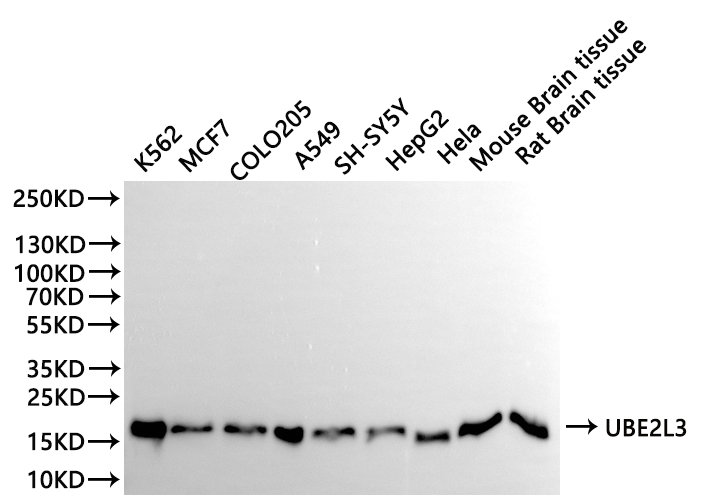
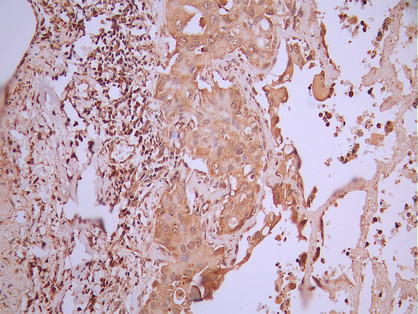
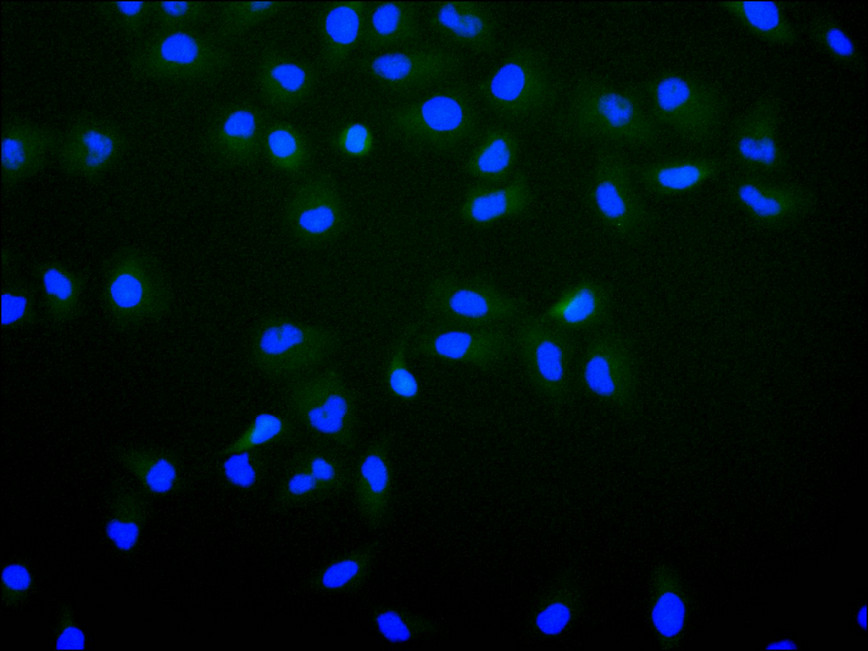
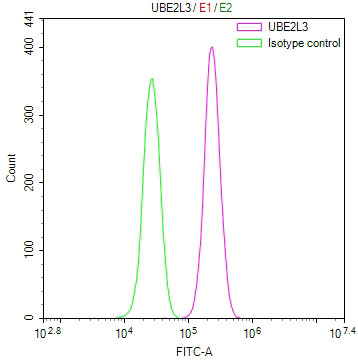
Extensive validation demonstrates this antibody's versatility across multiple applications. Western blot analysis confirms reliable detection of UBE2L3 at the expected 18 kDa molecular weight across diverse human cell lines including K562, MCF-7, COLO-205, A549, SH-SY5Y, HepG2, and HeLa cells. Cross-species reactivity extends to mouse and rat brain tissue lysates, supporting translational research using rodent models. Immunohistochemistry validation in paraffin-embedded human lung cancer tissue demonstrates suitability for pathological investigations, while immunofluorescence staining in HeLa cells reveals clear cytoplasmic localization patterns. Flow cytometry analysis in HepG2 cells further expands your experimental options for quantitative single-cell studies.
Whether you are exploring ubiquitin pathway dysregulation in disease contexts, characterizing post-translational modification networks, or investigating epigenetic and nuclear signaling mechanisms, this antibody provides a dependable tool for advancing your research objectives.
There are currently no reviews for this product.





