
Call us
301-363-4651 (Available 9 a.m. to 5 p.m. CST from Monday to Friday)

| Code | CSB-RA025821A0HU |
| Size | US$210 |
| Order now | |
| Image |
|
| Have Questions? | Leave a Message or Start an on-line Chat |
| Application | Recommended Dilution |
|---|---|
| WB | 1:500-1:5000 |
| IHC | 1:50-1:200 |
VDAC1, or voltage-dependent anion-selective channel protein 1, serves as the primary transport channel in the outer mitochondrial membrane, regulating the exchange of metabolites, ions, and ATP between mitochondria and the cytoplasm. This gatekeeper function positions VDAC1 at the intersection of cellular energy metabolism and apoptosis, making it a compelling target for researchers investigating mitochondrial dysfunction, cancer metabolism, and programmed cell death pathways.
This recombinant monoclonal antibody, generated from clone 3A1 in rabbit, offers the reproducibility that demanding experimental workflows require. Because the antibody sequence is defined and production occurs through recombinant expression, you can expect consistent performance across lots, eliminating the variability that can complicate long-term studies or multi-site collaborations.
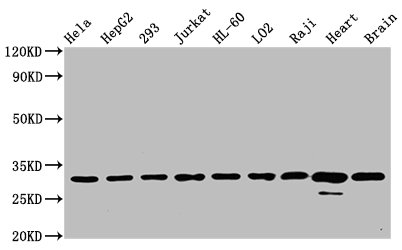
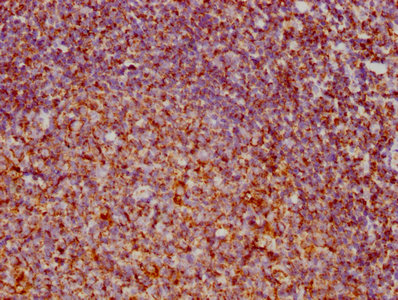
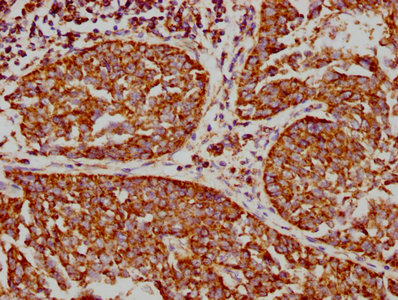
Validation data demonstrates robust performance across multiple experimental platforms. In western blot applications, the antibody detects VDAC1 at the expected 31 kDa molecular weight across an extensive panel of human cell lines including HeLa, HepG2, 293, Jurkat, HL-60, LO2, and Raji cells. Cross-species reactivity has been confirmed through successful detection in rat heart tissue and mouse brain tissue, providing flexibility for researchers working with rodent models. For immunohistochemistry, the antibody has been validated in paraffin-embedded human tonsil tissue and cervical cancer specimens using citrate buffer antigen retrieval, demonstrating utility for both normal and pathological tissue analysis.
Whether you are characterizing mitochondrial markers in cell culture systems, examining VDAC1 expression patterns in tissue sections, or conducting comparative studies across species, this antibody provides a reliable tool for exploring mitochondrial biology and its role in disease.
There are currently no reviews for this product.





