
Call us
301-363-4651 (Available 9 a.m. to 5 p.m. CST from Monday to Friday)

| Code | CSB-RA896869MA2HU |
| Size | US$210 |
| Order now | |
| Image |
|
| Have Questions? | Leave a Message or Start an on-line Chat |
| Application | Recommended Dilution |
|---|---|
| IHC | 1:50-1:200 |
| IF | 1:50-1:200 |
VSIG4, also known as complement receptor of the immunoglobulin superfamily (CRIg), serves as a critical regulator of innate immunity expressed predominantly on tissue-resident macrophages. This immunoglobulin superfamily member functions as a pattern recognition receptor that directly binds complement component C3b and its cleavage fragments, enabling macrophages to efficiently clear complement-opsonized pathogens and apoptotic cells. Beyond its role in pathogen clearance, VSIG4 has emerged as an important negative regulator of T cell activation, positioning it at the intersection of innate and adaptive immunity with significant implications for autoimmune disease, transplant tolerance, and tumor immunology research.
This recombinant monoclonal antibody, clone 16G9, offers the reproducibility and consistency that demanding immunological studies require. Generated against recombinant human VSIG4 protein and produced using recombinant technology with a human IgG1 framework, this antibody delivers sequence-defined specificity that eliminates the lot-to-lot variability inherent in traditional hybridoma-derived reagents. Affinity chromatography purification ensures high purity suitable for sensitive detection applications.
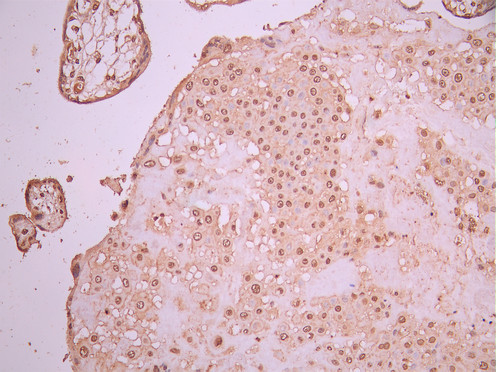
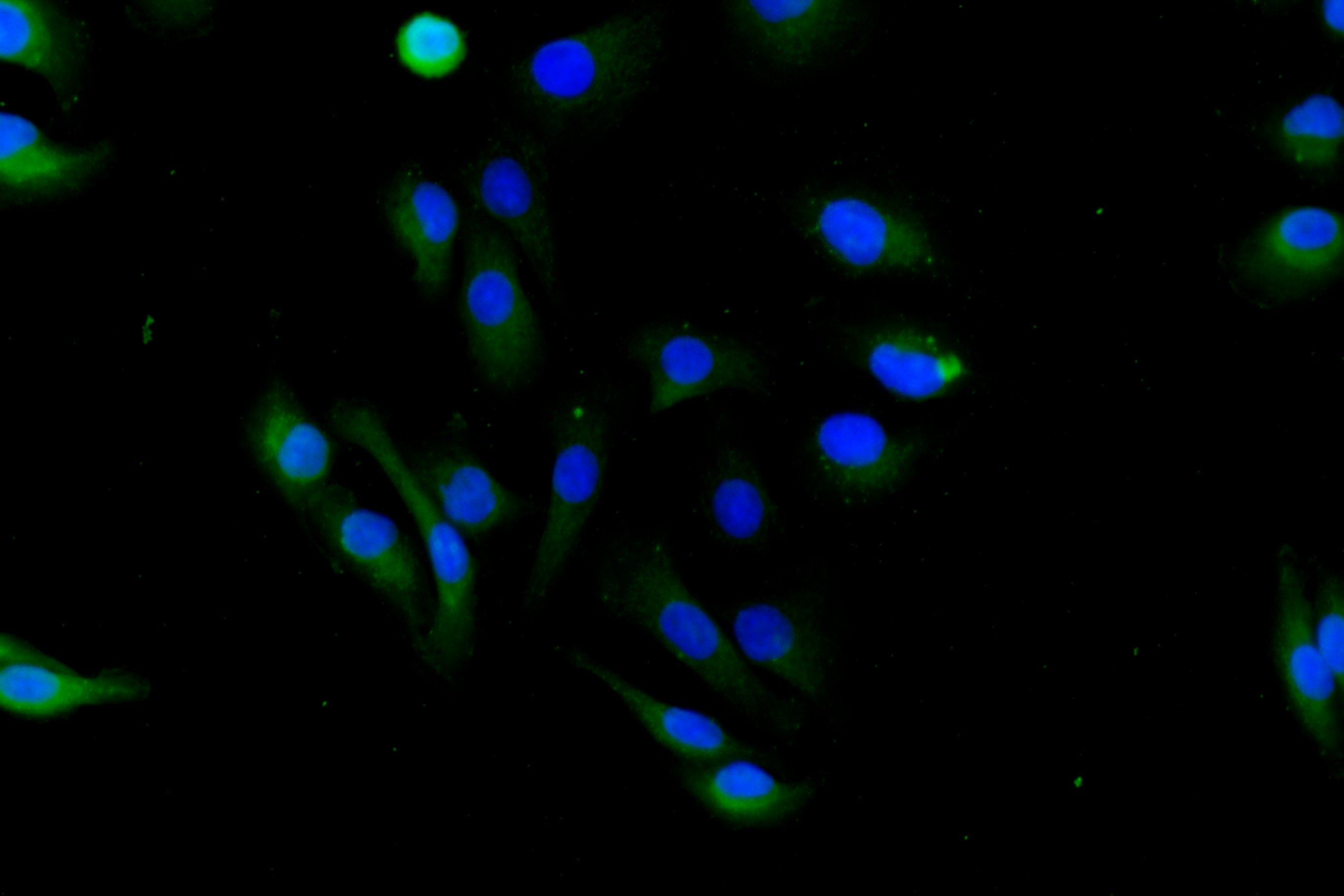
Validation studies demonstrate reliable performance across multiple experimental platforms. Immunohistochemistry on paraffin-embedded human placenta tissue, where tissue-resident macrophages abundantly express VSIG4, shows specific staining at dilutions of 1:50 to 1:200 using citrate buffer antigen retrieval. Immunofluorescence analysis in A549 cells confirms utility for cellular localization studies, revealing clear signal with DAPI counterstaining at 1:30 dilution.
For researchers investigating macrophage biology, complement-mediated immunity, or the immunomodulatory functions of VSIG4 in disease contexts, this antibody provides a dependable tool for characterizing expression patterns in human tissues and cell models.
There are currently no reviews for this product.





