
Call us
301-363-4651 (Available 9 a.m. to 5 p.m. CST from Monday to Friday)

| Code | CSB-RA953902A0HU |
| Size | US$210 |
| Order now | |
| Image |
|
| Have Questions? | Leave a Message or Start an on-line Chat |
| Application | Recommended Dilution |
|---|---|
| WB | 1:500-1:5000 |
| IHC | 1:50-1:200 |
| IF | 1:50-1:200 |
Wiskott-Aldrich syndrome protein (WASp) serves as a critical regulator of actin cytoskeleton dynamics in hematopoietic cells, orchestrating essential cellular processes including immune cell signaling, migration, and phagocytosis. Mutations in the WAS gene result in Wiskott-Aldrich syndrome, a severe X-linked immunodeficiency characterized by eczema, thrombocytopenia, and recurrent infections. Understanding WASp's role in signal transduction pathways continues to be vital for researchers investigating immune cell function, cytoskeletal reorganization, and primary immunodeficiency disorders.
This recombinant monoclonal antibody, clone 23C6, offers the reproducibility and consistency that demanding experimental workflows require. Developed using recombinant technology with a defined sequence, this antibody eliminates the lot-to-lot variability often encountered with traditional hybridoma-derived reagents, ensuring your results remain comparable across extended studies.
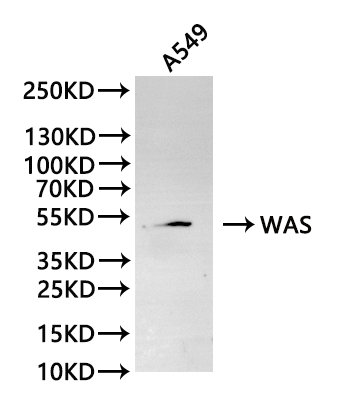
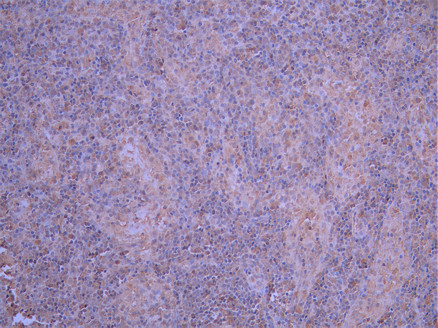
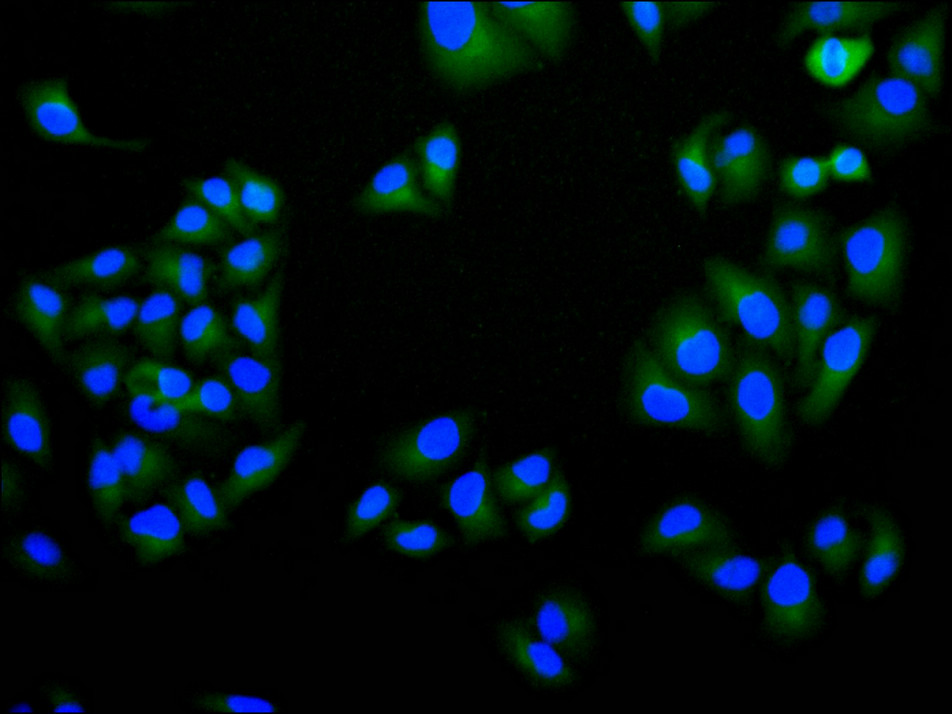
Validation across multiple applications demonstrates this antibody's versatility in your research toolkit. Western blot analysis in A549 whole cell lysate reveals a clean band at the predicted 53 kDa molecular weight, confirming accurate target recognition. For tissue-based studies, immunohistochemistry performed on human lymph node sections using a Leica Bond system shows reliable detection of WASp in this immunologically relevant tissue. Immunofluorescence staining in HeLa cells further extends its utility for subcellular localization studies, allowing visualization of WASp distribution within individual cells.
Whether you are investigating actin polymerization mechanisms, characterizing immune cell dysfunction, or exploring signal transduction pathways, this antibody provides a dependable tool for detecting human WASp across protein expression analysis, tissue architecture studies, and cellular imaging applications.
There are currently no reviews for this product.





