
Call us
301-363-4651 (Available 9 a.m. to 5 p.m. CST from Monday to Friday)

| Code | CSB-RA076471A0HU |
| Size | US$210 |
| Order now | |
| Image |
|
| Have Questions? | Leave a Message or Start an on-line Chat |
| Application | Recommended Dilution |
|---|---|
| WB | 1:500-1:2000 |
| IHC | 1:50-1:200 |
| FC | 1:50-1:200 |
XRCC6, commonly known as Ku70, forms a critical heterodimer with Ku80 that serves as the DNA-binding component of the DNA-dependent protein kinase complex. This protein plays an essential role in non-homologous end joining, the primary pathway for repairing double-strand DNA breaks in mammalian cells. Beyond its canonical repair function, Ku70 participates in telomere maintenance, V(D)J recombination in immune cells, and has emerging roles in apoptosis regulation, making it a significant target for researchers studying genomic stability, cancer biology, and immune system development.
This recombinant monoclonal antibody, generated from clone 3C6 in rabbit host, offers the reproducibility advantages inherent to recombinant technology. Because the antibody sequence is defined and production occurs through controlled expression systems, researchers can expect consistent performance across experiments and between lot numbers, eliminating a common source of variability in long-term studies.
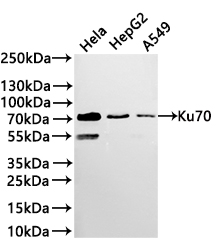
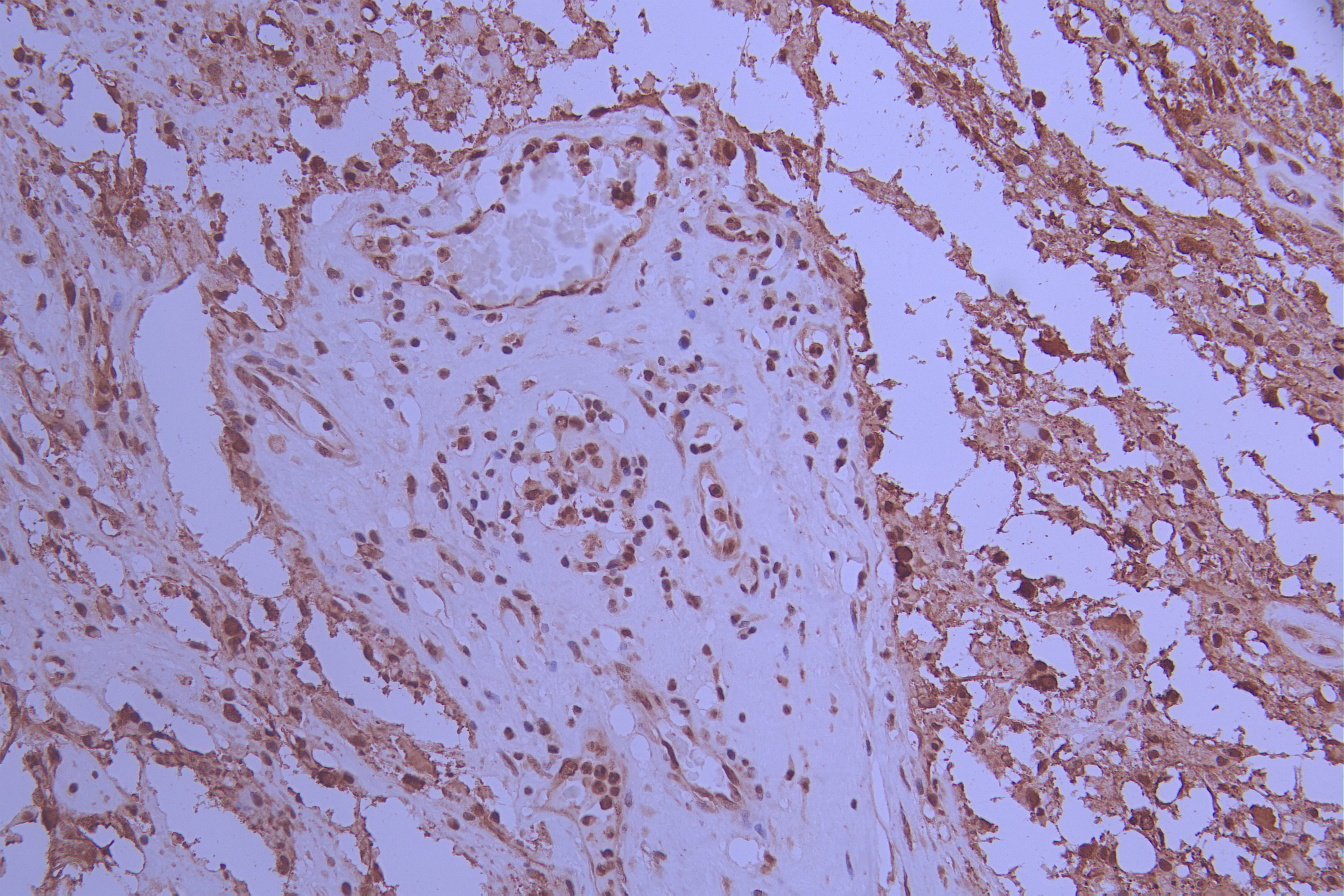
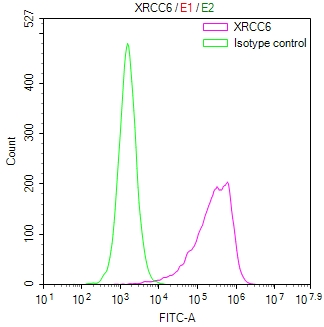
Validation data demonstrates robust performance across multiple applications. Western blot analysis confirms specific detection of the expected 70 kDa band across a diverse panel of human cell lines including JURKAT, HEK293, A431, HeLa, HepG2, and A549, indicating reliable performance across different cellular contexts. Immunohistochemistry validation in paraffin-embedded human glioma tissue shows clear nuclear staining patterns consistent with Ku70's known localization. Flow cytometry analysis in HepG2 cells demonstrates distinct positive population shifts compared to isotype controls, confirming utility for single-cell analysis of intracellular targets.
This antibody supports investigations into DNA damage response pathways, cancer therapeutics targeting repair mechanisms, and studies examining the interplay between genomic maintenance and cellular fate decisions.
There are currently no reviews for this product.





