
Call us
301-363-4651 (Available 9 a.m. to 5 p.m. CST from Monday to Friday)

| Code | CSB-RA026293MA1HU |
| Size | US$210 |
| Order now | |
| Image |
|
| Have Questions? | Leave a Message or Start an on-line Chat |
| Application | Recommended Dilution |
|---|---|
| WB | 1:500-1:2000 |
| IF | 1:50-1:200 |
| FC | 1:50-1:200 |
YWHAZ, also known as 14-3-3 protein zeta/delta, belongs to the highly conserved 14-3-3 protein family that plays fundamental roles in signal transduction, cell cycle regulation, and apoptotic pathways. This adapter protein functions by binding to phosphoserine-containing motifs on target proteins, thereby modulating their activity, localization, and stability. Its involvement in diverse cellular processes including metabolism, protein trafficking, and stress responses makes YWHAZ a valuable target for researchers investigating cancer biology, neurodegenerative diseases, and cellular signaling networks.
This recombinant monoclonal antibody, clone 19G7E9, offers the consistency and reproducibility that demanding research applications require. Because recombinant antibodies are produced from defined sequences rather than hybridoma-derived sources, you can expect reliable lot-to-lot performance across long-term studies and collaborative projects. The antibody is affinity-purified and supplied in a glycerol-based buffer optimized for stability during storage.
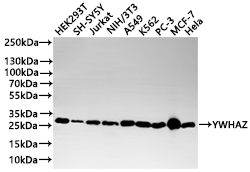
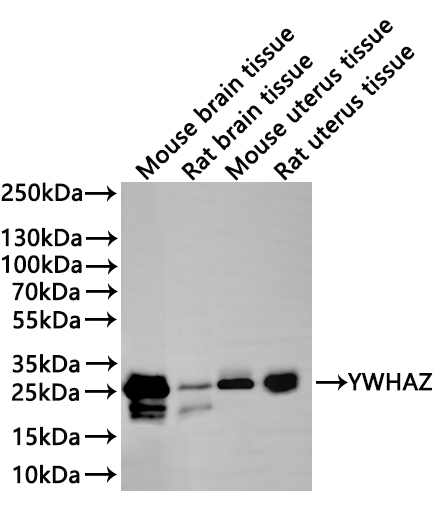
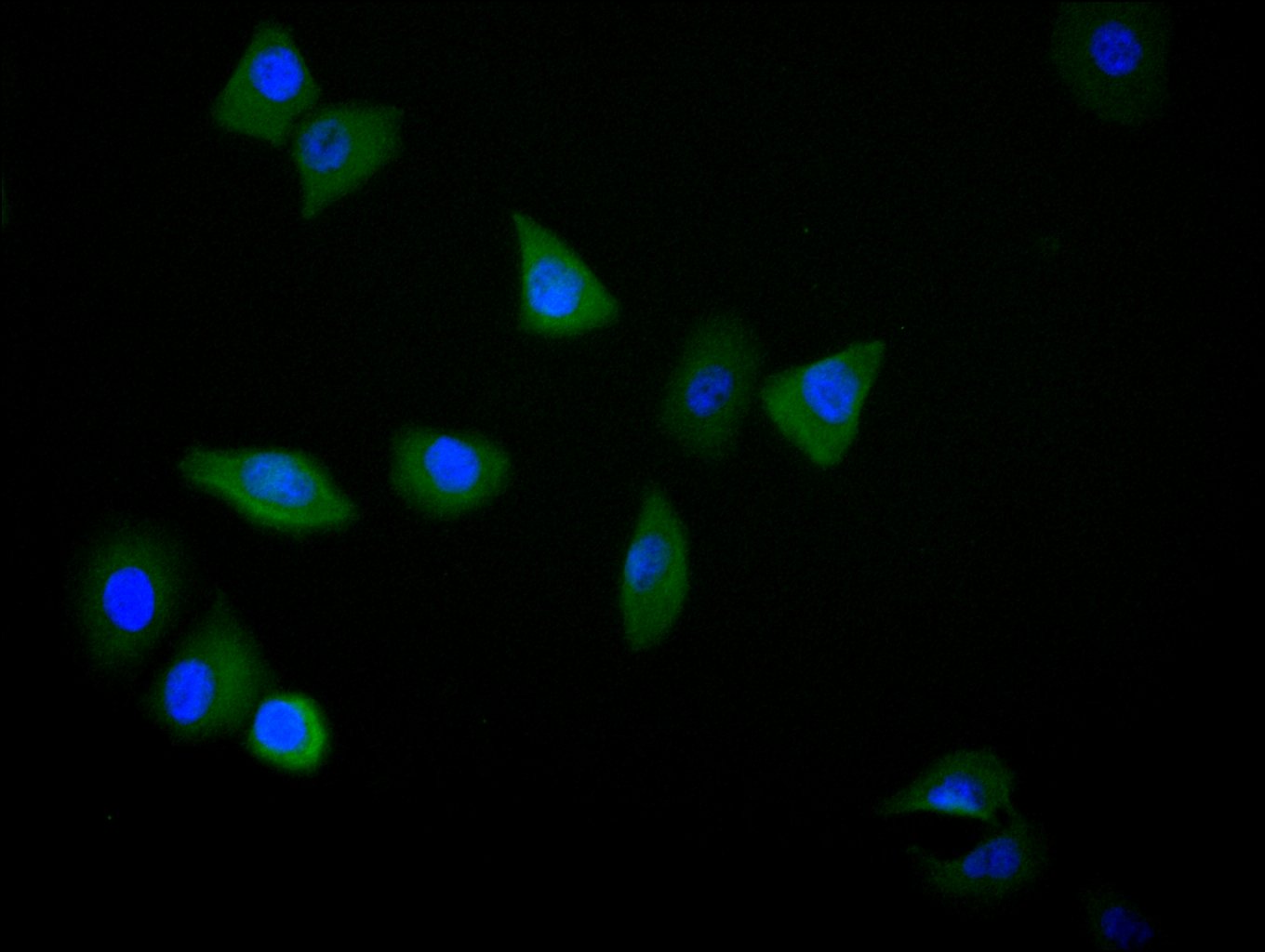
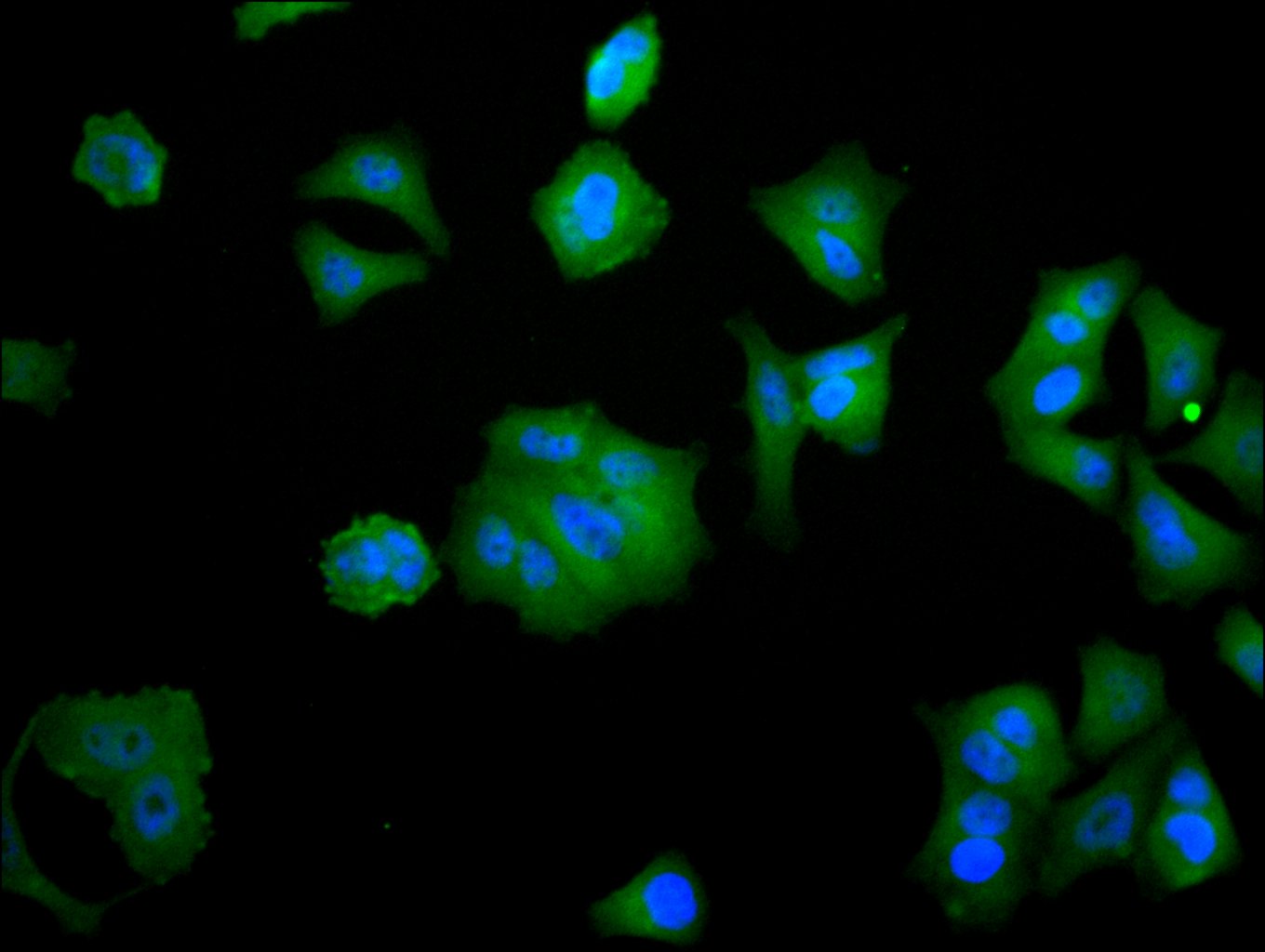
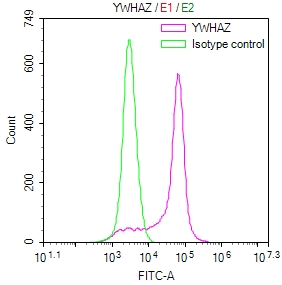
Validation studies demonstrate robust performance across multiple experimental platforms. In Western blot applications, the antibody detects a clean band at the expected 28 kDa molecular weight across an extensive panel of human cell lines including HEK293T, SH-SY5Y, Jurkat, A549, K562, PC-3, MCF-7, and HeLa cells. Cross-species reactivity has been confirmed through successful detection in mouse and rat brain and uterus tissue lysates, expanding its utility for comparative and translational studies. Immunofluorescence staining has been validated in HeLa and MCF-7 cells, revealing cytoplasmic localization patterns consistent with YWHAZ's known cellular distribution. Flow cytometry applications have been demonstrated using A431 cells with clear separation from isotype controls.
This versatile antibody supports researchers exploring 14-3-3 protein biology, signal transduction mechanisms, and disease-relevant pathways across human and rodent model systems.
There are currently no reviews for this product.





