
Call us
301-363-4651 (Available 9 a.m. to 5 p.m. CST from Monday to Friday)

| Code | CSB-RA103439A0HU |
| Size | US$210 |
| Order now | |
| Image |
|
| Have Questions? | Leave a Message or Start an on-line Chat |
| Application | Recommended Dilution |
|---|---|
| WB | 1:500-1:2000 |
| IF | 1:50-1:200 |
| FC | 1:50-1:200 |
Alpha-actinin-4 (ACTN4) serves as a critical actin-crosslinking protein that plays essential roles in cytoskeletal organization, cell motility, and adhesion dynamics. Beyond its structural functions, ACTN4 has garnered significant research attention due to its involvement in focal segmental glomerulosclerosis (FSGS), where mutations in the ACTN4 gene directly contribute to kidney disease pathology. The protein's dual role in both normal cellular architecture and disease mechanisms makes it a compelling target for researchers investigating cytoskeletal biology, cancer metastasis, and renal pathophysiology.
This recombinant monoclonal antibody, generated against a synthetic peptide derived from human ACTN4, offers the reproducibility and consistency that demanding experimental workflows require. As a sequence-defined reagent produced through recombinant technology, it eliminates the lot-to-lot variability that can compromise longitudinal studies and multi-site collaborations. The rabbit IgG format provides excellent signal-to-noise characteristics across multiple detection platforms.
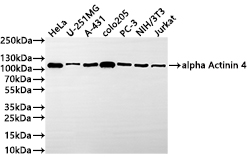
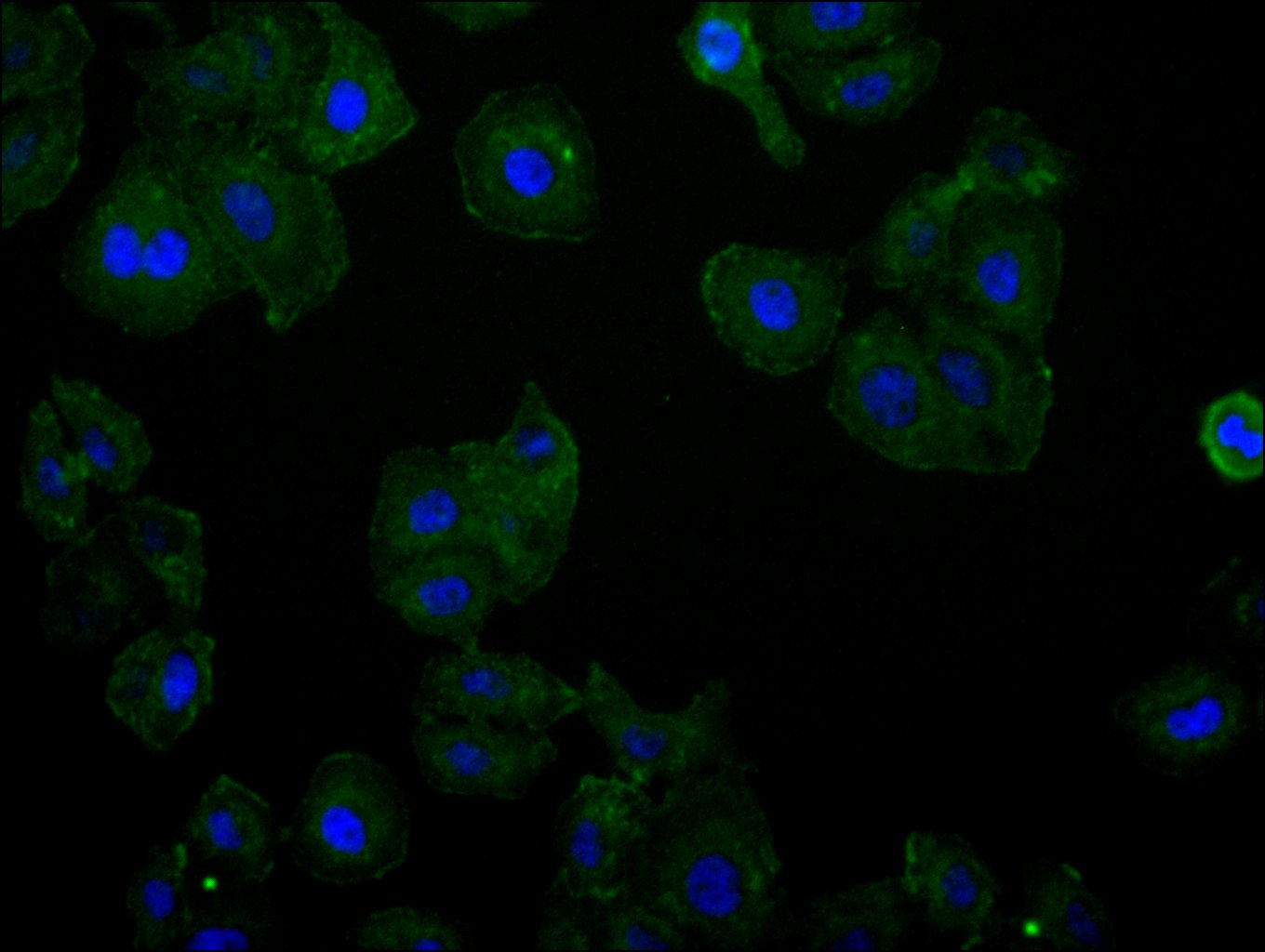
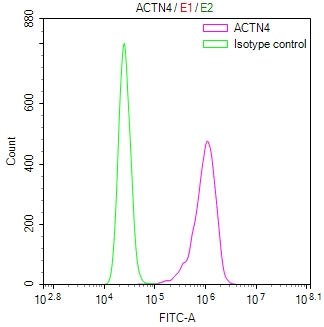
Validation studies demonstrate robust performance across diverse applications. Western blot analysis confirms specific detection at the expected 105 kDa molecular weight across an extensive panel of human cell lines including HeLa, U-251MG, A-431, COLO205, PC-3, and Jurkat, as well as the mouse NIH/3T3 line, supporting cross-species reactivity for human and mouse samples. Immunofluorescence staining in HeLa cells reveals clear cytoplasmic localization patterns consistent with ACTN4's known distribution, while flow cytometry validation provides quantitative single-cell analysis capabilities.
This antibody supports researchers investigating cytoskeletal dynamics, epithelial-mesenchymal transition, podocyte biology, and FSGS disease mechanisms, offering the application flexibility needed to address complex biological questions from multiple experimental angles.
There are currently no reviews for this product.





