
Call us
301-363-4651 (Available 9 a.m. to 5 p.m. CST from Monday to Friday)

| Code | CSB-RA116104A0HU |
| Size | US$210 |
| Order now | |
| Image |
|
| Have Questions? | Leave a Message or Start an on-line Chat |
| Application | Recommended Dilution |
|---|---|
| WB | 1:500-1:5000 |
| IHC | 1:50-1:200 |
| FC | 1:50-1:200 |
AGL, also known as glycogen debranching enzyme, plays an essential role in glycogen metabolism by catalyzing two distinct enzymatic activities: 4-alpha-glucanotransferase and amylo-alpha-1,6-glucosidase. This bifunctional enzyme is critical for the complete breakdown of glycogen, and mutations in AGL are associated with glycogen storage disease type III, making it a significant target for metabolic disease research, liver pathology studies, and investigations into muscle disorders.
This recombinant monoclonal antibody, clone 8D4, offers the reproducibility and consistency that demanding research workflows require. Produced using recombinant technology with a defined sequence, this antibody eliminates the lot-to-lot variability that can complicate long-term studies or multi-site collaborations. The rabbit IgG format and affinity-chromatography purification ensure high specificity for your target.
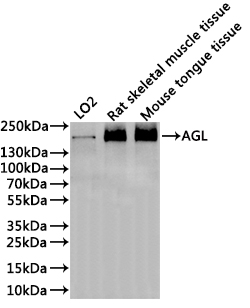
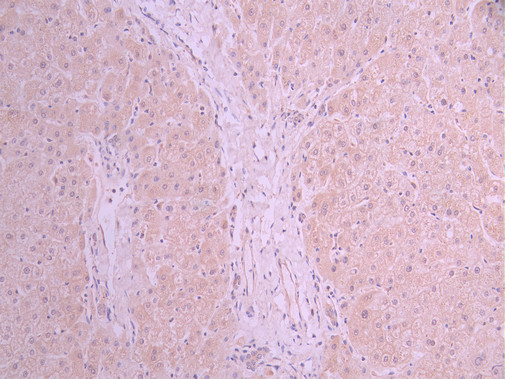
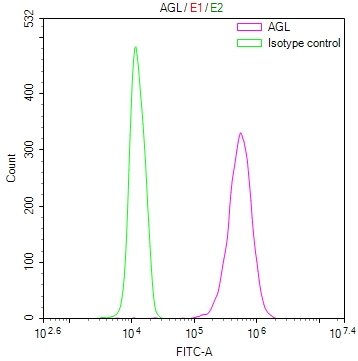
Validation studies demonstrate robust performance across multiple applications and sample types. Western blot analysis confirms detection of AGL at the expected 175 kDa molecular weight in human LO2 whole cell lysate, rat skeletal muscle tissue, and mouse tongue tissue, providing researchers with confidence when working across these species. Immunohistochemistry validation in paraffin-embedded human liver tissue shows clear staining using standard antigen retrieval protocols, while flow cytometry analysis in HeLa cells demonstrates effective intracellular detection with appropriate signal separation from isotype controls.
The versatility across ELISA, immunohistochemistry, and flow cytometry applications gives researchers flexibility to investigate AGL expression and localization using complementary approaches. Whether you are studying glycogen metabolism, characterizing metabolic disorders, or examining tissue-specific expression patterns in liver and muscle, this antibody provides a reliable tool for advancing your research.
There are currently no reviews for this product.





