
Call us
301-363-4651 (Available 9 a.m. to 5 p.m. CST from Monday to Friday)

| Code | CSB-RA001950MA3HU |
| Size | $49.9 |
| Order now | |
| Promotion |

|
| Image |
|
| Have Questions? | Leave a Message or Start an on-line Chat |
| Application | Recommended Dilution |
|---|---|
| IF | 1:50-1:200 |
| FC | 1:50-1:200 |
Amyloid precursor protein (APP) stands at the center of Alzheimer's disease research as the source of amyloid-beta peptides, the primary components of senile plaques characteristic of this neurodegenerative condition. Beyond its pathological significance, APP plays essential roles in neuronal development, synaptic plasticity, and cell adhesion, making it a critical target for investigators studying both normal brain function and disease mechanisms.
This recombinant monoclonal antibody against human APP, clone 15A10, offers the reproducibility and consistency that demanding research applications require. Produced using recombinant technology with a defined sequence, this antibody eliminates the lot-to-lot variability inherent in traditional hybridoma-derived reagents, ensuring your experimental results remain comparable across studies and over time. The human IgG1 isotype format and affinity chromatography purification deliver a high-quality reagent suitable for sensitive detection methods.
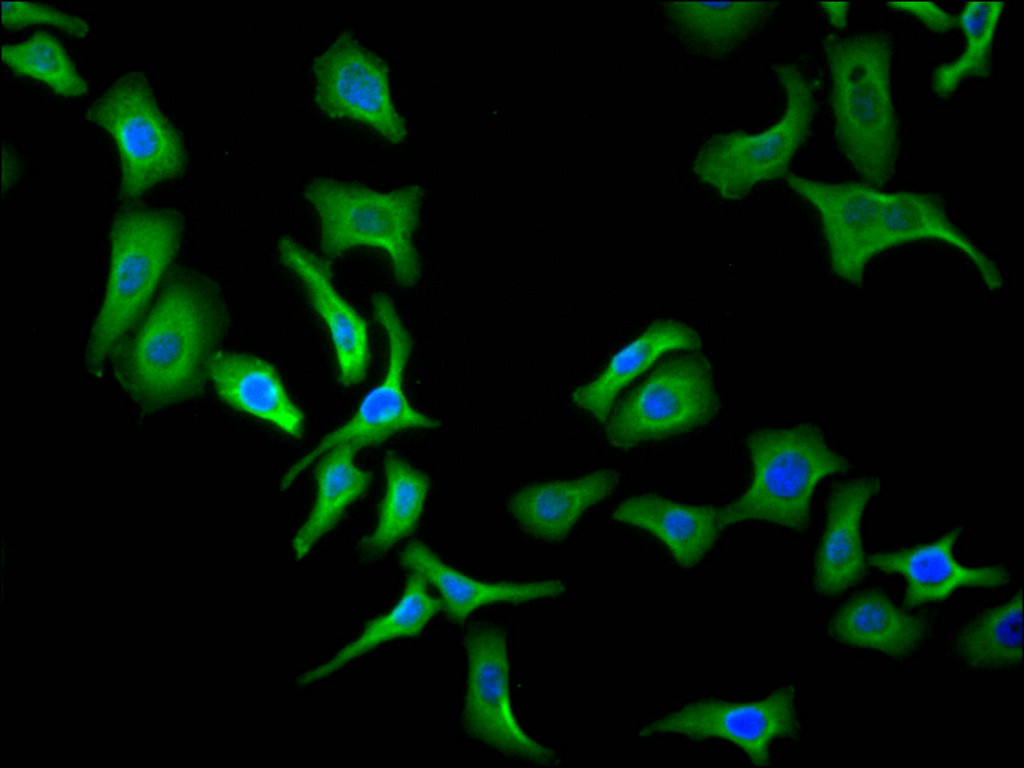
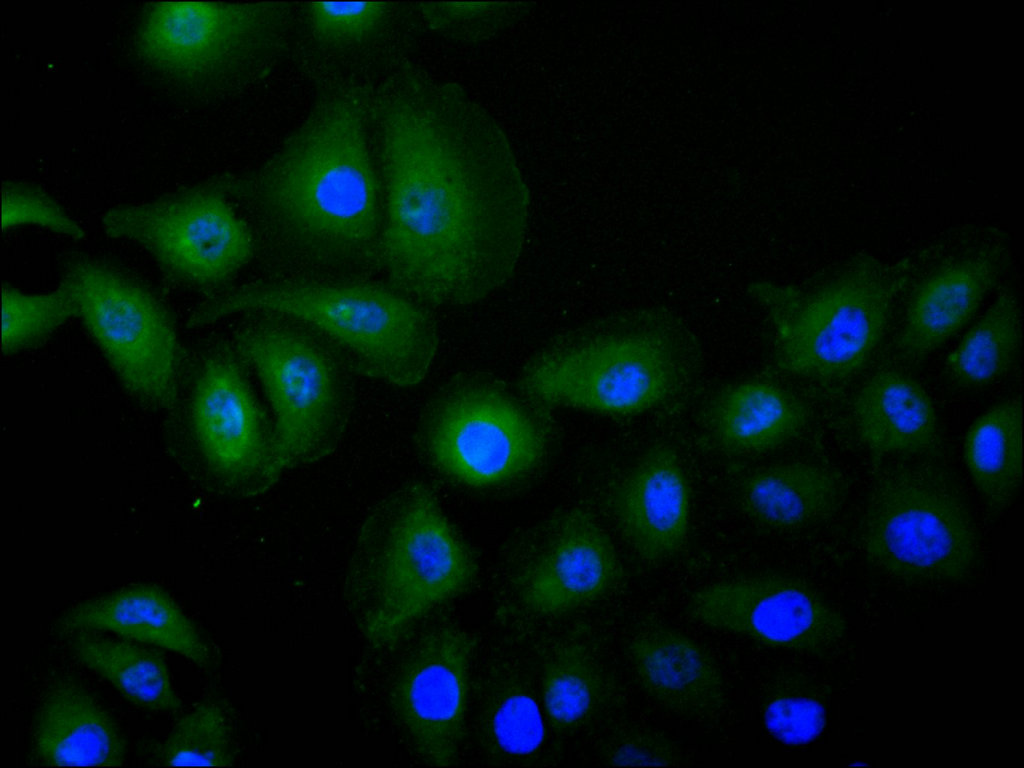
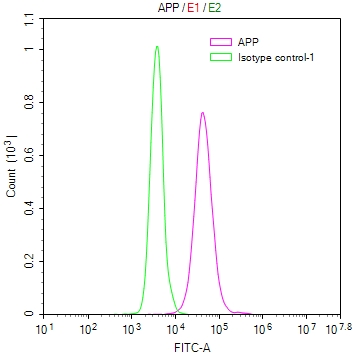
Validation studies demonstrate reliable performance in immunofluorescence and flow cytometry applications. Immunofluorescence staining has been successfully performed in both HeLa and A549 cell lines at dilutions of 1:30, revealing clear cellular localization when counter-stained with DAPI. Flow cytometry analysis of HeLa cells shows distinct positive signal separation from isotype control, confirming specific target recognition in fixed and permeabilized samples. These validated protocols provide researchers with flexible starting points for their own experimental optimization.
Whether you are investigating APP processing pathways, screening therapeutic candidates targeting amyloid production, or characterizing cellular models of neurodegeneration, this antibody provides a dependable tool for your neuroscience research. The unconjugated format allows compatibility with your preferred secondary detection systems across multiple experimental platforms.
There are currently no reviews for this product.





