
Call us
301-363-4651 (Available 9 a.m. to 5 p.m. CST from Monday to Friday)

| Code | CSB-RA994273A0HU |
| Size | US$210 |
| Order now | |
| Image |
|
| Have Questions? | Leave a Message or Start an on-line Chat |
| Application | Recommended Dilution |
|---|---|
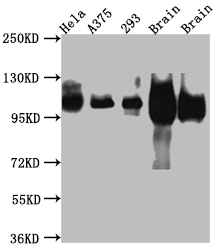
| WB | 1:500-1:5000 |
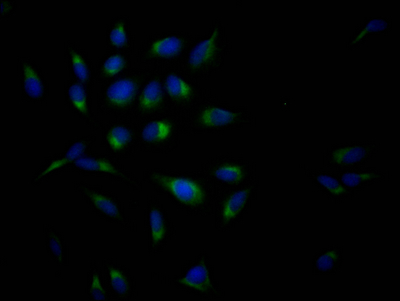
| IF | 1:20-1:200 |
Amyloid precursor protein (APP) stands at the center of Alzheimer's disease research as the source of amyloid-beta peptides, the primary components of senile plaques that characterize this devastating neurodegenerative condition. Beyond its role in pathology, APP participates in neuronal development, synaptic formation, and cell signaling, making it an essential target for researchers investigating both normal brain function and disease mechanisms. The complex proteolytic processing of APP by secretases generates multiple biologically active fragments, each with distinct functions in cellular physiology and potential contributions to neurodegeneration.
This recombinant monoclonal antibody, clone 6F10, offers the reproducibility and consistency that demanding neuroscience research requires. Produced using recombinant technology with a defined sequence, it eliminates the lot-to-lot variability that can compromise longitudinal studies or multi-site collaborations. The rabbit IgG format provides excellent signal-to-noise characteristics across multiple detection platforms.
Validation studies demonstrate robust performance in Western blot applications across human cell lines including HeLa, A375, and HEK293, as well as rat and mouse brain tissue lysates, confirming reliable cross-species reactivity for translational research models. The observed band at approximately 100 kDa, slightly higher than predicted molecular weights, reflects the extensive glycosylation characteristic of mature APP. Immunofluorescence validation in HeLa cells reveals clear cellular localization patterns, enabling subcellular distribution studies.
With verified performance in ELISA, Western blot, and immunofluorescence applications, this antibody supports diverse experimental approaches from quantitative protein analysis to spatial localization studies. Researchers investigating amyloid processing, neurodegeneration mechanisms, or APP biology will find this reagent a dependable tool for advancing their work.
There are currently no reviews for this product.





