
Call us
301-363-4651 (Available 9 a.m. to 5 p.m. CST from Monday to Friday)

| Code | CSB-RA558416A0HU |
| Size | US$210 |
| Order now | |
| Image |
|
| Have Questions? | Leave a Message or Start an on-line Chat |
| Application | Recommended Dilution |
|---|---|
| WB | 1:500-1:5000 |
| IHC | 1:50-1:200 |
ARHGDIA, also known as Rho GDP-dissociation inhibitor 1 or RhoGDI alpha, serves as a critical regulator of Rho family GTPases by preventing the release of GDP and maintaining these signaling proteins in their inactive cytosolic state. This regulatory function places ARHGDIA at the center of numerous cellular processes including cytoskeletal organization, cell migration, and proliferation, making it a valuable target for researchers investigating signal transduction pathways and their roles in both normal physiology and disease states.
This recombinant monoclonal antibody, clone 14G5, offers the reproducibility and consistency that demanding experimental workflows require. Generated through recombinant technology using a synthesized peptide derived from human ARHGDIA, this antibody provides sequence-defined specificity that eliminates the lot-to-lot variability often encountered with traditional hybridoma-produced antibodies. The result is reliable performance across extended research programs where experimental continuity matters.
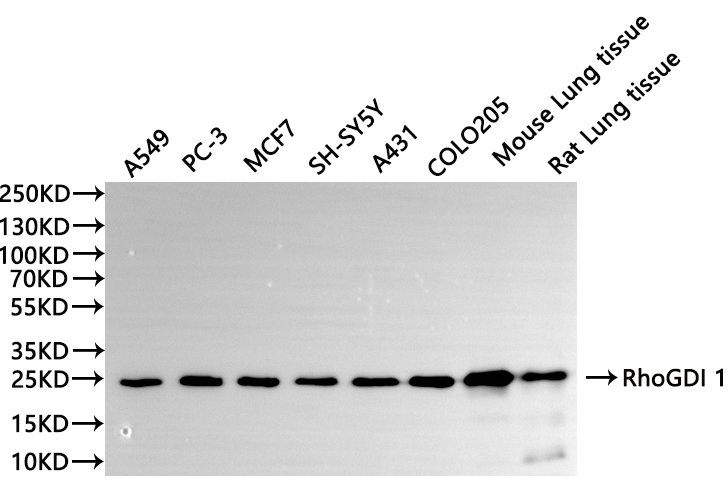
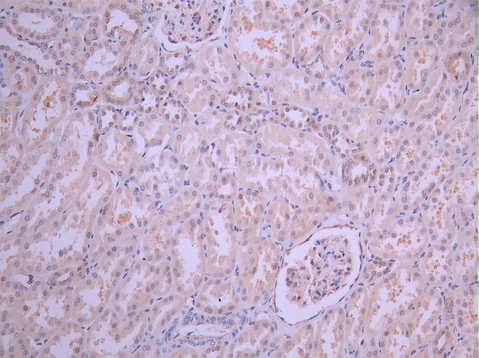
Validation studies demonstrate robust performance across multiple applications and sample types. In western blot analysis, the antibody successfully detects ARHGDIA in a diverse panel of human cell lines including A549, PC-3, MCF7, SH-SY5Y, A431, and COLO205, as well as mouse and rat lung tissue lysates. The observed band at approximately 25 kDa, slightly higher than the predicted 23 kDa molecular weight, likely reflects post-translational modifications (such as glycosylation and phosphorylation) common to this protein. This cross-species reactivity across human, mouse, and rat samples provides flexibility for researchers working with different model systems. Immunohistochemistry validation in paraffin-embedded human kidney tissue further confirms the antibody's utility for tissue-based studies.
Whether investigating Rho GTPase signaling dynamics or exploring ARHGDIA's emerging connections to nephrotic syndrome research, this antibody delivers the specificity and versatility needed for rigorous signal transduction studies.
There are currently no reviews for this product.





