
Call us
301-363-4651 (Available 9 a.m. to 5 p.m. CST from Monday to Friday)

| Code | CSB-RA164774A0HU |
| Size | US$210 |
| Order now | |
| Image |
|
| Have Questions? | Leave a Message or Start an on-line Chat |
| Application | Recommended Dilution |
|---|---|
| IHC | 1:50-1:200 |
| FC | 1:50-1:200 |
ARID1A serves as a critical subunit of the SWI/SNF chromatin remodeling complex, where it functions as BAF250a to regulate gene expression through ATP-dependent nucleosome repositioning. This protein plays essential roles in cell cycle control, DNA repair, and differentiation, making it a significant focus in cancer research given its frequent mutation across multiple tumor types, including ovarian clear cell carcinoma, endometrial cancer, and gastric adenocarcinoma.
This recombinant monoclonal antibody, clone 22A7, offers the experimental consistency that demanding research protocols require. Developed through recombinant technology with a defined sequence, it eliminates the lot-to-lot variability that can compromise longitudinal studies or multi-site collaborations. The rabbit host and monoclonal nature ensure high specificity for human ARID1A, providing reliable detection across your experimental timeline.
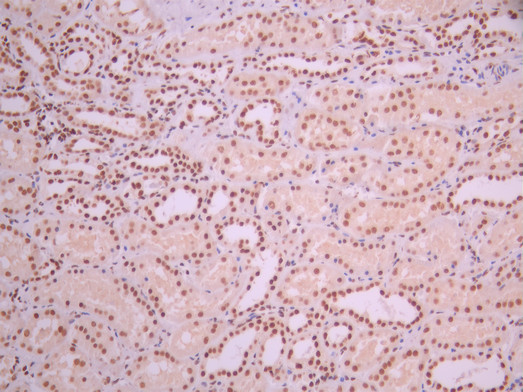
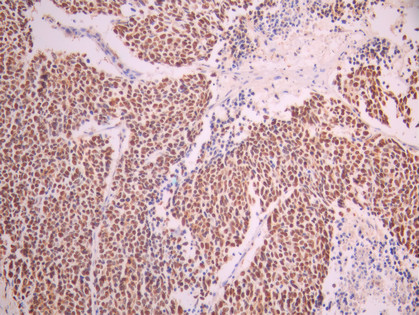
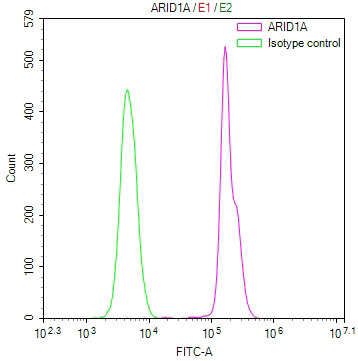
Validation studies demonstrate robust performance in immunohistochemistry, with successful staining confirmed in paraffin-embedded human kidney tissue and human lung cancer specimens at 1:100 dilution using citrate buffer antigen retrieval. This tissue-level validation proves particularly valuable for researchers investigating ARID1A expression patterns in both normal and malignant contexts. Flow cytometry applications have been validated using SH-SY5Y neuroblastoma cells, showing clear positive signal separation from isotype controls, enabling quantitative analysis of ARID1A expression at the single-cell level.
The antibody arrives purified by affinity chromatography in a glycerol-containing buffer optimized for long-term storage stability. Whether you are characterizing ARID1A loss in tumor samples, investigating chromatin remodeling dynamics, or exploring signal transduction pathways influenced by SWI/SNF complex function, this antibody provides a dependable tool for advancing your research objectives.
There are currently no reviews for this product.





