
Call us
301-363-4651 (Available 9 a.m. to 5 p.m. CST from Monday to Friday)

| Code | CSB-RA166706A0HU |
| Size | US$210 |
| Order now | |
| Image |
|
| Have Questions? | Leave a Message or Start an on-line Chat |
| Application | Recommended Dilution |
|---|---|
| IHC | 1:50-1:200 |
| FC | 1:20-1:200 |
ATM (Ataxia Telangiectasia Mutated) is a serine/threonine protein kinase that serves as a master regulator of the DNA damage response, particularly in detecting and signaling double-strand breaks. This critical role in maintaining genomic integrity makes ATM a central focus in cancer research, where its dysfunction contributes to tumor development and influences therapeutic responses to DNA-damaging agents. Understanding ATM expression and localization provides valuable insights into cellular repair mechanisms and potential vulnerabilities in malignant tissues.
This recombinant monoclonal antibody, clone 3G11, offers researchers the consistency and reliability that comes with sequence-defined production. Unlike traditional hybridoma-derived antibodies, recombinant technology ensures that every lot performs identically to the last, eliminating the variability that can compromise longitudinal studies or multi-site collaborations. The antibody was raised in rabbit against a synthetic peptide derived from human ATM, providing defined epitope targeting for reproducible results.
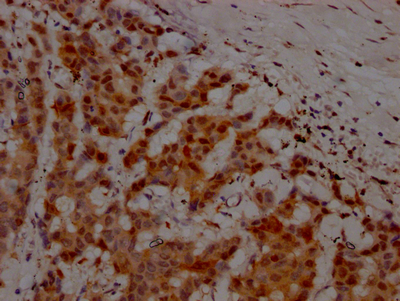
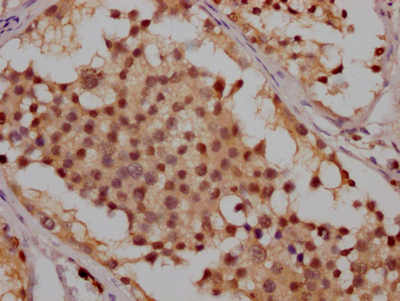
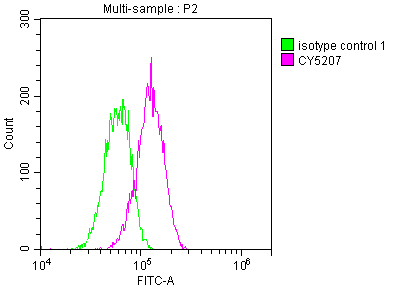
Validation studies demonstrate robust performance across multiple applications. Immunohistochemistry testing in paraffin-embedded human breast cancer tissue reveals clear detection of ATM, making this antibody suitable for investigating ATM status in oncology specimens. Additional IHC validation in human testis tissue confirms reliable staining in normal tissue contexts as well. For cellular analysis, flow cytometry experiments using HeLa cells show distinct positive signal separation from isotype controls, enabling quantitative assessment of ATM expression at the single-cell level.
Whether you are characterizing ATM expression patterns in tumor samples, investigating DNA damage signaling pathways, or screening for ATM status in cancer models, this antibody provides the workflow flexibility needed for epigenetics, nuclear signaling, and oncology research programs.
There are currently no reviews for this product.





