
Call us
301-363-4651 (Available 9 a.m. to 5 p.m. CST from Monday to Friday)

| Code | CSB-RA782732A0HU |
| Size | US$210 |
| Order now | |
| Image |
|
| Have Questions? | Leave a Message or Start an on-line Chat |
| Application | Recommended Dilution |
|---|---|
| IHC | 1:50-1:200 |
Manganese superoxide dismutase (SOD2) serves as the primary mitochondrial defense against oxidative stress, catalyzing the conversion of superoxide radicals into hydrogen peroxide and oxygen. The acetylation status of SOD2 at lysine 68 represents a critical regulatory mechanism that modulates enzyme activity, with deacetylation by SIRT3 enhancing antioxidant capacity. This post-translational modification has emerged as a significant research focus in cancer metabolism, cardiovascular disease, and neurodegeneration, where mitochondrial oxidative balance plays a central role in disease progression.
This recombinant monoclonal antibody, clone 23G5, specifically recognizes acetylated SOD2 at the K68 residue, enabling researchers to distinguish between active and inactive enzyme populations within their experimental systems. As a recombinant antibody produced from a defined sequence, it delivers the lot-to-lot consistency essential for longitudinal studies and reproducible quantification of acetylation dynamics. The rabbit IgG format and affinity-chromatography purification ensure high specificity for detecting this particular post-translational modification.
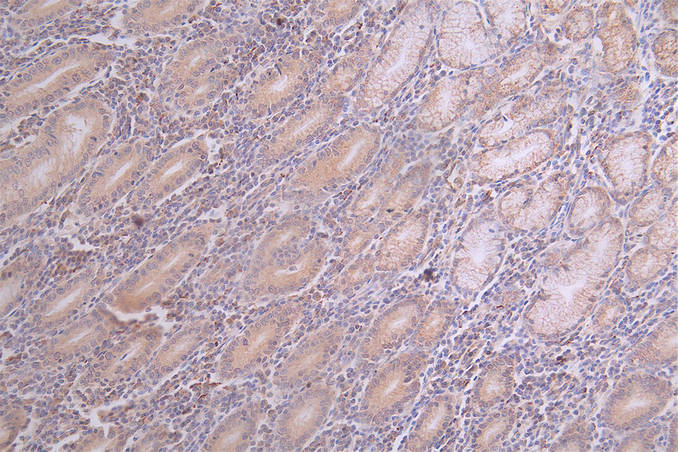
Validation in immunohistochemistry demonstrates reliable performance in paraffin-embedded human breast cancer tissue, where the antibody was tested at 1:100 dilution using citrate buffer antigen retrieval and standard polymer detection. This tissue-based validation confirms suitability for investigating SOD2 acetylation patterns in archival clinical specimens, supporting translational research applications.
With validated performance in ELISA and immunohistochemistry, this antibody provides researchers studying metabolic reprogramming, mitochondrial dysfunction, and redox signaling with a dependable tool for interrogating acetyl-SOD2 levels across diverse experimental contexts in human samples.
There are currently no reviews for this product.





