
Call us
301-363-4651 (Available 9 a.m. to 5 p.m. CST from Monday to Friday)

| Code | CSB-RA005034MA2HU |
| Size | $49.9 |
| Order now | |
| Promotion |

|
| Image |
|
| Have Questions? | Leave a Message or Start an on-line Chat |
| Application | Recommended Dilution |
|---|---|
| ELISA | 1:5000-1:50000 |
E-cadherin, encoded by the CDH1 gene, serves as a cornerstone of epithelial tissue architecture and cellular adhesion. This calcium-dependent transmembrane glycoprotein mediates homophilic cell-cell interactions that maintain tissue integrity, and its dysregulation has profound implications across multiple research domains. Loss or downregulation of E-cadherin is a hallmark of epithelial-to-mesenchymal transition, a process central to cancer metastasis, making it an essential marker for researchers investigating tumor progression, invasion, and developmental biology pathways.
This recombinant monoclonal antibody, clone 10H4, offers the reproducibility and consistency that demanding research applications require. Because recombinant antibodies are produced from defined genetic sequences rather than traditional hybridoma methods, researchers benefit from lot-to-lot uniformity that supports longitudinal studies and ensures experimental reproducibility across collaborative projects. The antibody is raised against recombinant human CDH1 protein and demonstrates validated reactivity with human samples.
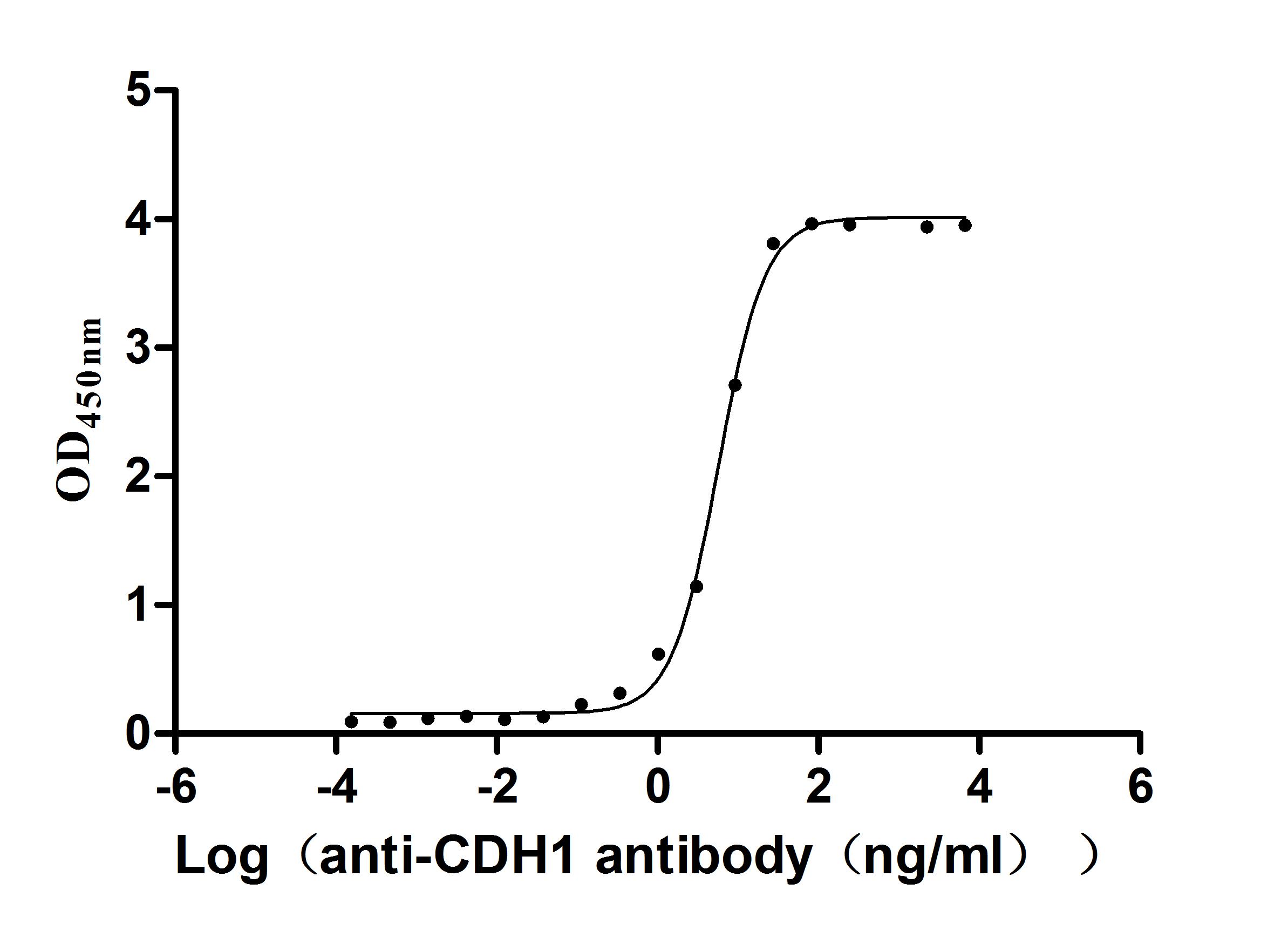
Functional ELISA validation confirms the antibody's robust binding characteristics, with EC50 values in the range of 5.151 to 6.358 ng/mL when tested against immobilized human CDH1 protein. This high-affinity binding supports reliable detection in ELISA-based workflows, with recommended working dilutions spanning 1:5000 to 1:50000, providing flexibility to optimize signal-to-noise ratios for individual experimental conditions.
Supplied in a liquid format with glycerol-based buffer for stability, this affinity-purified antibody is well-suited for researchers exploring cancer biology, signal transduction mechanisms, and developmental processes where E-cadherin function and expression patterns provide critical insights into cellular behavior and disease progression.
There are currently no reviews for this product.





