
Call us
301-363-4651 (Available 9 a.m. to 5 p.m. CST from Monday to Friday)

| Code | CSB-RA219236A0HU |
| Size | US$210 |
| Order now | |
| Image |
|
| Have Questions? | Leave a Message or Start an on-line Chat |
| Application | Recommended Dilution |
|---|---|
| WB | 1:500-1:2000 |
| IF | 1:50-1:200 |
| FC | 1:50-1:200 |
Cyclin-dependent kinase 5 occupies a unique position among the CDK family, functioning primarily in post-mitotic neurons where it regulates cytoskeletal dynamics, synaptic plasticity, and neuronal migration. Unlike its cell cycle-associated relatives, CDK5 requires activation by non-cyclin partners p35 and p39, making it central to neurodegenerative disease research, particularly studies investigating tau phosphorylation in Alzheimer's disease pathology. Beyond the nervous system, emerging evidence implicates CDK5 in cancer progression, pain signaling, and insulin secretion, broadening its relevance across multiple research disciplines.
This recombinant monoclonal antibody, clone 6E10, offers the reproducibility essential for longitudinal studies and multi-site collaborations. Developed against a synthetic peptide derived from human CDK5 and produced using recombinant technology in rabbit, it delivers sequence-defined consistency that eliminates the lot-to-lot variability inherent in traditional hybridoma-derived antibodies.
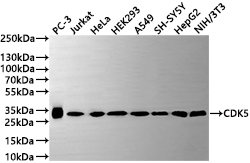
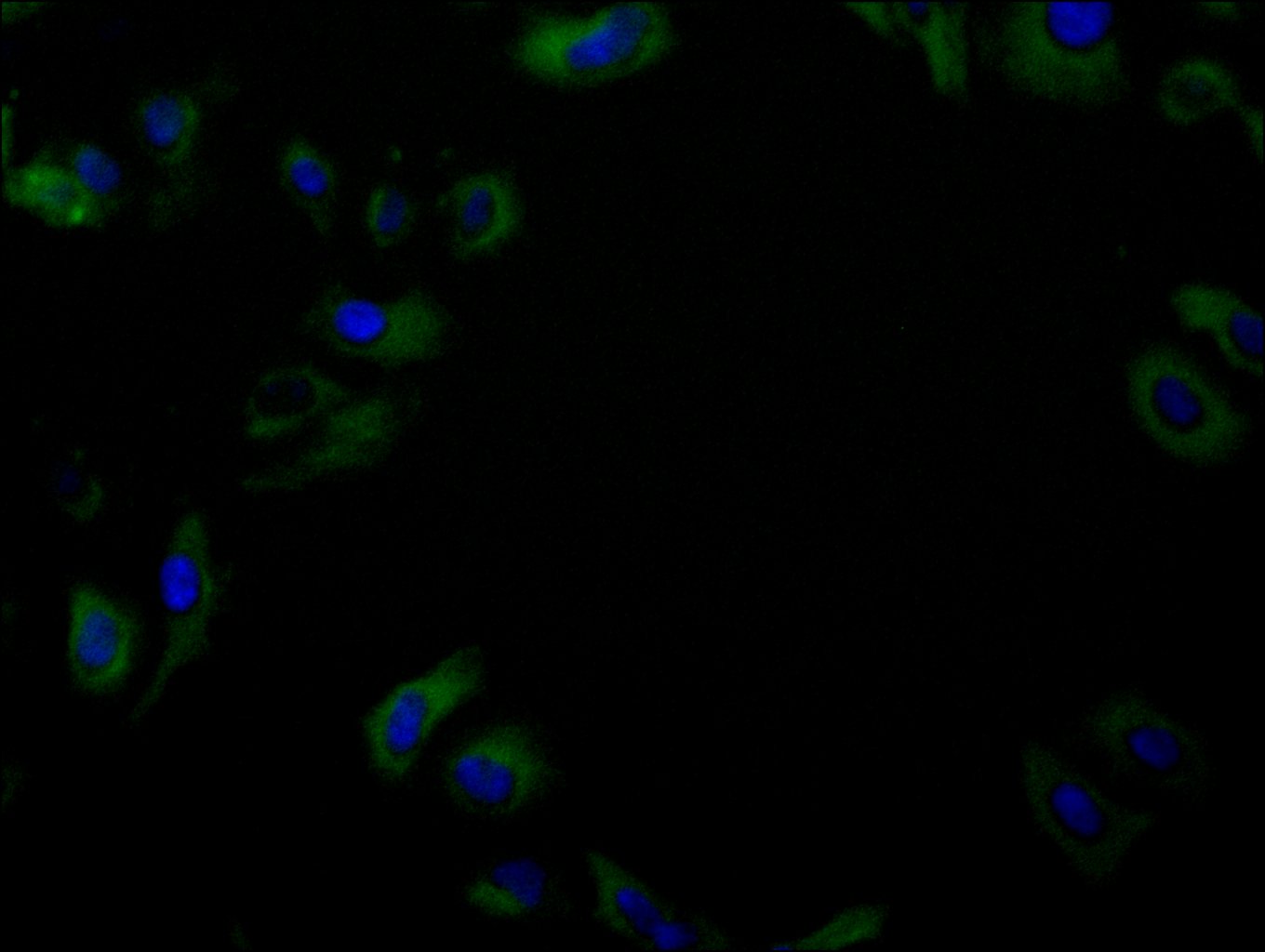
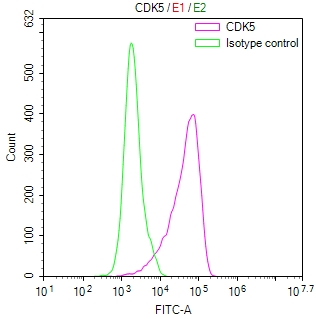
Validation across diverse experimental platforms demonstrates genuine workflow flexibility. Western blot analysis detects CDK5 across an extensive panel of human cell lines including PC-3, Jurkat, HeLa, HEK293, A549, SH-SY5Y, and HepG2, as well as mouse NIH/3T3 cells, confirming cross-species reactivity with both human and mouse samples. The observed band at 33 kDa runs slightly below the predicted 35 kDa molecular weight, a common occurrence attributable to protein processing or conformational factors affecting electrophoretic mobility. Immunofluorescence staining in HeLa cells reveals clear cytoplasmic localization, while flow cytometry analysis in A431 cells shows distinct positive population shifts compared to isotype controls.
Whether investigating neurodegeneration mechanisms, characterizing CDK5 expression in cancer models, or exploring its emerging roles in metabolic regulation, this antibody provides the validated performance and recombinant reliability your research demands.
There are currently no reviews for this product.





