CIRBP Recombinant Monoclonal Antibody

Code CSB-RA821323A0HU
Size US$210
Order now
Image
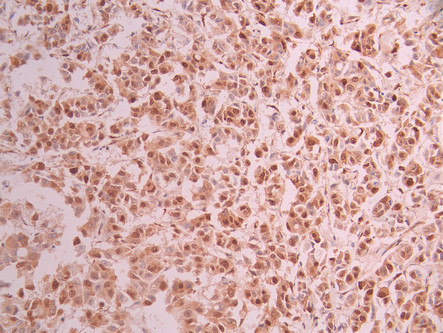
  • IHC image of CSB-RA821323A0HU diluted at 1:100 and staining in paraffin-embedded human breast cancer performed on a Leica BondTM system. After dewaxing and hydration, antigen retrieval was mediated by high pressure in a citrate buffer (pH 6.0). Section was blocked with 10% normal goat serum 30min at RT. Then primary antibody (1% BSA) was incubated at 4°C overnight. The primary is detected by a Goat anti-rabbit polymer IgG labeled by HRP and visualized using 0.05% DAB.
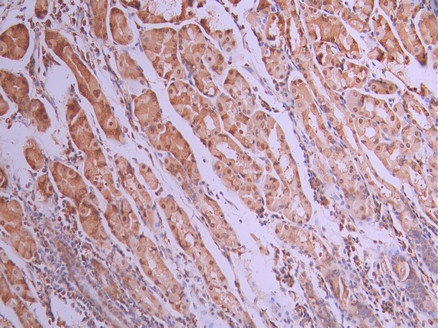
  • IHC image of CSB-RA821323A0HU diluted at 1:100 and staining in paraffin-embedded human stomach tissue performed on a Leica BondTM system. After dewaxing and hydration, antigen retrieval was mediated by high pressure in a citrate buffer (pH 6.0). Section was blocked with 10% normal goat serum 30min at RT. Then primary antibody (1% BSA) was incubated at 4°C overnight. The primary is detected by a Goat anti-rabbit polymer IgG labeled by HRP and visualized using 0.05% DAB.
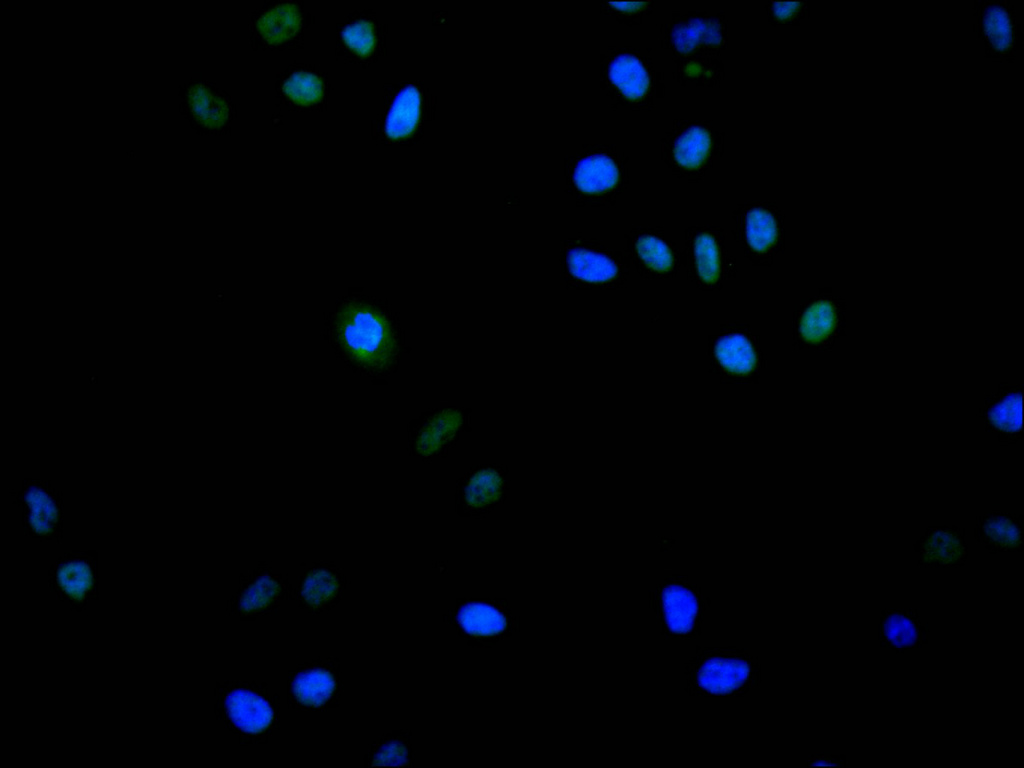
  • Immunofluorescence staining of Hela cell with CSB-RA821323A0HU at 1:50, counter-stained with DAPI. The cells were fixed in 4% formaldehyde, permeabilized using 0.2% Triton X-100 and blocked in 10% normal Goat Serum. The cells were then incubated with the antibody overnight at 4°C. The secondary antibody was Alexa Fluor 488-congugated AffiniPure Goat Anti-Rabbit IgG(H+L).
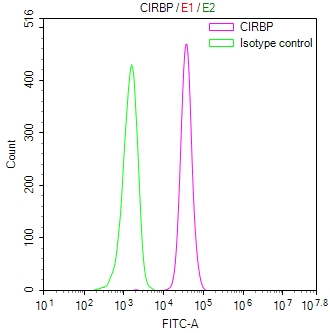
  • Overlay Peak curve showing A549 cells stained with CSB-RA821323A0HU (red line) at 1:100. The cells were fixed in 4% formaldehyde and permeated by 0.2% TritonX-100 for 10min. Then 10% normal goat serum to block non-specific protein-protein interactions followed by the antibody (1ug/1*106cells) for 45min at 4℃. The secondary antibody used was FITC-conjugated goat anti-rabbit IgG (H+L) at 1/200 dilution for 35min at 4℃.Control antibody (green line) was Rabbit IgG (1ug/1*106cells) used under the same conditions. Acquisition of >10,000 events was performed.
Have Questions? Leave a Message or Start an on-line Chat

Product Details

Uniprot No.
Target Names
Alternative Names
Cold-inducible RNA-binding protein (A18 hnRNP) (Glycine-rich RNA-binding protein CIRP), CIRBP, A18HNRNP CIRP
Species Reactivity
Human
Immunogen
A synthesized peptide from human CIRBP protein
Immunogen Species
Homo sapiens (Human)
Conjugate
Non-conjugated
Clonality
Monoclonal
Isotype
Rabbit IgG
Clone No.
11A9
Purification Method
Affinity-chromatography
Concentration
It differs from different batches. Please contact us to confirm it.
Buffer
Rabbit IgG in 10mM phosphate buffered saline , pH 7.4, 150mM sodium chloride, 0.05% BSA, 0.02% sodium azide and 50% glycerol.
Form
Liquid
Tested Applications
ELISA, IHC, IF, FC
Recommended Dilution
Application Recommended Dilution
IHC 1:50-1:200
IF 1:50-1:200
FC 1:50-1:200
Troubleshooting and FAQs
Storage
Upon receipt, store at -20°C or -80°C. Avoid repeated freeze.
Lead Time
Basically, we can dispatch the products out in 1-3 working days after receiving your orders. Delivery time maybe differs from different purchasing way or location, please kindly consult your local distributors for specific delivery time.
Description

Cold-inducible RNA-binding protein (CIRBP) serves as a critical stress-response mediator that becomes upregulated under conditions of mild hypothermia, hypoxia, and UV irradiation. This glycine-rich RNA-binding protein stabilizes specific mRNA transcripts and modulates their translation, influencing cellular processes ranging from circadian rhythm regulation to inflammatory responses. CIRBP has garnered significant research attention for its emerging roles in cancer biology, where it can promote tumor cell survival and proliferation, as well as in inflammatory conditions where extracellular CIRBP acts as a damage-associated molecular pattern.

This recombinant monoclonal antibody, clone 11A9, offers the reproducibility and consistency that demanding research applications require. Generated against a synthetic peptide derived from human CIRBP, the antibody is produced using recombinant technology, ensuring sequence-defined specificity and eliminating the lot-to-lot variability that can compromise longitudinal studies. Affinity chromatography purification delivers a reagent optimized for reliable performance across experiments.

Validation studies demonstrate robust performance across multiple platforms. Immunohistochemistry on paraffin-embedded human tissues reveals clear CIRBP detection in both breast cancer and stomach tissue sections at 1:100 dilution using citrate buffer antigen retrieval. Immunofluorescence staining of HeLa cells shows distinct signal patterns when counterstained with DAPI, while flow cytometry analysis of A549 cells confirms reliable detection with clear separation from isotype control, supporting quantitative single-cell applications.

This antibody supports researchers investigating stress response mechanisms, tumor microenvironment biology, and inflammatory signaling pathways where CIRBP function is increasingly recognized as therapeutically relevant.

Usage
For Research Use Only. Not for use in diagnostic or therapeutic procedures.

Customer Reviews and Q&A

 Customer Reviews

There are currently no reviews for this product.

Submit a Review here

Target Background

Function
Cold-inducible mRNA binding protein that plays a protective role in the genotoxic stress response by stabilizing transcripts of genes involved in cell survival. Acts as a translational activator. Seems to play an essential role in cold-induced suppression of cell proliferation. Binds specifically to the 3'-untranslated regions (3'-UTRs) of stress-responsive transcripts RPA2 and TXN. Acts as a translational repressor. Promotes assembly of stress granules (SGs), when overexpressed.
Gene References into Functions
  1. The serum and synovial concentrations of CIRP in the rheumatoid arthritis patients were increased, suggesting that CIRP mediates inflammation and is a potential marker for synovial inflammation. PMID: 27315340
  2. This study reports that cold-inducible RNA-binding protein (CIRBP) is a newly identified key regulator in DNA double-strand break (DSB) repair. PMID: 29432179
  3. Crystal structure of the hnRNP A18 RNA recognition motif has been reported. PMID: 28368279
  4. cold temperature can induce an airway inflammatory response and excess mucus production via a CIRP-mediated increase in mRNA stability and protein translation PMID: 27477308
  5. CIRP Expression Is Induced in Skin Cancer Cells and in Keratinocytes Exposed to Lower-Dose But Not Higher-Dose UVB Radiation. PMID: 27864909
  6. In human abdominal aortic aneurysm (AAA) tissue, Cold-inducible RNA-binding protein (CIRP) exhibited a 5.6-fold and 93% increase in mRNA and protein expression, respectively. In a rat AAA model, CIRP was upregulated significantly in a time-dependent manner in the serum and AAA tissue. PMID: 26936526
  7. We found out that the link between CIRP and Snail is mediated by ERK and p38 pathways. EMT is a critical component of carcinoma metastasis and invasion. As demonstrated in this study, the biological role of CIRP in EMT may explain why CIRP overexpression has been associated with a bad prognosis in cancer patients. PMID: 27395339
  8. CIRP was expressed in the bronchi of human COPD patients and was involved in inflammatory factors and MUC5AC expression after cold stimulation through the ERK and NF-kappaB pathways PMID: 27184164
  9. Low CIRP expression is associated with colon Cancer. PMID: 28373441
  10. this study shows that CIRP expression in bronchial airway epithelial cells of patients with chronic obstructive pulmonary disease is higher than that in healthy person PMID: 27423012
  11. We generated a transgenic mouse model overexpressing human CIRP in the mammary epithelium to ask if it plays a role in mammary gland development. Effects of CIRP overexpression on mammary gland morphology, cell proliferation, and apoptosis were studied from puberty through pregnancy, lactation and weaning PMID: 27837912
  12. Increased synovial fluid CIRP concentrations were closely associated with the severity of knee osteoarthritis PMID: 27840101
  13. hnRNP A18 can promote tumor growth in in vivo models by coordinating the translation of pro-survival transcripts to support the demands of proliferating cells and increase survival under cellular stress. PMID: 26824423
  14. Clinically, CIRP overexpression is significantly correlated with Cushing's disease recurrence. CIRP appears to play a critical tumorigenesis function in Cushing's disease and its expression might be a useful biomarker for tumor recurrence. PMID: 26824322
  15. CIRP protein regulates telomerase activity in a temperature-dependent manner by regulating the level of TERT mRNAs. PMID: 26673712
  16. Study shows that CIRP elevated plasma concentration is significantly associated with poor prognosis among patients with sepsis. Therefore, CIRP is a potential predictor of sepsis prognosis. PMID: 26361390
  17. The expression of CIRP in pituitary adenoma is closely related with tumor proliferation and invasion, and its significantly elevated expression level indicates post-op recurrence. PMID: 25934796
  18. CIRP inhibits DNA damage-induced apoptosis by regulating p53 protein.CIRP suppresses p53 upregulation during apoptosis.CIRP regulates the expression of genes involved in apoptosis. PMID: 26188505
  19. High levels of CIRP protein expression was associated with a short survival rate in oral squamous cell carcinoma patients. PMID: 25027624
  20. Cirp promotes the development of intestinal inflammation and colorectal tumors through regulating apoptosis and production of TNFalpha and IL23 in inflammatory cells. PMID: 25187386
  21. report increased levels of cold-inducible RNA-binding protein (CIRP) in the blood of individuals admitted to the surgical intensive care unit with hemorrhagic shock PMID: 24097189
  22. CIRBP regulates the expression of interleukin-1beta in an NF-kappaB-dependent fashion. PMID: 23437386
  23. CIRBP contributes to ultraviolet light- and lipopolysaccharide-induced expression of IL1beta by regulating NFkappaB activity. PMID: 23437386
  24. results suggest that cold inducible RNA binding protein may participate in the cell cycle regulation of normal endometrium and the loss of its expression may be involved in endometrial carcinogenesis PMID: 12819390
  25. RBM3 and CIRP are adaptatively expressed in response to hypoxia by a mechanism that involves neither HIF-1 nor mitochondria PMID: 15075239
  26. CIRP enhanced extracellular signal-regulated kinase 1 and 2 (ERK1/2) phosphorylation, and treatment with an MEK inhibitor decreased the proliferation caused by CIRP. PMID: 19158277
  27. pharmacological modulation of RBM3 and CIRBP may represent novel therapeutic approaches for prostate cancer. PMID: 19277990

Show More

Hide All

Subcellular Location
Nucleus, nucleoplasm. Cytoplasm.
Tissue Specificity
Ubiquitous.
Database Links

HGNC: 1982

OMIM: 602649

KEGG: hsa:1153

STRING: 9606.ENSP00000322887

UniGene: Hs.618145

icon of phone
Call us
301-363-4651 (Available 9 a.m. to 5 p.m. CST from Monday to Friday)

icon of address
Address
No. 269, Shendun 5th Road, Donghu Hi-Tech Development Area, Hubei Province, 430206, P.R.China
icon of social media
Join us with

Subscribe newsletter

Leave a message

* To protect against spam, please pass the CAPTCHA test below.
CAPTCHA verification
© 2007-2026 CUSABIO TECHNOLOGY LLC All rights reserved. 鄂ICP备15011166号-1
Place an order now

I. Product details

*
*
*
*

II. Contact details

*
*

III. Ship To

*
*
*
*
*
*
*

IV. Bill To

*
*
*
*
*
*
*
*


