
Call us
301-363-4651 (Available 9 a.m. to 5 p.m. CST from Monday to Friday)

| Code | CSB-RA056014A0HU |
| Size | US$210 |
| Order now | |
| Image |
|
| Have Questions? | Leave a Message or Start an on-line Chat |
| Application | Recommended Dilution |
|---|---|
| WB | 1:500-1:2000 |
| IF | 1:50-1:200 |
| FC | 1:50-1:200 |
CLIC4, or chloride intracellular channel protein 4, plays a multifaceted role in cellular physiology, participating in chloride ion transport, apoptosis regulation, and cellular differentiation. This protein has garnered significant research attention due to its involvement in TGF-β signaling pathways and its altered expression patterns in various disease states, including cancer progression and cardiovascular conditions. Understanding CLIC4 function provides valuable insights into membrane dynamics and intracellular signaling mechanisms.
This recombinant monoclonal antibody, clone 16D7, offers researchers the consistency and reliability that comes with sequence-defined production. Unlike traditional hybridoma-derived antibodies, recombinant technology ensures that every lot performs identically to the last, eliminating the variability that can compromise longitudinal studies or multi-site collaborations. The rabbit host origin combined with monoclonal specificity delivers high-affinity binding to human CLIC4, with the antibody raised against a synthetic peptide derived from the human protein sequence.
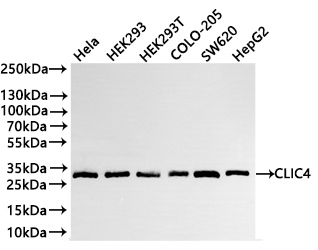
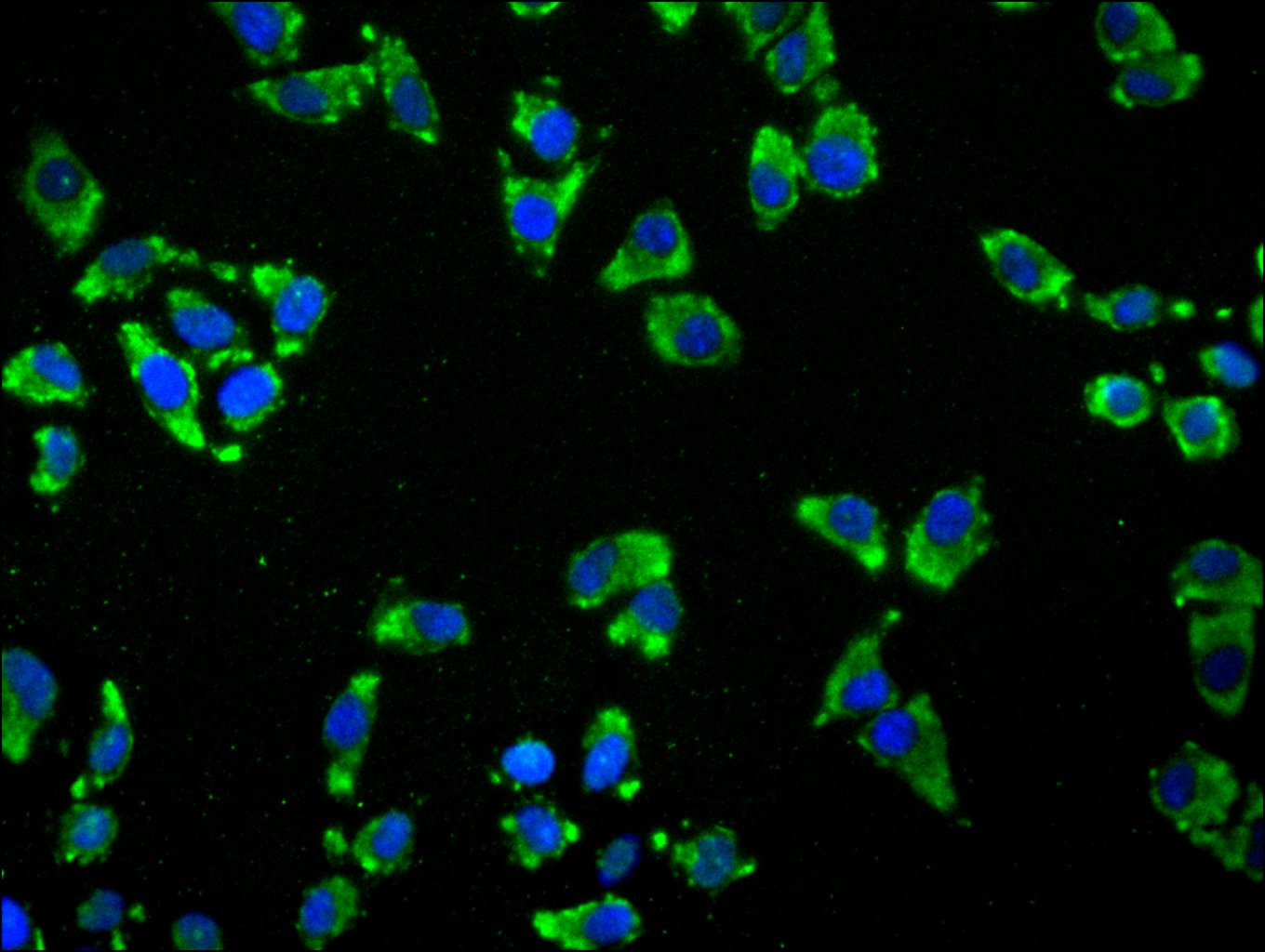
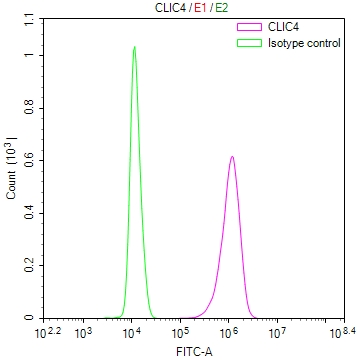
Validation across multiple experimental platforms demonstrates this antibody's versatility in your research workflow. Western blot analysis confirms specific detection at the expected 29 kDa molecular weight across diverse human cell lines, including HeLa, HEK293, HEK293T, COLO-205, SW620, and HepG2, with recommended dilutions ranging from 1:500 to 1:2000. Immunofluorescence studies in HeLa cells reveal clear intracellular localization patterns, while flow cytometry analysis in U251 glioblastoma cells shows distinct positive population shifts compared to isotype controls.
This antibody serves researchers investigating chloride channel biology, epithelial-mesenchymal transition, tumor microenvironment dynamics, and mitochondrial function, providing a dependable tool for exploring CLIC4's diverse cellular roles.
There are currently no reviews for this product.





