
Call us
301-363-4651 (Available 9 a.m. to 5 p.m. CST from Monday to Friday)

| Code | CSB-RA257842A0HU |
| Size | US$210 |
| Order now | |
| Image |
|
| Have Questions? | Leave a Message or Start an on-line Chat |
| Application | Recommended Dilution |
|---|---|
| WB | 1:500-1:5000 |
| IHC | 1:50-1:200 |
| IF | 1:50-1:200 |
| FC | 1:50-1:200 |
C-terminal binding protein 2 (CTBP2) serves as a transcriptional corepressor with critical roles in developmental processes and cellular differentiation. This protein functions as a key regulator of gene expression by interacting with sequence-specific DNA-binding proteins, and its dysregulation has been implicated in various pathological conditions, making it a valuable target for researchers investigating transcriptional control mechanisms and disease biology.
This recombinant monoclonal antibody against CTBP2 offers the consistency and reliability that demanding experimental workflows require. Produced using recombinant technology with a defined sequence, clone 8D8 delivers the lot-to-lot reproducibility essential for longitudinal studies and multi-site collaborations. The rabbit IgG format, raised against a synthetic peptide derived from human CTBP2, has been affinity-purified to ensure high specificity for your target.
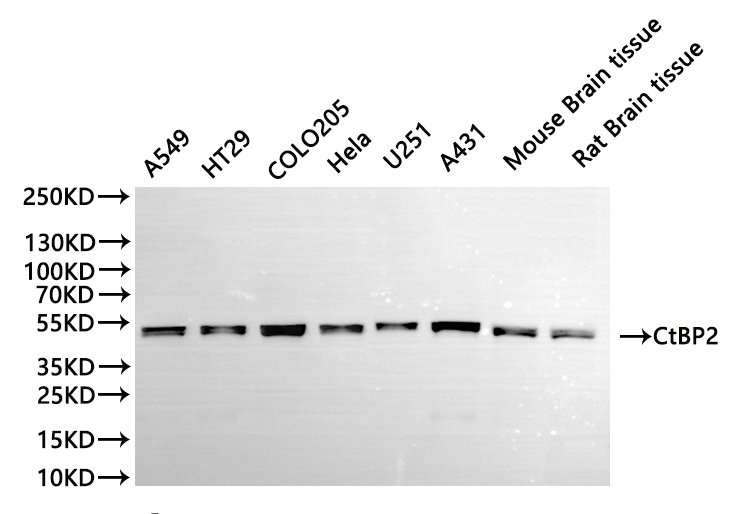
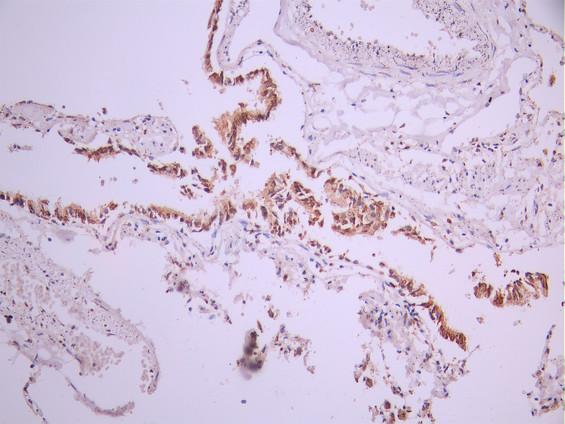
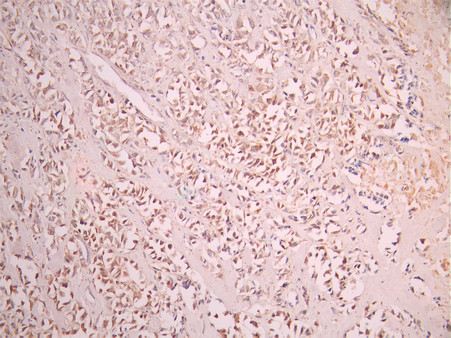
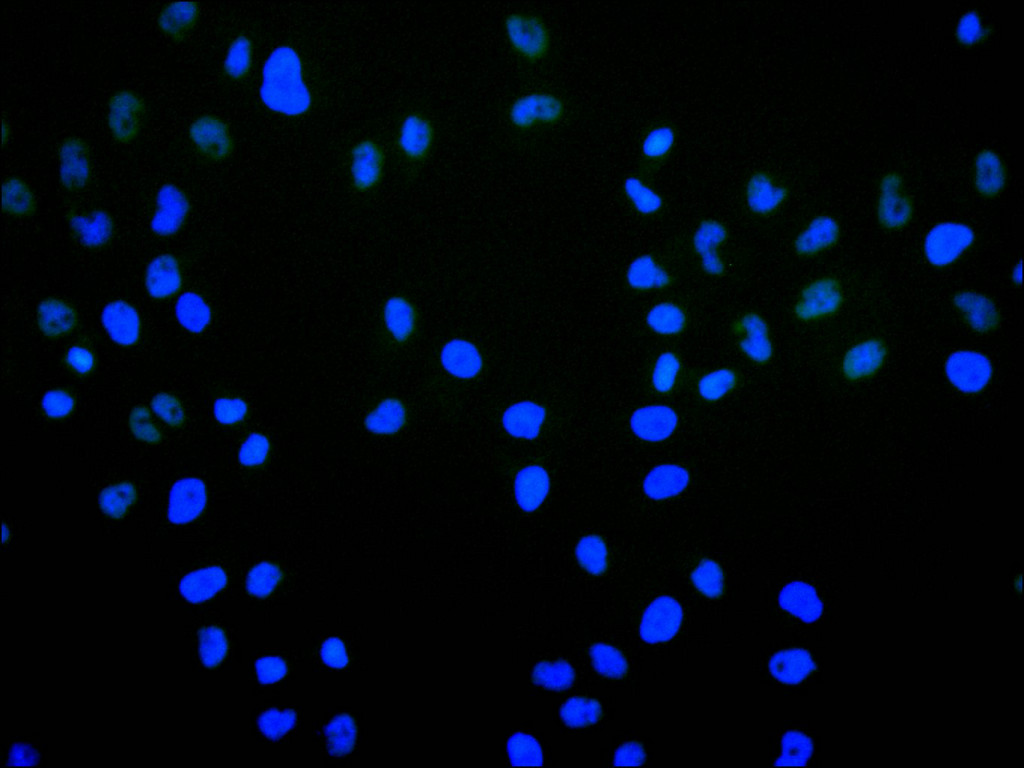
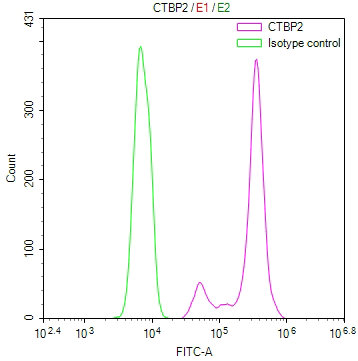
Extensive validation across multiple platforms demonstrates this antibody's versatility in your research applications. Western blot analysis confirms detection of the expected 49 kDa band across diverse human cell lines including A549, HT29, COLO205, HeLa, U251, and A431, with cross-species reactivity validated in mouse and rat brain tissue lysates. Immunohistochemistry studies have successfully visualized CTBP2 in paraffin-embedded human lung tissue and breast cancer specimens using citrate buffer antigen retrieval. Immunofluorescence staining in HeLa cells reveals clear subcellular localization patterns, while flow cytometry analysis demonstrates robust detection suitable for single-cell studies.
The broad application compatibility spanning western blot, immunohistochemistry, immunofluorescence, flow cytometry, and ELISA provides researchers with flexibility to investigate CTBP2 across multiple experimental contexts, from protein expression analysis to tissue localization studies in cancer and developmental biology research.
There are currently no reviews for this product.





