
Call us
301-363-4651 (Available 9 a.m. to 5 p.m. CST from Monday to Friday)

| Code | CSB-RA029079A0HU |
| Size | US$210 |
| Order now | |
| Image |
|
| Have Questions? | Leave a Message or Start an on-line Chat |
| Application | Recommended Dilution |
|---|---|
| IHC | 1:50-1:200 |
| IF | 1:50-1:200 |
| FC | 1:50-1:200 |
DPYSL2, also known as collapsin response mediator protein 2 (CRMP-2), plays a central role in neuronal development and axonal guidance by mediating semaphorin signaling pathways. This cytosolic phosphoprotein regulates microtubule dynamics and is essential for growth cone collapse and neurite outgrowth. Beyond its developmental functions, DPYSL2 has garnered significant research attention due to its altered expression in neurodegenerative conditions and its emerging roles in cancer biology, making it a valuable target for investigators studying both neurological disorders and tumor progression.
This recombinant monoclonal antibody, clone 20D8, offers the reproducibility and consistency that demanding research applications require. Generated through recombinant technology with a defined sequence, this rabbit IgG eliminates the lot-to-lot variability that can compromise longitudinal studies and multi-site collaborations. The antibody was raised against a synthetic peptide derived from human DPYSL2 and purified by affinity chromatography, ensuring high specificity for your target.
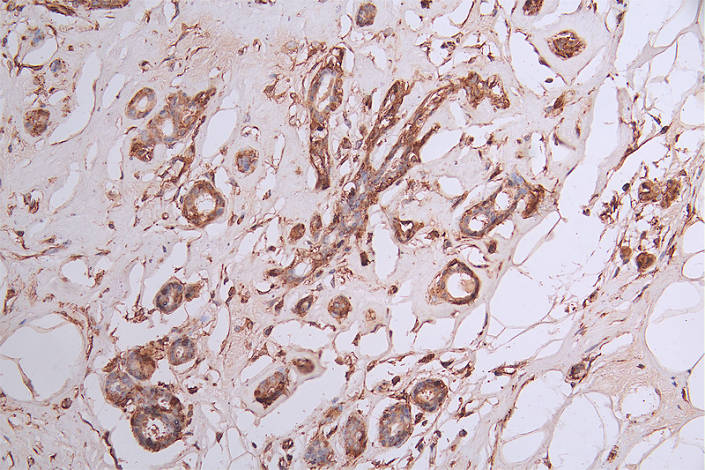
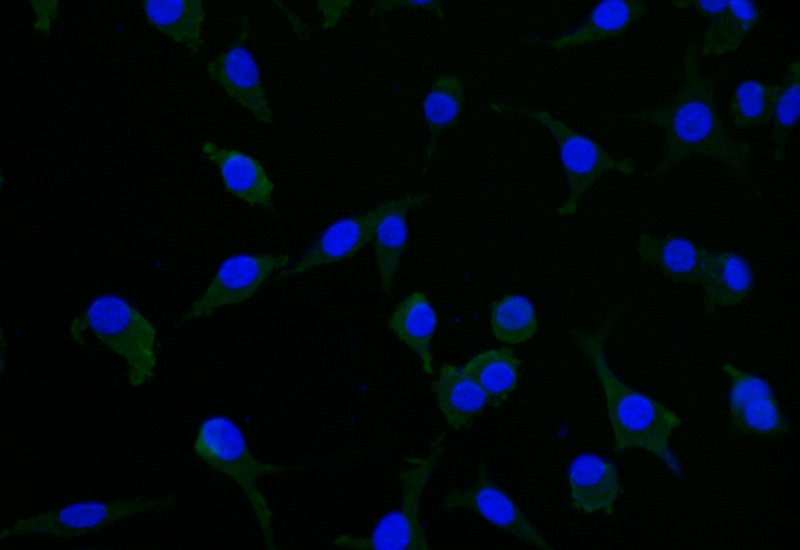
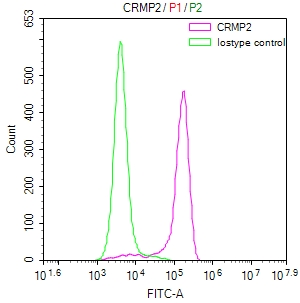
Validation studies demonstrate reliable performance across multiple experimental platforms. Immunohistochemistry testing in paraffin-embedded human breast cancer tissue reveals clear staining at dilutions between 1:50 and 1:200, providing flexibility to optimize signal intensity for your specific samples. Immunofluorescence and flow cytometry applications have been validated using SH-SY5Y neuroblastoma cells, a particularly relevant model given DPYSL2's neuronal expression pattern. The flow cytometry data shows distinct separation between specific staining and isotype control populations, confirming robust detection of intracellular DPYSL2.
Whether you are investigating axonal regeneration mechanisms, characterizing CRMP-2 phosphorylation states in disease models, or exploring its unexpected roles in cancer tissues, this antibody provides a dependable tool for advancing your neuroscience research.
There are currently no reviews for this product.





