
Call us
301-363-4651 (Available 9 a.m. to 5 p.m. CST from Monday to Friday)

| Code | CSB-RA053731A0HU |
| Size | US$210 |
| Order now | |
| Image |
|
| Have Questions? | Leave a Message or Start an on-line Chat |
| Application | Recommended Dilution |
|---|---|
| WB | 1:500-1:2000 |
| IF | 1:50-1:200 |
| FC | 1:50-1:200 |
Eukaryotic elongation factor 2 (EEF2) serves as an essential component of the protein synthesis machinery, catalyzing the GTP-dependent translocation of the ribosome along messenger RNA during translation. This highly conserved protein plays a critical role in cellular growth and proliferation, making it a significant target in studies of translational control, cancer biology, and cellular stress responses. EEF2 activity is tightly regulated through phosphorylation by EEF2 kinase, positioning it at the intersection of nutrient sensing and protein synthesis pathways.
This recombinant monoclonal antibody, generated from clone 8B4 in rabbit host, offers the reproducibility and consistency that demanding research applications require. Because the antibody sequence is defined and produced recombinantly, you can expect uniform performance across experiments and over time, eliminating the lot-to-lot variability that can complicate long-term studies or multi-site collaborations.
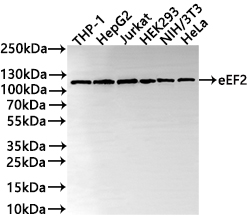
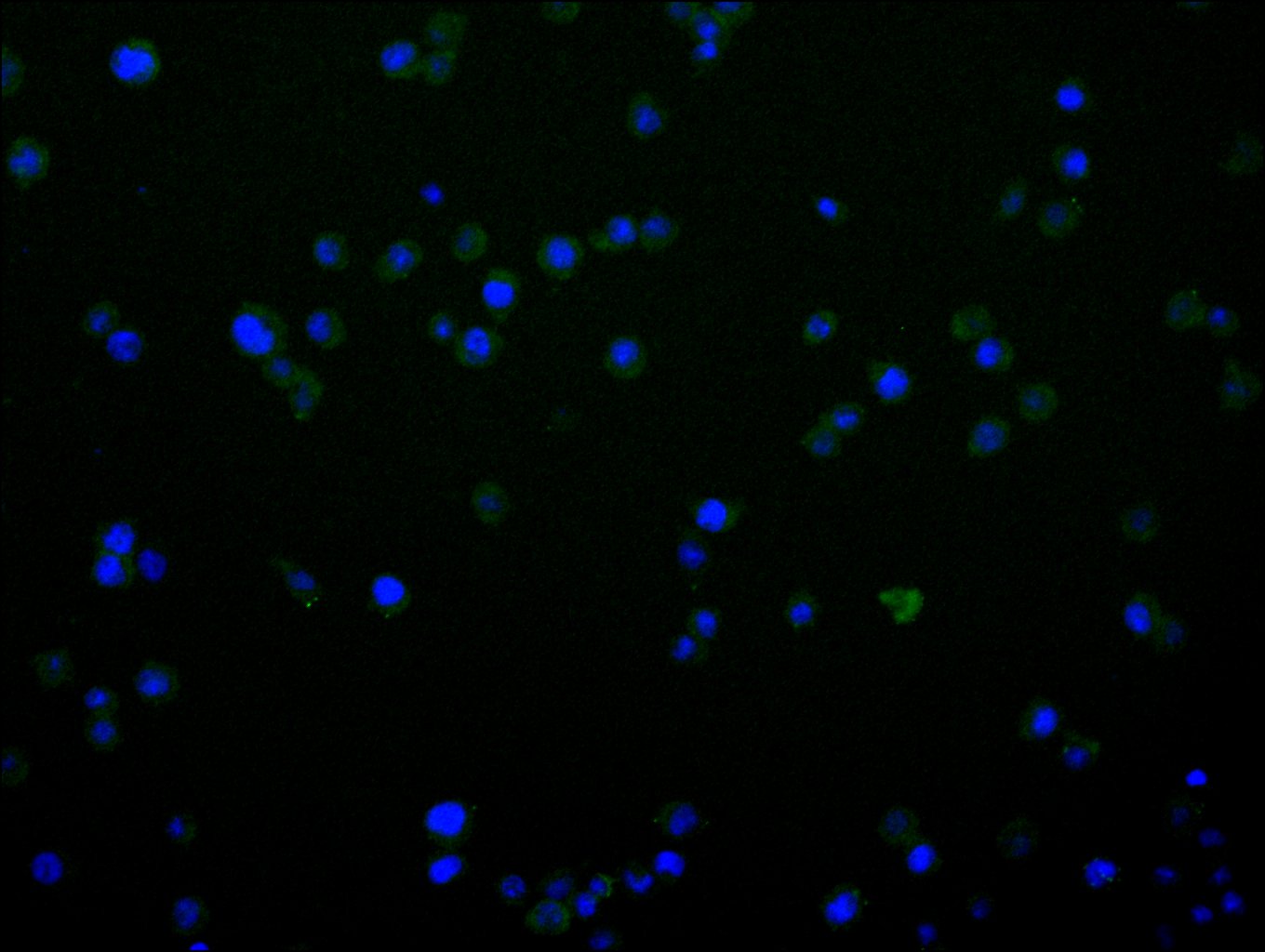
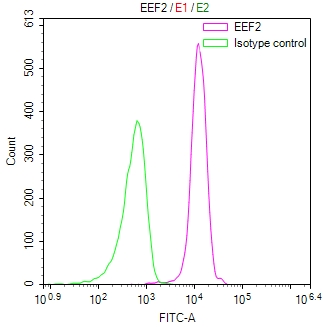
Validation across multiple platforms demonstrates this antibody's versatility in your workflow. Western blot analysis confirms robust detection in both human cell lines, including THP-1, HepG2, Jurkat, HEK293, and HeLa, as well as mouse NIH/3T3 cells, providing valuable cross-species reactivity for comparative studies. The observed band at approximately 115 kDa, higher than the predicted 95 kDa molecular weight, reflects the known post-translational modifications of EEF2, including glycosylation and phosphorylation events. Immunofluorescence staining in Jurkat cells reveals cytoplasmic localization consistent with EEF2's role in ribosomal function, while flow cytometry data demonstrates clear separation from isotype controls.
Whether investigating translational regulation, exploring EEF2's emerging connections to neurodegenerative conditions like spinocerebellar ataxia type 26, or examining metabolic stress responses, this antibody provides reliable detection across multiple experimental approaches.
There are currently no reviews for this product.





