
Call us
301-363-4651 (Available 9 a.m. to 5 p.m. CST from Monday to Friday)

| Code | CSB-RA909705A0HU |
| Size | US$210 |
| Order now | |
| Image |
|
| Have Questions? | Leave a Message or Start an on-line Chat |
| Application | Recommended Dilution |
|---|---|
| IHC | 1:50-1:200 |
| IF | 1:50-1:200 |
| FC | 1:50-1:200 |
Endoplasmic reticulum protein 29 (ERP29) serves as a critical molecular chaperone within the secretory pathway, facilitating the proper folding and processing of nascent proteins destined for secretion or membrane insertion. This protein plays essential roles in ER stress responses and has garnered significant attention in cancer research, where altered expression patterns have been linked to tumor progression and therapeutic resistance mechanisms.
This recombinant monoclonal antibody, clone 23C9, offers researchers the consistency and reliability that comes with sequence-defined production. Unlike traditional hybridoma-derived antibodies, recombinant technology ensures that every lot performs identically to the last, eliminating the variability that can compromise longitudinal studies or multi-site collaborations. The rabbit host origin combined with monoclonal specificity provides excellent signal-to-noise characteristics across multiple detection platforms.
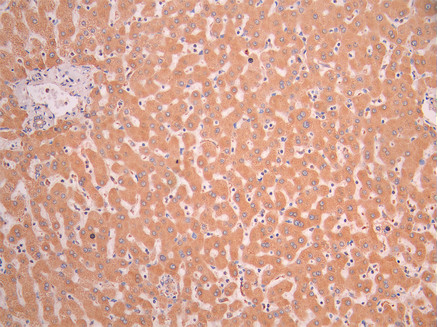
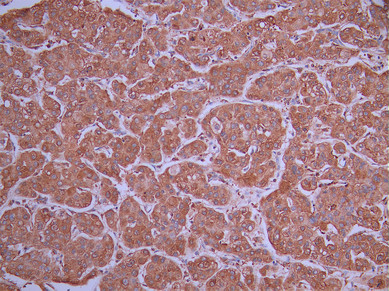
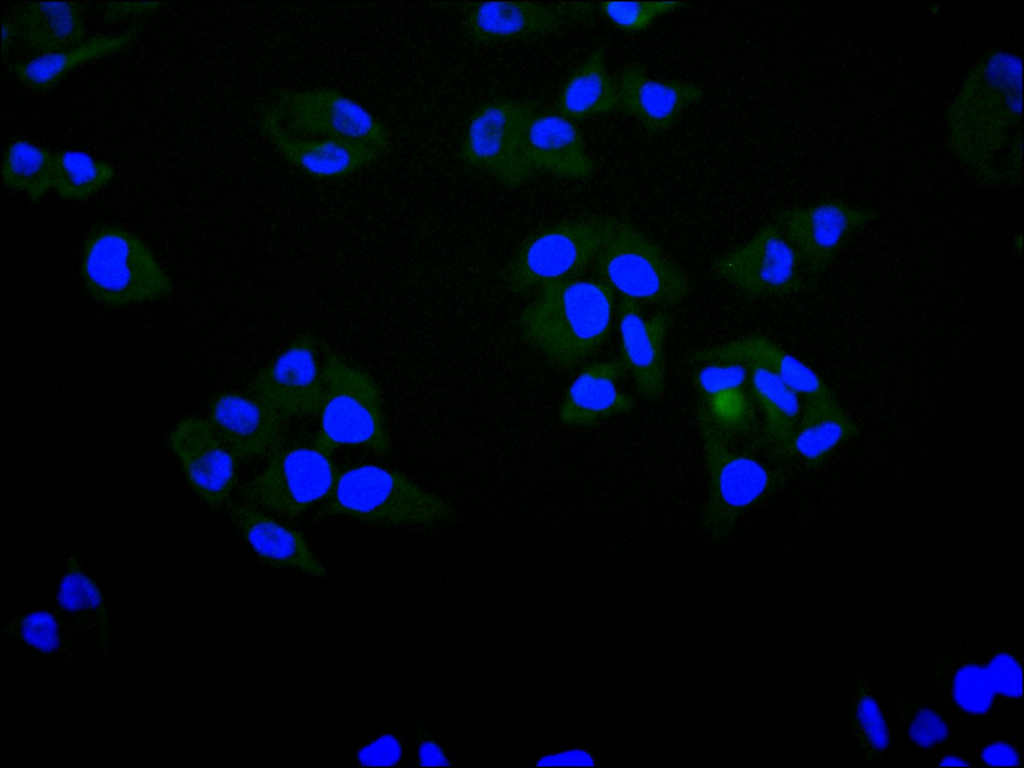
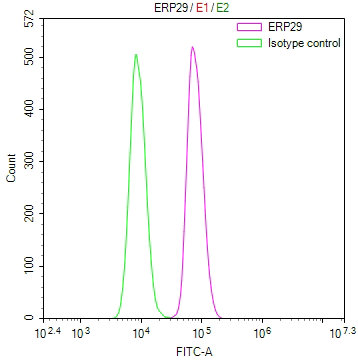
Validation studies demonstrate robust performance in immunohistochemistry, where the antibody successfully detects ERP29 in both normal human liver tissue and liver cancer specimens at 1:100 dilution using citrate buffer antigen retrieval. This dual-tissue validation is particularly valuable for researchers investigating ERP29 expression changes in hepatic malignancies. Immunofluorescence applications have been confirmed in HeLa cells, revealing characteristic ER localization patterns when counterstained with DAPI. Flow cytometry validation in K562 cells demonstrates clear population separation from isotype controls, supporting intracellular staining protocols for suspension cell analysis.
The antibody arrives affinity-purified and ready for use across ELISA, immunohistochemistry, immunofluorescence, and flow cytometry workflows. For investigators exploring ER stress pathways, protein secretion mechanisms, or the emerging connections between ERP29 and cancer biology, this antibody provides a dependable tool for advancing signal transduction research.
There are currently no reviews for this product.





