
Call us
301-363-4651 (Available 9 a.m. to 5 p.m. CST from Monday to Friday)

| Code | CSB-RA560252A0HU |
| Size | US$210 |
| Order now | |
| Image |
|
| Have Questions? | Leave a Message or Start an on-line Chat |
| Application | Recommended Dilution |
|---|---|
| WB | 1:500-1:5000 |
| IHC | 1:50-1:200 |
Fatty acid amide hydrolase (FAAH) serves as the primary enzyme responsible for degrading endocannabinoid signaling molecules, including anandamide and oleamide. By regulating the tone of the endocannabinoid system, FAAH influences diverse physiological processes spanning pain perception, inflammation, mood regulation, and metabolic homeostasis. This central role in lipid signaling has positioned FAAH as a compelling target for researchers investigating cancer biology, metabolic disorders, and signal transduction pathways.
This recombinant monoclonal antibody, clone 8G3, offers the reproducibility and consistency that demanding experimental workflows require. Because the antibody sequence is defined and production occurs in a controlled recombinant system, you can expect reliable performance across experiments and between lots, eliminating the variability that often complicates long-term studies or multi-site collaborations.
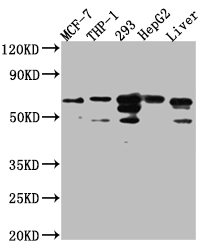
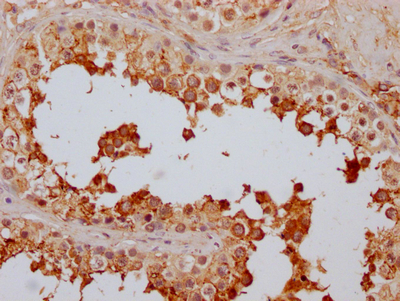
Validation testing demonstrates robust performance across multiple applications. In western blot experiments, the antibody detects FAAH at the expected 64 kDa molecular weight across a diverse panel of human cell lines including MCF-7, THP-1, HEK293, and HepG2, as well as mouse liver tissue, confirming cross-species reactivity between human and mouse samples. This breadth of validated sample types provides flexibility whether you're working with cancer cell models, immune cells, or primary tissue lysates. For tissue localization studies, immunohistochemistry validation in paraffin-embedded human testis tissue demonstrates clear specific staining, supporting applications in archival tissue analysis.
The unconjugated format and affinity-purified preparation allow straightforward integration into existing detection systems. Whether you're mapping FAAH expression patterns in tumor samples, investigating metabolic regulation, or characterizing endocannabinoid pathway dynamics, this antibody delivers the specificity and consistency your research demands.
There are currently no reviews for this product.





