
Call us
301-363-4651 (Available 9 a.m. to 5 p.m. CST from Monday to Friday)

| Code | CSB-RA797360A0HU |
| Size | US$210 |
| Order now | |
| Image |
|
| Have Questions? | Leave a Message or Start an on-line Chat |
| Application | Recommended Dilution |
|---|---|
| IHC | 1:50-1:200 |
| IF | 1:50-1:200 |
| FC | 1:50-1:200 |
FOXP1 is a member of the forkhead box transcription factor family that plays essential roles in regulating gene expression across multiple tissue types. This transcription factor is particularly significant in cardiac development, lung morphogenesis, and B-cell differentiation, while also functioning as a context-dependent tumor suppressor or oncogene in various malignancies. Its involvement in diffuse large B-cell lymphoma and other cancers has made FOXP1 an important target for researchers investigating transcriptional regulation in both normal development and disease states.
This recombinant monoclonal antibody, clone 2D3, offers the consistency and reliability that demanding experimental workflows require. Because it is produced from a defined sequence in a controlled expression system, researchers can expect reproducible performance across different lots, eliminating the variability often encountered with traditional hybridoma-derived antibodies. The rabbit host and monoclonal nature combine high affinity binding with exceptional specificity for human FOXP1.
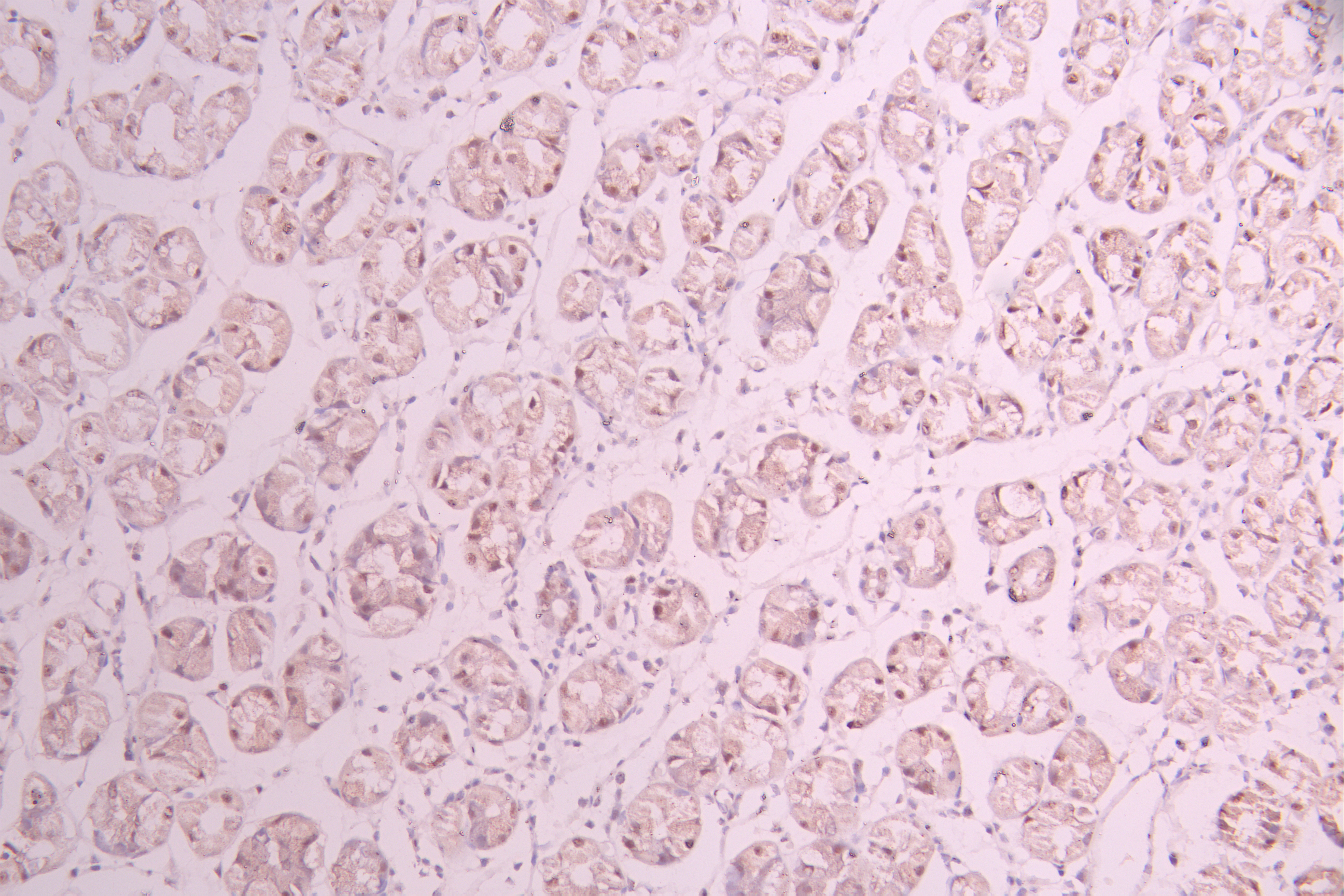
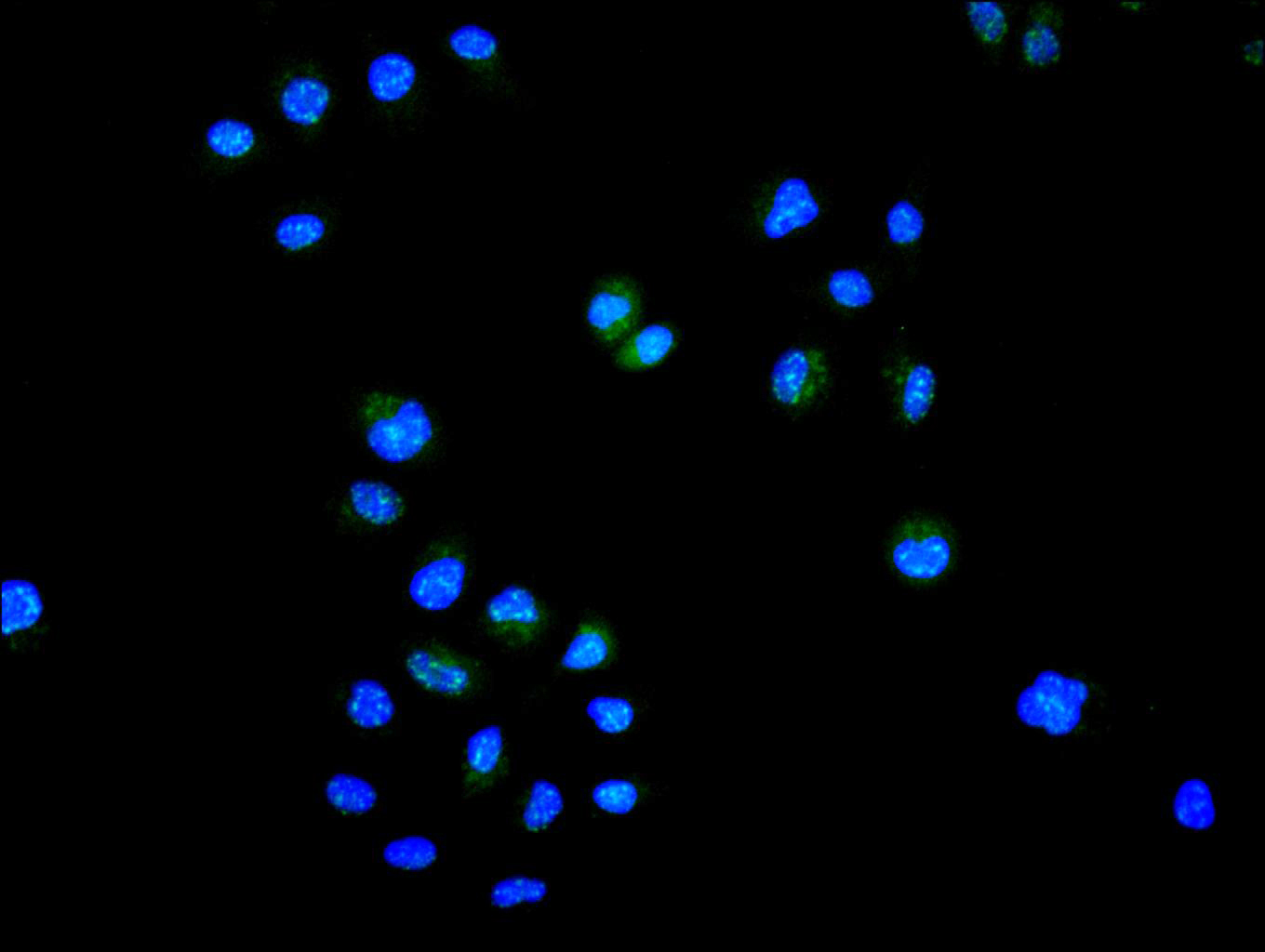
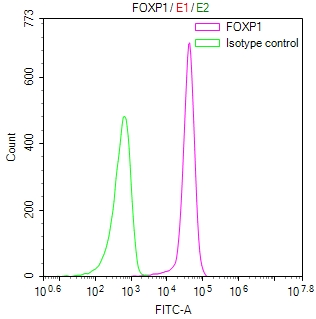
Validation studies demonstrate versatile performance across multiple detection platforms. Immunohistochemistry on paraffin-embedded human stomach tissue shows clear staining using a citrate buffer antigen retrieval protocol at dilutions between 1:50 and 1:200. Immunofluorescence analysis in HeLa cells reveals the expected nuclear localization pattern characteristic of this transcription factor. Flow cytometry experiments using Jurkat cells confirm robust detection of intracellular FOXP1 following fixation and permeabilization, with clear separation from isotype control.
This antibody serves researchers studying transcriptional networks in development, lymphocyte biology, and cancer. Its validated performance in tissue sections, cultured cells, and flow cytometry applications provides flexibility for investigators examining FOXP1 expression and localization across diverse experimental contexts.
There are currently no reviews for this product.





