
Call us
301-363-4651 (Available 9 a.m. to 5 p.m. CST from Monday to Friday)

| Code | CSB-RA009356A0HU |
| Size | US$210 |
| Order now | |
| Image |
|
| Have Questions? | Leave a Message or Start an on-line Chat |
| Application | Recommended Dilution |
|---|---|
| WB | 1:500-1:5000 |
| IHC | 1:50-1:200 |
| IP | 1:200-1:1000 |
Glial cell line-derived neurotrophic factor (GDNF) serves as a critical survival factor for dopaminergic and motor neurons, making it a protein of substantial interest in neurodegenerative disease research, particularly Parkinson's disease and amyotrophic lateral sclerosis. Beyond its well-characterized neuroprotective roles, GDNF also functions in kidney development and spermatogenesis, broadening its relevance across multiple research disciplines.
This recombinant monoclonal antibody, clone 11D2, offers the reproducibility and consistency that demanding experimental workflows require. Because the antibody sequence is defined and produced recombinantly in rabbit host cells, researchers can expect reliable performance across experiments and between lots, eliminating the variability often encountered with traditional hybridoma-derived antibodies.
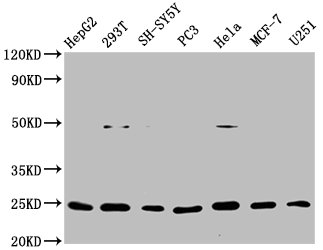
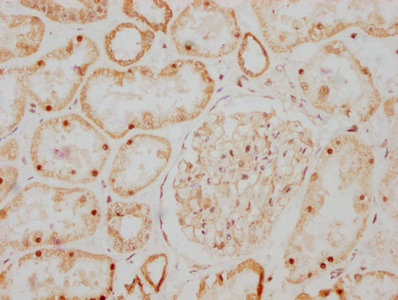
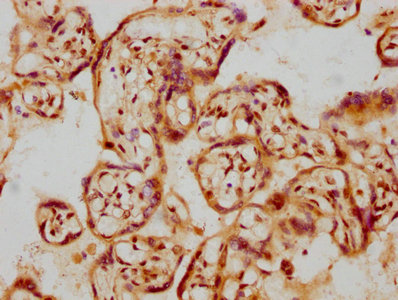
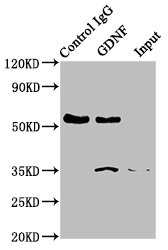
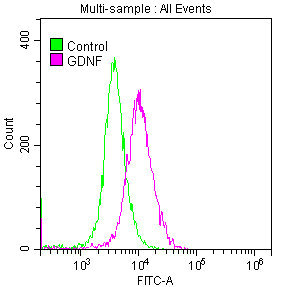
Validation data demonstrates robust performance across multiple applications. In western blotting, the antibody detects GDNF at the expected 24 kDa band across a diverse panel of human cell lines including HepG2, 293T, SH-SY5Y, PC3, HeLa, MCF-7, and U251, with effective dilutions ranging from 1:500 to 1:5000. The antibody has also been validated for immunohistochemistry in paraffin-embedded human kidney and placenta tissues using citrate buffer antigen retrieval, providing researchers studying GDNF expression in these contexts with a tested protocol. Immunoprecipitation studies in HeLa lysates confirm the antibody's utility for protein enrichment applications, while flow cytometry validation in SH-SY5Y neuroblastoma cells demonstrates clear signal separation from control, supporting intracellular staining workflows.
For researchers investigating neurotrophic factor signaling, neuronal survival mechanisms, or GDNF's roles in peripheral tissues, this antibody provides a versatile, sequence-defined tool validated across complementary experimental approaches.
There are currently no reviews for this product.





