
Call us
301-363-4651 (Available 9 a.m. to 5 p.m. CST from Monday to Friday)

| Code | CSB-RA188594A0HU |
| Size | US$210 |
| Order now | |
| Image |
|
| Have Questions? | Leave a Message or Start an on-line Chat |
| Application | Recommended Dilution |
|---|---|
| IHC | 1:50-1:200 |
Glutathione peroxidase 4 (GPX4) serves as a critical regulator of ferroptosis, the iron-dependent form of programmed cell death that has emerged as a significant focus in cancer biology and metabolic disease research. As the only glutathione peroxidase capable of directly reducing phospholipid hydroperoxides within biological membranes, GPX4 protects cells from lipid peroxidation-induced damage. Its central role in ferroptosis regulation has made it an essential target for researchers investigating novel therapeutic strategies in oncology and understanding cellular stress responses.
This recombinant monoclonal antibody, clone 9D4, offers the reproducibility and consistency that demanding research applications require. Developed using recombinant technology with a sequence-defined approach, this antibody eliminates the lot-to-lot variability that can complicate long-term studies and multi-site collaborations. The rabbit host and monoclonal nature ensure high specificity for human GPX4, with the antibody raised against a synthetic peptide derived from the human protein sequence.
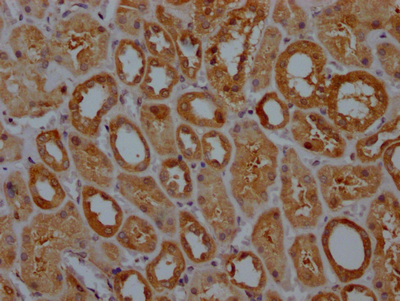
Validation in immunohistochemistry demonstrates reliable performance in paraffin-embedded human kidney tissue, where the antibody was tested at 1:100 dilution using a Leica Bond system with citrate buffer antigen retrieval. This established protocol provides a solid foundation for researchers examining GPX4 expression patterns in tissue sections, with recommended working dilutions of 1:50 to 1:200 allowing flexibility for optimization across different sample types. The antibody is also validated for ELISA applications.
For investigators exploring ferroptosis mechanisms, metabolic regulation, or signal transduction pathways in cancer and other disease contexts, this GPX4 antibody provides a dependable tool for characterizing this essential selenoprotein in human samples.
There are currently no reviews for this product.





