
Call us
301-363-4651 (Available 9 a.m. to 5 p.m. CST from Monday to Friday)

| Code | CSB-RA010144MA1HU |
| Size | $49.9 |
| Order now | |
| Promotion |

|
| Image |
|
| Have Questions? | Leave a Message or Start an on-line Chat |
| Application | Recommended Dilution |
|---|---|
| IHC | 1:50-1:200 |
HAVCR1, also known as KIM-1 or TIM-1, serves as a critical biomarker in kidney injury research and plays multifaceted roles in immune regulation. This type I transmembrane glycoprotein is dramatically upregulated in proximal tubule epithelial cells following ischemic or toxic kidney injury, making it an invaluable indicator for studying acute kidney injury progression and recovery. Beyond nephrology, HAVCR1 functions as a phosphatidylserine receptor involved in apoptotic cell clearance and serves as the cellular receptor for hepatitis A virus, positioning it at the intersection of immunology and infectious disease research.
This recombinant monoclonal antibody, clone 10A10, offers the reproducibility that demanding research protocols require. Generated against recombinant human HAVCR1 protein and produced using recombinant technology, each lot delivers sequence-defined consistency, eliminating the variability that can compromise longitudinal studies or multi-site collaborations. The human IgG4 isotype format and affinity-chromatography purification ensure reliable performance across your experimental workflow.
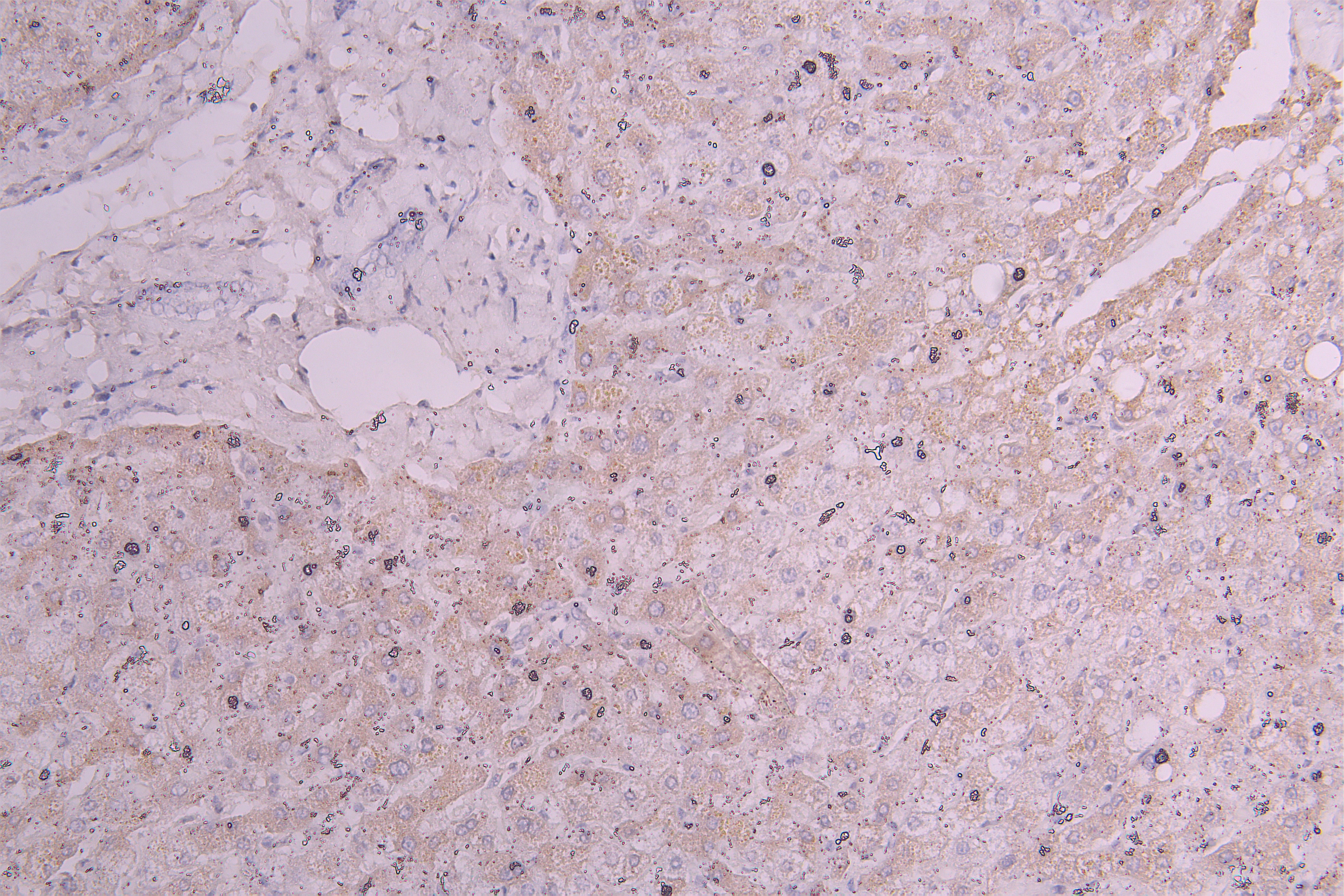
Validation in immunohistochemistry demonstrates clear detection in paraffin-embedded human liver tissue, with optimal staining achieved at dilutions between 1:50 and 1:200. The validated IHC protocol employed citrate buffer antigen retrieval at pH 6.0 under high pressure, followed by overnight primary antibody incubation at 4°C, providing a tested starting point for your own tissue studies. Additional validation for ELISA applications extends the utility of this antibody for quantitative detection approaches.
For researchers investigating acute kidney injury mechanisms, immune checkpoint pathways, or hepatitis A virus entry, this antibody provides a dependable tool for detecting HAVCR1 in human samples across multiple experimental platforms.
There are currently no reviews for this product.





