
Call us
301-363-4651 (Available 9 a.m. to 5 p.m. CST from Monday to Friday)

| Code | CSB-RA010245A0HU |
| Size | US$210 |
| Order now | |
| Image |
|
| Have Questions? | Leave a Message or Start an on-line Chat |
| Application | Recommended Dilution |
|---|---|
| WB | 1:500-1:5000 |
| IHC | 1:50-1:200 |
| IF | 1:20-1:200 |
HDAC9 belongs to the class IIa histone deacetylase family, where it functions as a key regulator of gene expression through chromatin remodeling and direct interaction with transcription factors, particularly MEF2. This enzyme plays significant roles in cardiac development, muscle differentiation, and immune cell function, making it an important target for researchers investigating epigenetic mechanisms in cardiovascular disease, cancer biology, and metabolic disorders.
This recombinant monoclonal antibody, clone 1F2, offers the reproducibility essential for longitudinal studies and multi-site collaborations. Because the antibody sequence is defined and production occurs in a controlled recombinant system, you can expect consistent performance across different lots, eliminating the variability that can complicate data interpretation when working with traditional hybridoma-derived antibodies.
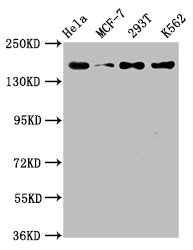
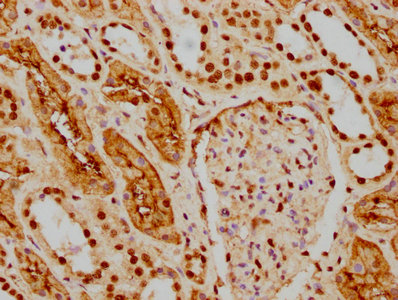
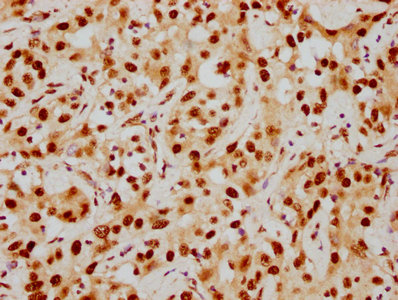
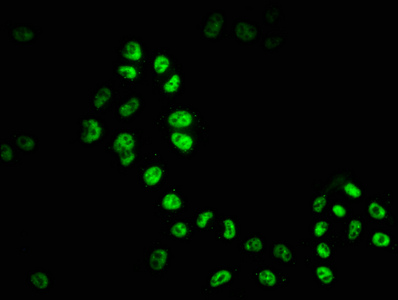
Validation across multiple experimental platforms provides flexibility for your research workflow. Western blot analysis demonstrates reliable detection in HeLa, MCF-7, 293T, and K562 whole cell lysates, with an observed band at approximately 160 kDa. This apparent molecular weight exceeds the predicted sizes for HDAC9 isoforms, which is consistent with post-translational modifications such as phosphorylation and SUMOylation that are well-documented for class IIa HDACs. Immunohistochemistry staining has been validated in paraffin-embedded human kidney tissue and liver cancer specimens using citrate buffer antigen retrieval, while immunofluorescence studies in HeLa cells confirm utility for subcellular localization experiments.
Whether you are examining HDAC9 expression patterns in tumor samples, investigating its role in transcriptional regulation, or exploring therapeutic targeting of epigenetic pathways, this antibody provides a dependable tool for advancing your research in epigenetics and nuclear signaling.
There are currently no reviews for this product.





