
Call us
301-363-4651 (Available 9 a.m. to 5 p.m. CST from Monday to Friday)

| Code | CSB-RA571090A0HU |
| Size | US$210 |
| Order now | |
| Image |
|
| Have Questions? | Leave a Message or Start an on-line Chat |
| Application | Recommended Dilution |
|---|---|
| WB | 1:500-1:2000 |
| IHC | 1:50-1:200 |
| IF | 1:50-1:200 |
| FC | 1:50-1:200 |
Hepatocyte nuclear factor 4-alpha (HNF4A) serves as a master regulator of liver-specific gene expression and plays essential roles in hepatocyte differentiation, glucose metabolism, and lipid homeostasis. As a member of the nuclear receptor superfamily, this transcription factor has emerged as a critical focus in research spanning metabolic disorders, hepatocellular carcinoma, and developmental biology, making reliable detection tools indispensable for advancing these fields.
This recombinant monoclonal antibody offers the consistency and reproducibility that demanding research requires. Generated through recombinant technology with a defined clone (10A7), it provides sequence-level certainty and eliminates the lot-to-lot variability that can compromise longitudinal studies. The rabbit IgG format, raised against a synthetic peptide derived from human HNF4A, delivers high specificity for your target across multiple experimental platforms.
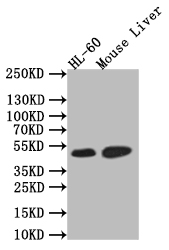
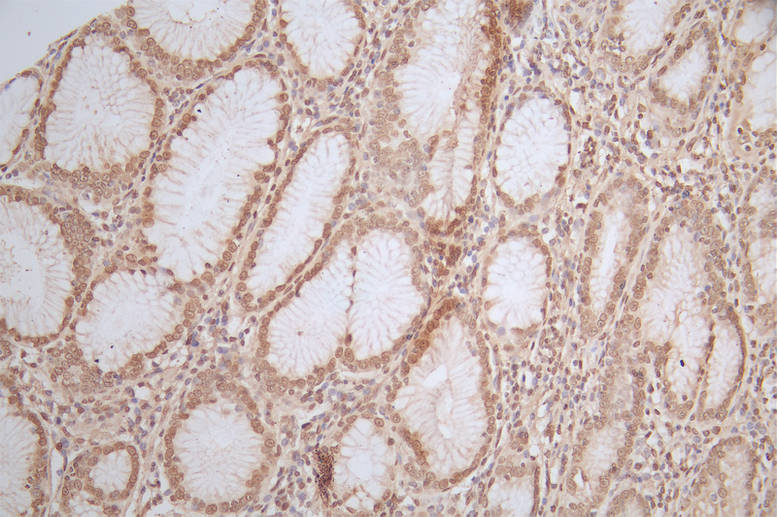
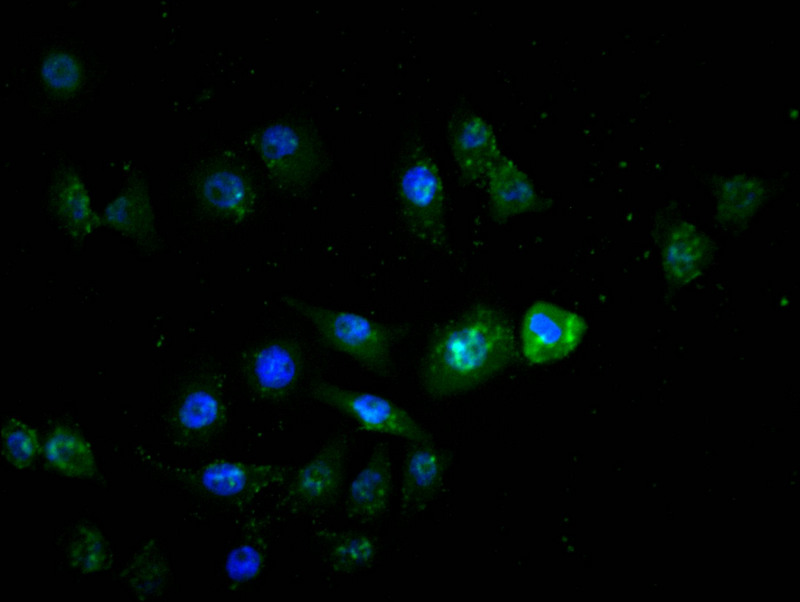
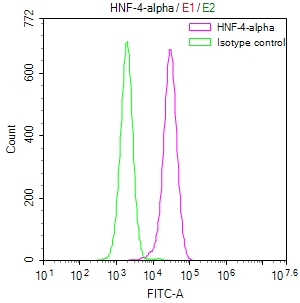
Validation data demonstrates robust performance across diverse applications. Western blot analysis confirms detection of the expected 52 kDa band in both HL-60 whole cell lysate and rat liver tissue, supporting the antibody's cross-species reactivity with human and rat samples. Immunohistochemistry staining in paraffin-embedded human gastric cancer tissue reveals clear nuclear localization patterns, while immunofluorescence studies in MCF-7 cells provide excellent visualization of HNF4A distribution when counter-stained with DAPI. Flow cytometry analysis in HepG2 cells shows distinct positive population shifts compared to isotype controls, confirming utility for quantitative single-cell applications.
Whether investigating nuclear receptor signaling pathways, exploring metabolic regulation in hepatic models, or examining HNF4A dysregulation in cancer contexts, this antibody delivers the flexibility and reliability needed to move your research forward with confidence.
There are currently no reviews for this product.





