
Call us
301-363-4651 (Available 9 a.m. to 5 p.m. CST from Monday to Friday)

| Code | CSB-RA010411A0HU |
| Size | US$210 |
| Order now | |
| Image |
|
| Have Questions? | Leave a Message or Start an on-line Chat |
| Application | Recommended Dilution |
|---|---|
| WB | 1:5000-1:10000 |
| IHC | 1:50-1:500 |
Histone H2B type 1-K is a core component of the nucleosome, the fundamental unit of chromatin that packages eukaryotic DNA. As part of the histone octamer, H2B plays essential roles in DNA replication, transcription regulation, and chromatin remodeling. Beyond its structural function, H2B undergoes various post-translational modifications that serve as epigenetic marks influencing gene expression patterns. Its interaction with HIRA protein also connects it to histone chaperone pathways involved in chromatin assembly and maintenance, making it a significant target for researchers investigating epigenetic mechanisms and nuclear signaling.
This recombinant monoclonal antibody, clone 4G10, offers the reproducibility and consistency that demanding epigenetic research requires. Because recombinant antibodies are produced from defined sequences rather than traditional hybridoma methods, researchers benefit from lot-to-lot uniformity that ensures experimental results remain comparable across studies and over time. The rabbit IgG format and affinity-chromatography purification provide high specificity for detecting endogenous Histone H2B type 1-K in your samples.
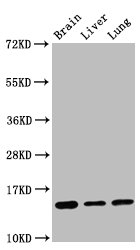
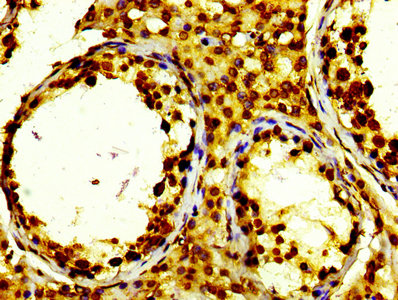
Validation studies demonstrate reliable performance across multiple experimental platforms. Western blot analysis confirms detection of the expected 14 kDa band in mouse brain tissue as well as rat liver and lung tissues, indicating useful cross-species reactivity for comparative studies. The antibody also performs effectively in immunohistochemistry, with validated staining in paraffin-embedded human testis tissue using standard citrate buffer antigen retrieval protocols.
Whether you are mapping histone modification landscapes, investigating chromatin dynamics, or studying nuclear signaling pathways, this antibody provides a dependable tool with the flexibility to support both protein expression analysis and tissue localization studies in your epigenetics research.
There are currently no reviews for this product.





