
Call us
301-363-4651 (Available 9 a.m. to 5 p.m. CST from Monday to Friday)

| Code | CSB-RA010418A0HU |
| Size | US$210 |
| Order now | |
| Image |
|
| Have Questions? | Leave a Message or Start an on-line Chat |
| Application | Recommended Dilution |
|---|---|
| WB | 1:500-1:5000 |
| IHC | 1:50-1:500 |
| IF | 1:30-1:200 |
Histone H3.1 serves as a fundamental building block of chromatin structure and plays a central role in epigenetic regulation of gene expression. As one of the canonical replication-dependent histone H3 variants, it undergoes extensive post-translational modifications that collectively constitute the "histone code," influencing processes ranging from transcriptional activation to DNA repair and cell cycle progression. Understanding H3.1 dynamics and modifications is essential for researchers investigating chromatin biology, cancer epigenetics, and developmental gene regulation.
This recombinant rabbit monoclonal antibody (clone 27F2) offers the reproducibility and consistency that demanding epigenetics research requires. Because recombinant antibodies are produced from a defined sequence rather than harvested from animal serum, you can expect uniform performance across experiments and over time—particularly valuable for longitudinal studies or when establishing standardized protocols in your laboratory.
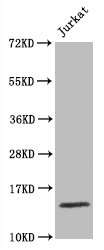
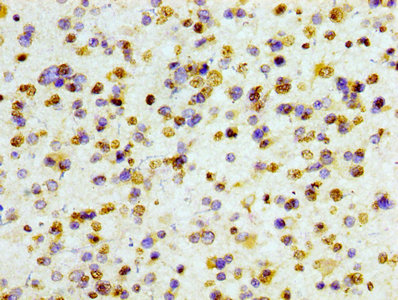
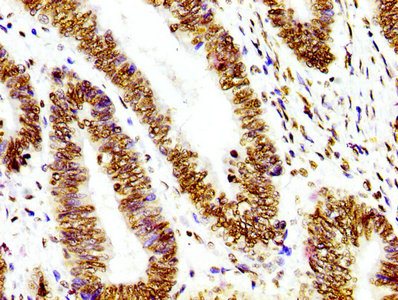
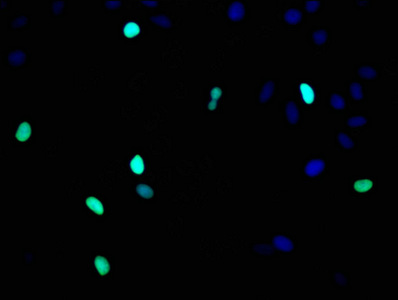
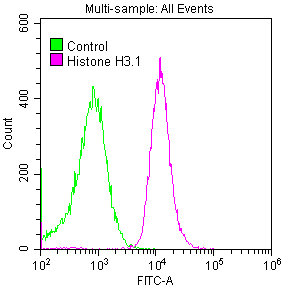
Validation data demonstrates reliable performance across multiple experimental platforms. Western blot analysis of Jurkat whole cell lysate reveals a clean band at the expected 15 kDa molecular weight, confirming specific detection of the target. Immunohistochemistry staining has been successfully performed on paraffin-embedded human glioma and colon cancer tissues, showing clear nuclear localization patterns consistent with histone biology. For cellular studies, immunofluorescence microscopy in HeLa cells demonstrates robust nuclear staining that colocalizes appropriately with DAPI, while flow cytometry analysis confirms quantitative detection suitable for population-level studies.
This versatile antibody supports researchers investigating chromatin dynamics, histone modification landscapes, and epigenetic alterations in cancer. Whether you're characterizing histone variants in tumor samples or examining chromatin states in cell-based models, this antibody provides a dependable tool for your epigenetics and nuclear signaling research.
There are currently no reviews for this product.
Hi, we study DNA and chromatin replication and are intrigued by the IF staining pattern of your “H3.1” antibody (CSB-RA010418A0HU). We have 3 questions.
Q1: Could you explain why the pattern is heterogeneous among single cells?
Q2: Does it only recognize newly incorporated histone H3.1?
Q3: I believe it is a bit of a strange pattern for H3.1 but it might recognize a modified version of the histone.
A1: Heterogenicity usually exists in DNA, RNA, and all other levels of proteins, while Histone H3.1 plays the key role in transcriptional control, DNA repair, DNA replication, and chromosome stabilization, which owns the Heterogenicity among single cells as well. The CSB-RA010418A0HU antibody is specific for Histone H3.1, so the IF pattern of CSB-RA010418A0HU also shows the Heterogenicity among single cells.
A2: The antibody CSB-RA010418A0HU can not only recognize newly incorporated Histone H3.1 but also specifically recognize all Histone H3.1 in the samples.
A3: Theoretically speaking, no matter whether the Histone H3.1 is modified or not, as long as the binding site to CSB-RA010418A0HU has not been changed, then it can be recognized by CSB-RA010418A0HU.





