
Call us
301-363-4651 (Available 9 a.m. to 5 p.m. CST from Monday to Friday)

| Code | CSB-RA012519MA1HU |
| Size | $49.9 |
| Order now | |
| Promotion |

|
| Image |
|
| Have Questions? | Leave a Message or Start an on-line Chat |
| Application | Recommended Dilution |
|---|---|
| IF | 1:50-1:200 |
| FC | 1:50-1:200 |
Keratin 18 is a type I intermediate filament protein that pairs with keratin 8 to form the primary cytoskeletal network in simple epithelial cells. This structural protein serves as a valuable marker in cancer research, particularly for identifying carcinomas of epithelial origin, and its cleavage products have emerged as important indicators of apoptosis in various disease contexts. The dynamic regulation of KRT18 expression and its post-translational modifications make it a compelling target for studies investigating epithelial differentiation, cellular stress responses, and tumor biology.
This recombinant monoclonal antibody against human KRT18 offers the reproducibility essential for longitudinal studies and multi-site collaborations. Produced using recombinant technology with a defined sequence, the antibody eliminates the lot-to-lot variability that can compromise experimental consistency. The human IgG1 isotype format, combined with affinity chromatography purification, ensures high specificity for your target while minimizing background interference.
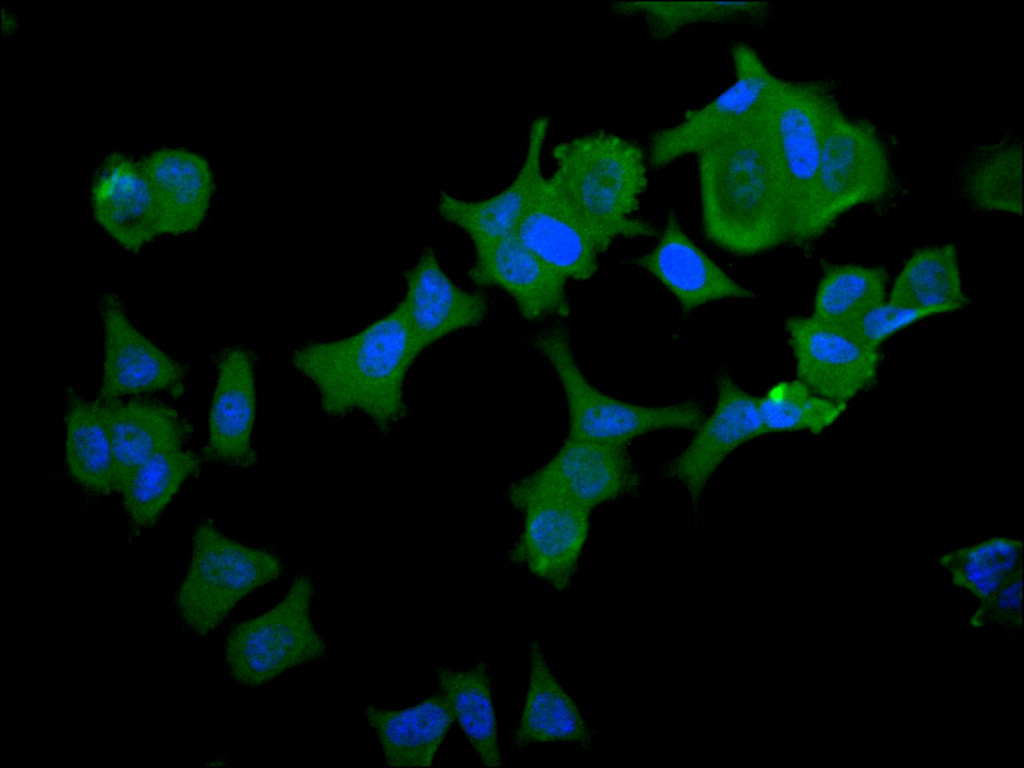
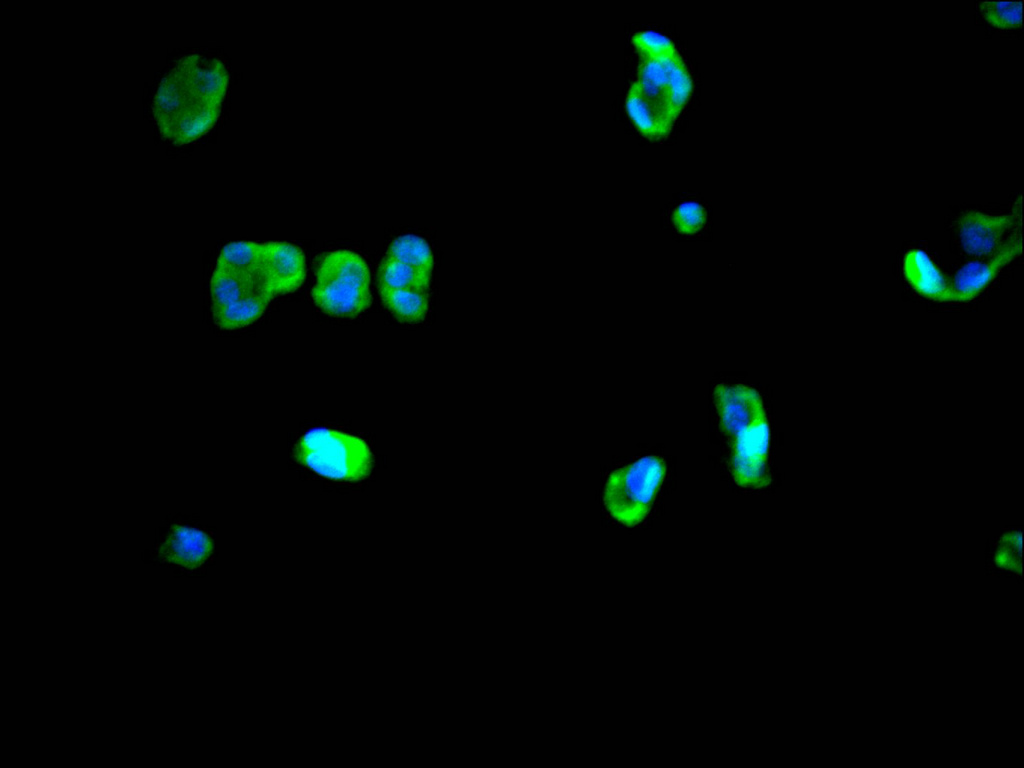
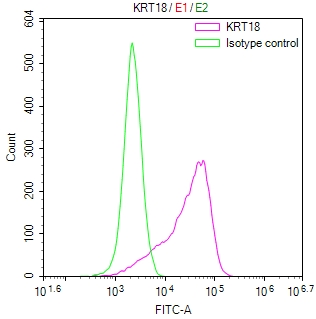
Validation studies demonstrate reliable performance across multiple experimental platforms. Immunofluorescence staining in both MCF-7 breast cancer cells and HepG2 hepatocellular carcinoma cells reveals the characteristic cytoplasmic filamentous network expected for this intermediate filament protein, with recommended dilutions ranging from 1:50 to 1:200. Flow cytometry analysis in HT29 colorectal adenocarcinoma cells confirms robust detection with clear separation from isotype control, supporting quantitative applications in cell population studies.
This antibody serves researchers investigating epithelial biology, cancer diagnostics, apoptosis mechanisms, and cytoskeletal organization. Its validated performance in immunofluorescence and flow cytometry provides flexibility for both imaging-based localization studies and high-throughput cellular analysis across diverse epithelial cancer models.
There are currently no reviews for this product.





