

Call us
301-363-4651 (Available 9 a.m. to 5 p.m. CST from Monday to Friday)

| Code | CSB-RA266964A0HU |
| Size | US$210 |
| Order now | |
| Image |
|
| Have Questions? | Leave a Message or Start an on-line Chat |
| Application | Recommended Dilution |
|---|---|
| WB | 1:500-1:2000 |
| IHC | 1:50-1:200 |
| IF | 1:50-1:200 |
| FC | 1:50-1:200 |
Lamin B2 is a key component of the nuclear lamina, the fibrous meshwork underlying the inner nuclear membrane that provides structural support to the nucleus and plays essential roles in chromatin organization, DNA replication, and cell cycle regulation. As a B-type lamin, LMNB2 is expressed constitutively across cell types and has emerged as an important marker in studies of nuclear architecture, cellular senescence, and various malignancies where nuclear envelope integrity is compromised.
This recombinant monoclonal antibody against human LMNB2 offers the reproducibility and consistency that demanding research applications require. Generated through recombinant technology using clone 15C5, it provides sequence-defined specificity that eliminates the lot-to-lot variability often encountered with traditional hybridoma-derived antibodies, ensuring your experimental results remain comparable across extended studies.
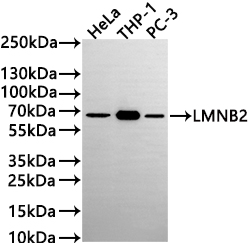
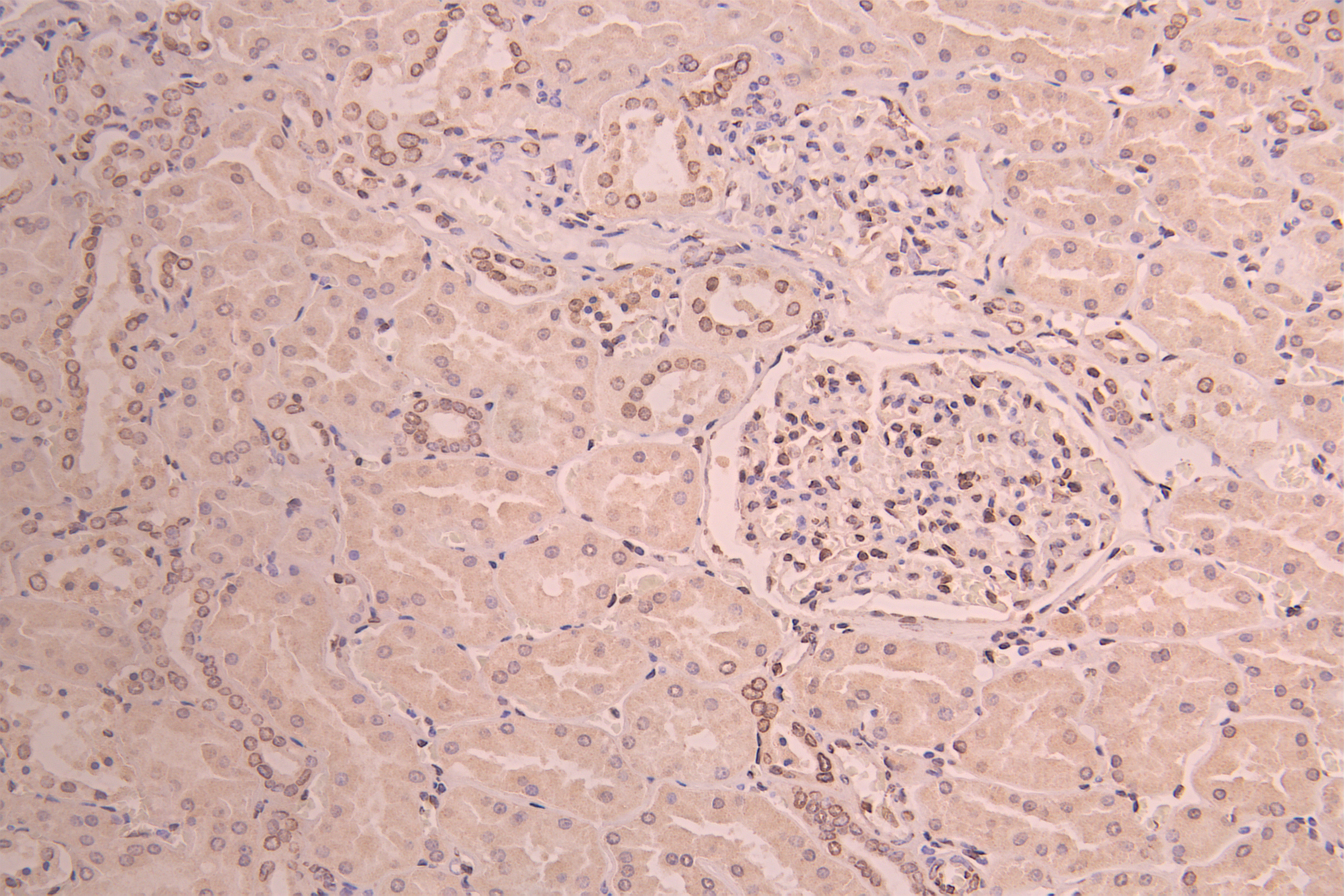
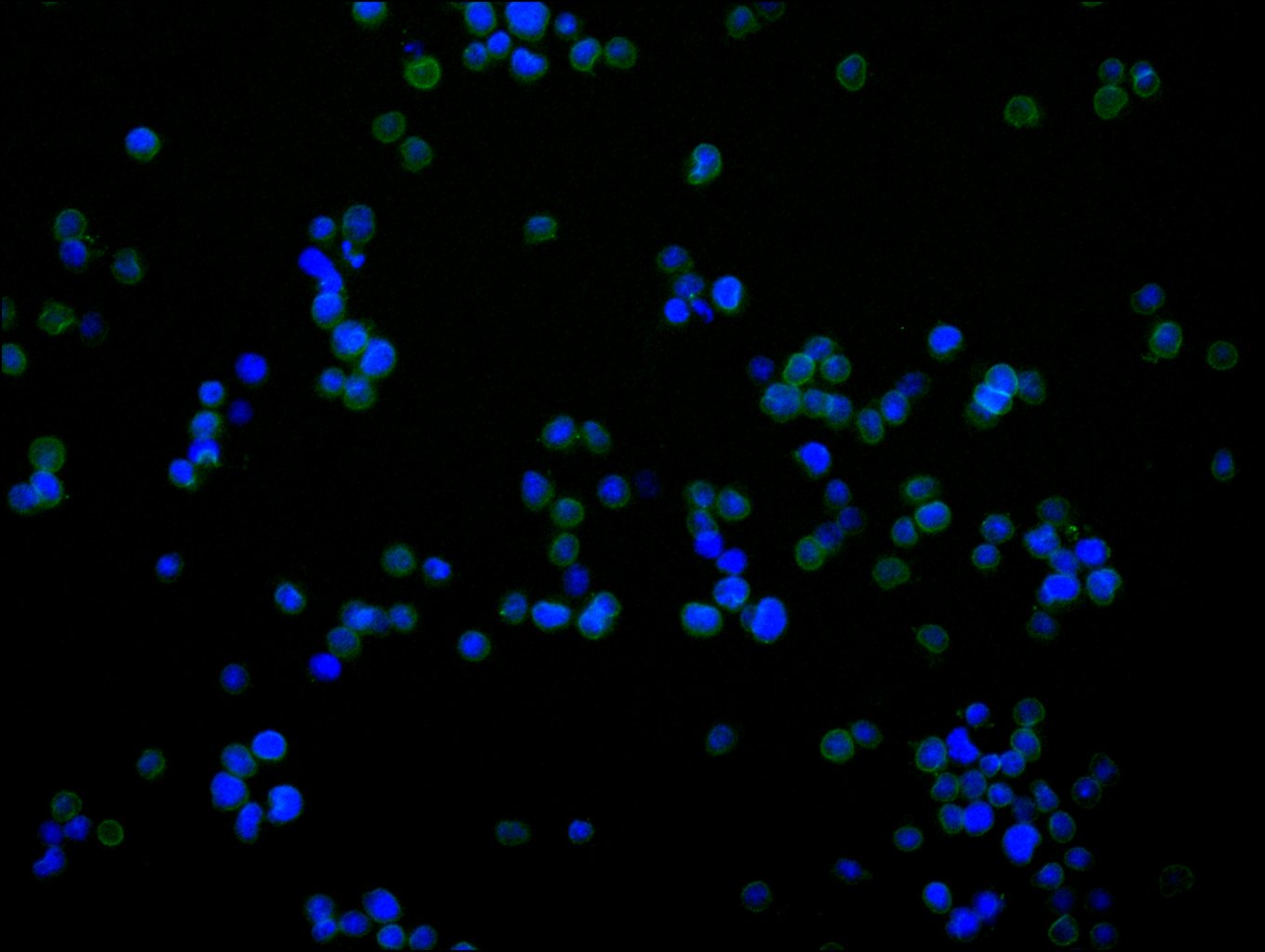
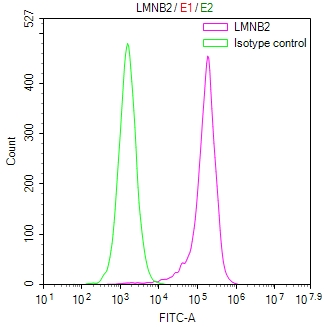
Validation across multiple platforms demonstrates this antibody's versatility in your workflow. Western blot analysis detects LMNB2 at approximately 68 kDa in HeLa, THP-1, and PC-3 cell lysates, with the slight difference from the predicted 70 kDa molecular weight likely reflecting post-translational processing typical of lamin proteins. Immunohistochemistry staining has been validated in human glioma and kidney tissue sections, while immunofluorescence studies in Jurkat cells reveal the characteristic nuclear envelope localization pattern. Flow cytometry analysis in HepG2 cells further confirms reliable detection in suspension-based assays.
Whether investigating nuclear lamina dynamics, exploring lamin alterations in cancer progression, or examining nuclear envelope breakdown during mitosis, this antibody provides a dependable tool for advancing your understanding of LMNB2 biology across diverse experimental contexts.
There are currently no reviews for this product.





