
Call us
301-363-4651 (Available 9 a.m. to 5 p.m. CST from Monday to Friday)

| Code | CSB-RA187479A0HU |
| Size | US$210 |
| Order now | |
| Image |
|
| Have Questions? | Leave a Message or Start an on-line Chat |
| Application | Recommended Dilution |
|---|---|
| IHC | 1:50-1:200 |
MME, also known as neprilysin or CD10, serves as a zinc-dependent metalloprotease with broad significance across multiple research disciplines. This cell surface enzyme degrades a variety of bioactive peptides including enkephalins, atrial natriuretic peptide, and substance P, positioning it as a key regulator of peptide signaling in both physiological and pathological contexts. In cancer research, CD10 expression patterns help distinguish specific leukemia subtypes, earning it the designation Common Acute Lymphocytic Leukemia Antigen, while its presence or absence in solid tumors provides valuable diagnostic and prognostic information. Beyond oncology, neprilysin plays established roles in cardiovascular regulation and has emerged as a therapeutic target in heart failure treatment.
This recombinant monoclonal antibody, clone 10G11, offers the reproducibility that demanding research protocols require. Generated against a synthetic peptide derived from human CD10 and produced using recombinant technology in rabbit host, each lot delivers sequence-defined consistency that eliminates the variability often encountered with traditional hybridoma-derived antibodies. The affinity-purified rabbit IgG format ensures minimal background in your detection systems.
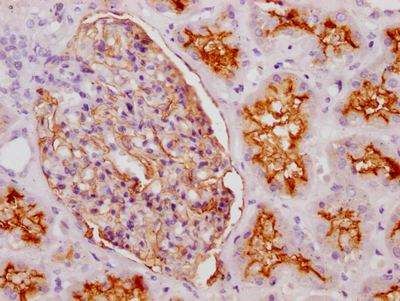
Validation in immunohistochemistry demonstrates reliable performance in paraffin-embedded human kidney tissue, where the antibody successfully detected MME at dilutions ranging from 1:50 to 1:200 using standard citrate buffer antigen retrieval. The validated protocol employed a polymer-based HRP detection system with DAB visualization, providing a tested starting point for your own tissue studies. Additional compatibility with ELISA expands experimental flexibility.
This antibody supports investigations spanning cancer biology, immunological research, and stem cell studies where CD10 serves as a lineage marker, making it a versatile tool for researchers exploring neprilysin biology across these interconnected fields.
There are currently no reviews for this product.





