MSMB Recombinant Monoclonal Antibody

Code CSB-RA195526A0HU
Size US$210
Order now
Image
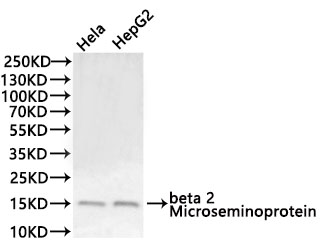
  • Western Blot
    Positive WB detected in: Hela whole cell lysate(30µg), HepG2 whole cell lysate(30µg)
    All lanes: beta 2 Microseminoprotein antibody at 1:1000
    Secondary
    Goat polyclonal to rabbit IgG at 1/40000 dilution
    Predicted band size: 13 kDa
    Observed band size:15 kDa
    Exposure time:3min
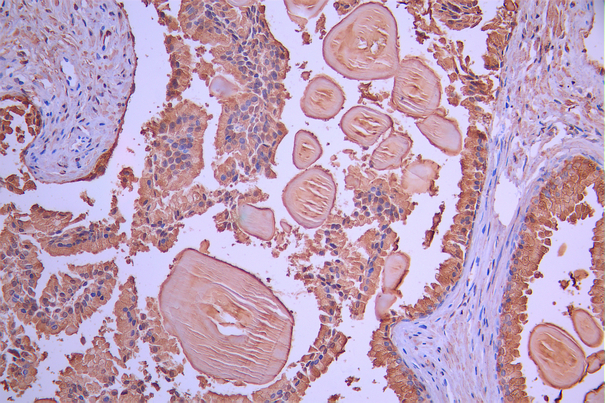
  • IHC image of CSB-RA195526A0HU diluted at 1:100 and staining in paraffin-embedded human prostate tissue performed on a Leica BondTM system. After dewaxing and hydration, antigen retrieval was mediated by high pressure in a citrate buffer (pH 6.0). Section was blocked with 10% normal goat serum 30min at RT. Then primary antibody (1% BSA) was incubated at 4°C overnight. The primary is detected by a Goat anti-rabbit polymer IgG labeled by HRP and visualized using 0.05% DAB.
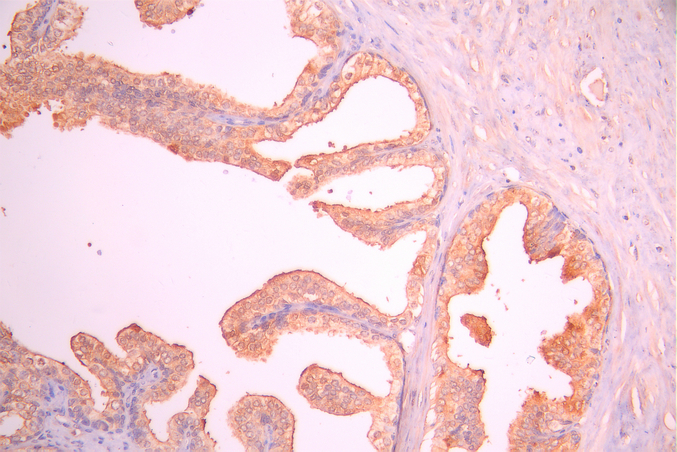
  • IHC image of CSB-RA195526A0HU diluted at 1:100 and staining in paraffin-embedded human prostate cancer performed on a Leica BondTM system. After dewaxing and hydration, antigen retrieval was mediated by high pressure in a citrate buffer (pH 6.0). Section was blocked with 10% normal goat serum 30min at RT. Then primary antibody (1% BSA) was incubated at 4°C overnight. The primary is detected by a Goat anti-rabbit polymer IgG labeled by HRP and visualized using 0.05% DAB.
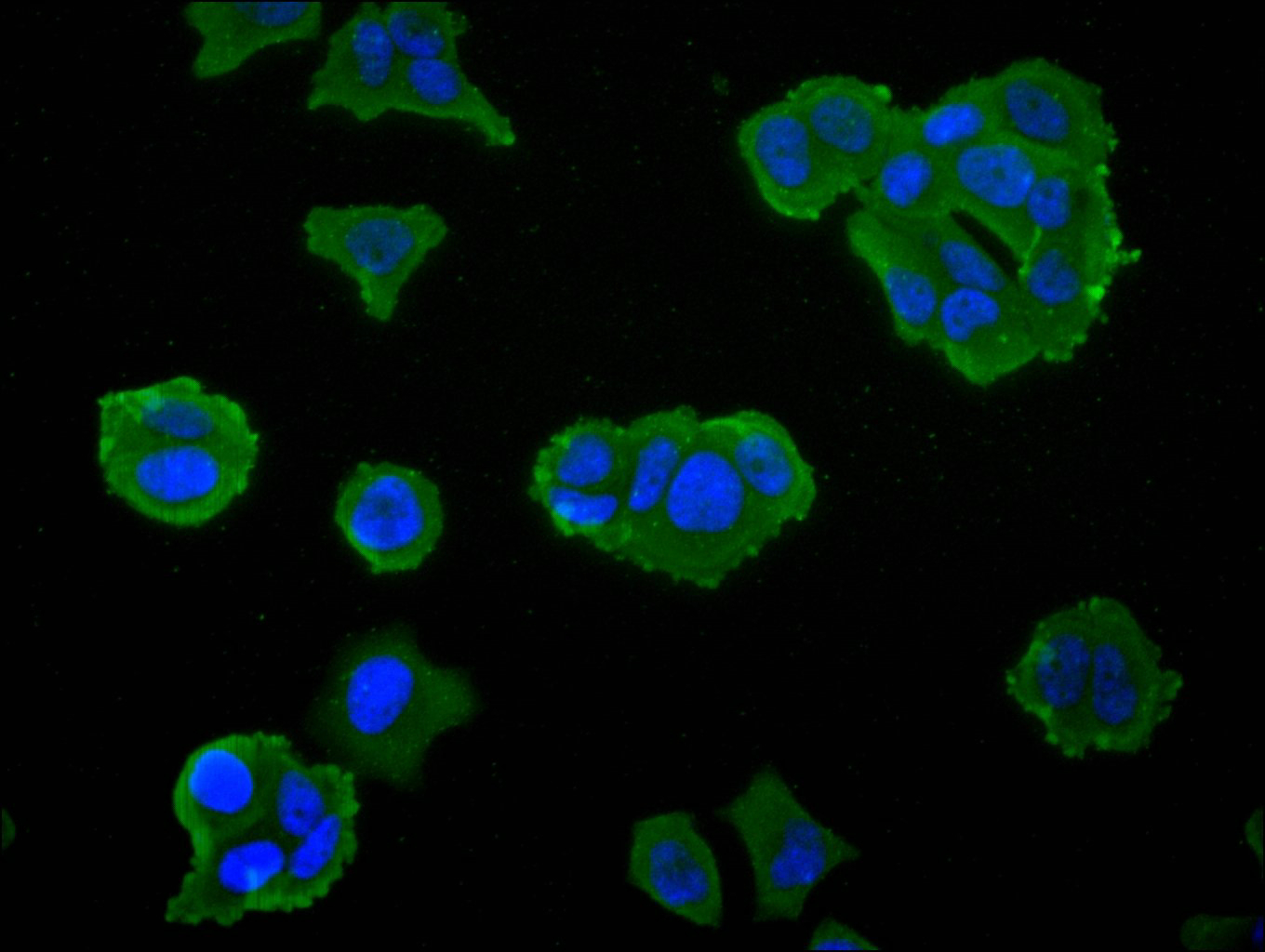
  • Immunofluorescence staining of MCF-7 cell with CSB-RA195526A0HU at 1:50 ,counter-stained with DAPI. The cells were fixed in 4% formaldehyde, permeabilized using 0.2% Triton X-100 and blocked in 10% normal Goat Serum. The cells were then incubated with the antibody overnight at 4°C. The secondary antibody was Alexa Fluor 488-congugated AffiniPure Goat Anti-Rabbit IgG(H+L).
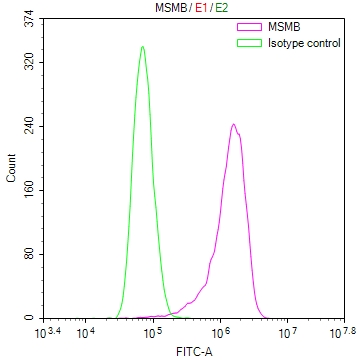
  • Overlay Peak curve showing PC-3 cells stained with CSB-RA195526A0HU (red line) at 1:100. The cells were fixed in 4% formaldehyde and permeated by 0.2% TritonX-100 for 10min. Then 10% normal goat serum to block non-specific protein-protein interactions followed by the antibody (1ug/1*106cells) for 45min at 4℃. The secondary antibody used was FITC-conjugated goat anti-rabbit IgG (H+L) at 1/200 dilution for 35min at 4℃.Control antibody (green line) was Rabbit IgG (1ug/1*106cells) used under the same conditions. Acquisition of >10,000 events was performed.
Have Questions? Leave a Message or Start an on-line Chat

Product Details

Uniprot No.
Target Names
MSMB
Alternative Names
Beta-microseminoprotein (Immunoglobulin-binding factor) (IGBF) (PN44) (Prostate secreted seminal plasma protein) (Prostate secretory protein of 94 amino acids) (PSP-94) (PSP94) (Seminal plasma beta-inhibin), MSMB, PRSP
Species Reactivity
Human
Immunogen
A synthesized peptide derived from Human MSMB protein
Immunogen Species
Homo sapiens (Human)
Conjugate
Non-conjugated
Clonality
Monoclonal
Isotype
Rabbit IgG
Clone No.
2G10
Purification Method
Affinity-chromatography
Concentration
It differs from different batches. Please contact us to confirm it.
Buffer
Rabbit IgG in 10mM phosphate buffered saline , pH 7.4, 150mM sodium chloride, 0.05% BSA, 0.02% sodium azide and 50% glycerol.
Form
Liquid
Tested Applications
ELISA, WB, IHC, IF, FC
Recommended Dilution
Application Recommended Dilution
WB 1:500-1:5000
IHC 1:50-1:200
IF 1:20-1:200
FC 1:20-1:200
Troubleshooting and FAQs
Storage
Upon receipt, store at -20°C or -80°C. Avoid repeated freeze.
Lead Time
Basically, we can dispatch the products out in 1-3 working days after receiving your orders. Delivery time maybe differs from different purchasing way or location, please kindly consult your local distributors for specific delivery time.
Usage
For Research Use Only. Not for use in diagnostic or therapeutic procedures.

Customer Reviews and Q&A

 Customer Reviews

There are currently no reviews for this product.

Submit a Review here

Target Background

Gene References into Functions
  1. Studies indicate prostate secretory protein of 94 amino acids (PSP94) as a prostate tumor marker [Review]. PMID: 28930560
  2. this meta-analysis indicates that MSMB gene rs10993994 polymorphism increases the risk of PC. PMID: 28212531
  3. PSP94 levels differed among idiopathic pulmonary fibrosis, pulmonary sarcoidosis and chronic pulmonary obstructive disease. PMID: 27758987
  4. Results identified CRISP2 as a potential binding protein of PSP94 from human sperm. PMID: 27161017
  5. decreased expression of MSMB parallels the clinical progression of PC and adjusted serum MSMB levels are associated with PC risk PMID: 26939004
  6. Based on nasopharyngeal MSP gene expression in readily available Nasopharyngeal aspirate samples , we can discriminate between severity of disease in Respiratory syncytial virus infected infants. PMID: 25261323
  7. PSP94 regulate the Lin28/Let-7 loop in ovarian cancer cells. PMID: 25188517
  8. Data indicate that prostate secretory protein PSP94 is decreased in an ovarian cancer drug-resistant cell line, and plays an important role in the development of drug resistance in vitro. PMID: 24186202
  9. The rs10993994 genotype in the MSMB gene modifies the association between number of sexual partners and prostate cancer risk. PMID: 24037734
  10. Beta-microseminoprotein in urine was statistically lower in prostate cancer patients. PMID: 24115268
  11. Han Chinese men carrying the MSMB variant have an increased risk of spermatogenic failure associated with male infertility. PMID: 23608167
  12. Data indicate that the increase in prostate cancer (PC) risk associated with rs10993994:C>T is likely mediated by the variant's effect of MSMB-encoded protein PSP94 expression; however, this effect does not extend to NCOA4 in the data. PMID: 22887727
  13. Involvement of the hinge region of CRISPs in interaction with PSP94 may affect the domain movement of CRISPs essential for the ion-channel regulatory activity resulting in inhibition of this activity. PMID: 23375721
  14. MSMB and CRISP3 were widely distributed in ovaries and in ovarian tumors; the expression of MSMB fits well with a tumor-suppressor function in ovarian carcinogenesis. PMID: 22993349
  15. Computational network analysis reveals that the MSMB gene is functionally connected to NCOA4 and the androgen receptor signaling pathway. The data provide an example of how GWAS-associated variants may have multiple genetic and epigenetic effects PMID: 22661295
  16. These data identify beta-microseminoprotein as an important innate immune factor active against C. albicans and may help explain the low sexual transmission rate of Candida. PMID: 22496651
  17. MSMB is a strong independent factor, predicting favorable outcome after radical prostatectomy for localized prostate cancer. PMID: 21240253
  18. provide the first link between a low penetrance polymorphism for prostate cancer and a potential test in human tissue and bodily fluids PMID: 20967219
  19. Suppression of MSMB expression or NCOA4 overexpression promotes anchorage-independent growth of prostate epithelial cells. PMID: 21085629
  20. Authors examines the association between rs10993994 genotype and MSP levels in a sample of 500 prostate cancer-free men from four racial/ethnic populations in the Multiethnic Cohort (European Americans, African Americans, Latinos, and Japanese Americans). PMID: 20736317
  21. MSMB expression is influenced by androgens, but also by genotype and epigenetic silencing. PMID: 20680031
  22. Either PSP94 or CRISP-3 alone can induce growth inhibition in prostate cancer cells in a cell line specific manner. PMID: 20676114
  23. High MSMB expression is associated with the development of prostate cancer. PMID: 20569440
  24. SNPs at MSMB correlate with physiologic variation in beta-MSP and PSA levels in the blood and semen of healthy young Swedish men. In particular, rs10993994 has a strong effect on beta-MSP levels. PMID: 20696662
  25. A single-nucleotide polymorphism in the MSMB promoter contributes to the genetic predisposition to prostate cancer in the southern Chinese Han population. PMID: 20333697
  26. Crystal structure shows that these edges from two PSP94 monomers associate in antiparallel fashion, leading to formation of a dimer. PMID: 20184897
  27. We conclude that MSMB is unlikely to be a familial prostate cancer gene.The high-risk alleles may effect prostate cancer risk by modifying MSMB gene expression in response to hormones in a tissue-specific manner. PMID: 19997100
  28. Ab initio structure of human seminal plasma prostatic inhibin gives significant insight into its biological functions. PMID: 12032598
  29. a new blood protein (PSPBP) is identified that binds PSP94 PMID: 15344909
  30. NMR solution structure PMID: 16930619
  31. Bound/free PSP94 is a novel and independent prognostic markers following radical prostatectomy for prostate cancer. PMID: 17062675
  32. Our data disclose a hitherto unexplored link between the putative oncogene EZH2 and the tumor suppressor PSP94, and show that MSMB is silenced by EZH2 in advanced prostate cancer cells. PMID: 17237810
  33. both native PSP94 as well as modified protein have the ability to bind human IgG, suggesting the involvement of sequential epitopes of PSP94 in IgG binding PMID: 17493883
  34. Predictor of recurrence after radical prostatectomy for localized prostate cancer. PMID: 17634540
  35. MSP in serum can be used as a marker of prostate secretion, despite the contribution from extra prostatic tissues. PMID: 18222915
  36. A tentative structure for the hMSP-CRISP-3 complex using the known crystal structure of triflin as a model of CRISP-3 was presented. PMID: 19026612
  37. alternative splicing variants, M-RIP, HYAL2, CDCA1, and MSMB genes showed differential expressions between cancer cells and corresponding normal tissues. PMID: 19081476
  38. The observations that rs10993994 is the strongest associated variant in the region and its risk allele has a major effect on the transcriptional activity of MSMB suggest the T allele as a causal variant that confers increased risk of prostate cancer. PMID: 19153072
  39. PSP94 has been purified from human seminal plasma and crystallized. PMID: 19342788
  40. a common variant in MSMB on chromosome 10q11.2 is associated with prostate cancer susceptibility PMID: 19383797
  41. beta-Microseminoprotein was purified using anion-exchange and size-exclusion chromatography and the purified protein was crystallized using 0.1 M ammonium sulfate, 0.1 M HEPES buffer pH 7.0 and 20%(w/v) PEG 3350 PMID: 19407392
  42. For the two SNPs that had significant differences between more and less aggressive disease, KLK3 and MSMB, the alleles that are associated with increased risk for prostate cancer were more frequent in patients with less aggressive disease. PMID: 19434657

Show More

Hide All

Involvement in disease
Prostate cancer, hereditary, 13 (HPC13)
Subcellular Location
Secreted. Note=Sperm surface.
Protein Families
Beta-microseminoprotein family
Tissue Specificity
Strongly expressed in prostate, liver, kidney, breast and penis. Also expressed in pancreas, esophagus, stomach, deodenum, colon, trachea, lung, salivary glands and fallopian tube. PSP94 is expressed in lung and breast, whereas PSP57 is found in kidney an
Database Links

HGNC: 7372

OMIM: 157145

KEGG: hsa:4477

STRING: 9606.ENSP00000351363

UniGene: Hs.255462

icon of phone
Call us
301-363-4651 (Available 9 a.m. to 5 p.m. CST from Monday to Friday)

icon of address
Address
7505 Fannin St., Ste 610, Room 7 (CUBIO Innovation Center), Houston, TX 77054, USA
icon of social media
Join us with

Subscribe newsletter

Leave a message

* To protect against spam, please pass the CAPTCHA test below.
CAPTCHA verification
© 2007-2026 CUSABIO TECHNOLOGY LLC All rights reserved. 鄂ICP备15011166号-1
Place an order now

I. Product details

*
*
*
*

II. Contact details

*
*

III. Ship To

*
*
*
*
*
*
*

IV. Bill To

*
*
*
*
*
*
*
*


