
Call us
301-363-4651 (Available 9 a.m. to 5 p.m. CST from Monday to Friday)

| Code | CSB-RA579492A0HU |
| Size | US$210 |
| Order now | |
| Image |
|
| Have Questions? | Leave a Message or Start an on-line Chat |
| Application | Recommended Dilution |
|---|---|
| IHC | 1:50-1:200 |
NAIP, also known as neuronal apoptosis inhibitory protein or BIRC1, serves as a critical regulator of programmed cell death and innate immune responses. As a member of the inhibitor of apoptosis protein family, NAIP plays essential roles in protecting neurons from apoptotic signals and functions as an intracellular pattern recognition receptor within the inflammasome complex. Its involvement in both cell survival pathways and inflammatory responses makes it a compelling target for researchers investigating cancer biology, neurodegenerative conditions, and immune cell function.
This recombinant monoclonal antibody, clone 13E6, offers the reproducibility and consistency that demanding experimental workflows require. Generated against a synthetic peptide derived from human NAIP and produced using recombinant technology in rabbit host, this antibody provides sequence-defined specificity that eliminates the lot-to-lot variability often encountered with traditional hybridoma-derived reagents. The affinity-chromatography purification ensures high purity suitable for sensitive detection methods.
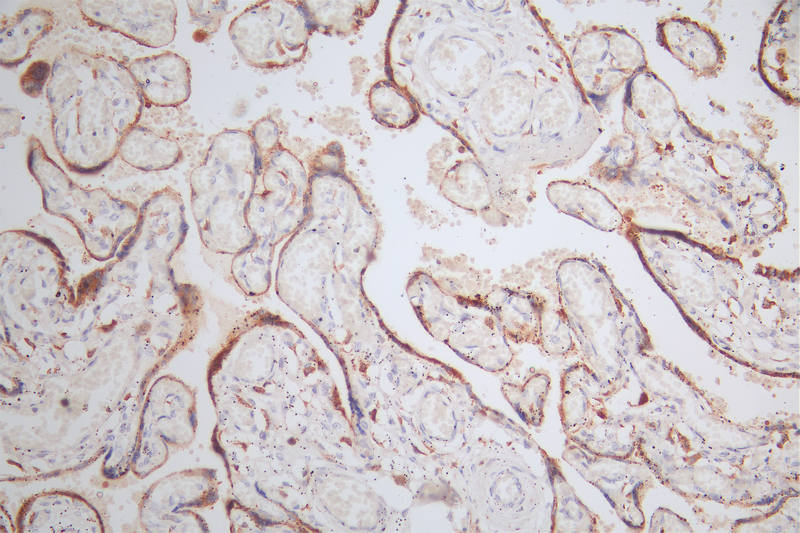
Validation in immunohistochemistry demonstrates reliable performance in paraffin-embedded human placenta tissue, with recommended working dilutions of 1:50 to 1:200. The established staining protocol, utilizing citrate buffer antigen retrieval at pH 6.0 followed by overnight primary antibody incubation, provides a solid foundation for researchers to adapt to their specific tissue types and experimental conditions. Additional compatibility with ELISA expands its utility across different experimental platforms.
For investigators exploring apoptosis regulation, inflammasome biology, or the intersection of cell death pathways with cancer progression, this antibody provides a dependable tool for characterizing NAIP expression patterns in human samples.
There are currently no reviews for this product.





