
Call us
301-363-4651 (Available 9 a.m. to 5 p.m. CST from Monday to Friday)

| Code | CSB-RA564743A0HU |
| Size | US$210 |
| Order now | |
| Image |
|
| Have Questions? | Leave a Message or Start an on-line Chat |
| Application | Recommended Dilution |
|---|---|
| WB | 1:500-1:2000 |
| IF | 1:50-1:200 |
| FC | 1:50-1:200 |
NME2, also known as nucleoside diphosphate kinase B, plays a multifaceted role in cellular biology that extends well beyond its canonical enzymatic function. This protein participates in nucleotide metabolism, DNA binding, and transcriptional regulation, notably acting as a purine-binding transcription factor that influences c-myc expression. Its involvement in metastasis suppression and cellular differentiation makes NME2 a compelling target for cancer biology research and studies investigating gene regulation mechanisms.
This recombinant monoclonal antibody, clone 14G12, offers researchers the reproducibility advantages inherent to recombinant technology. Because the antibody sequence is defined and produced through controlled expression systems, you can expect consistent performance across experiments and between lots, eliminating the variability that can complicate long-term studies or multi-site collaborations.
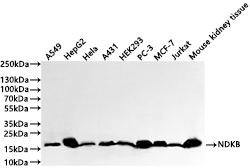
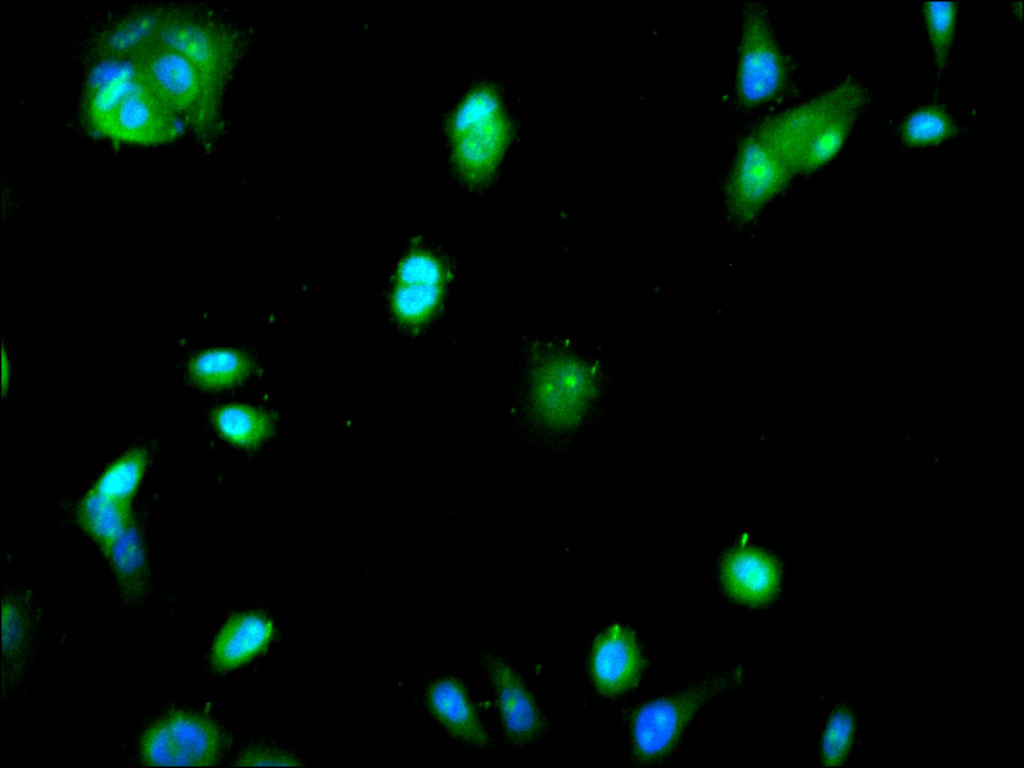
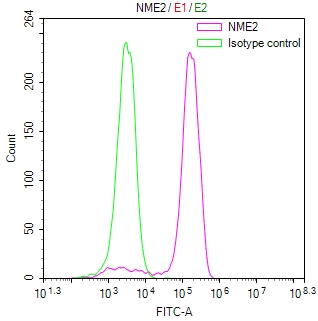
Validation data demonstrates robust performance across multiple experimental platforms. Western blot analysis detects a clean 17 kDa band matching the predicted molecular weight, confirmed across an extensive panel of human cell lines including A549, HepG2, HeLa, A431, HEK293, PC-3, MCF-7, and Jurkat cells, as well as mouse kidney tissue. This cross-species reactivity between human and mouse samples provides flexibility for researchers working with different model systems. Immunofluorescence staining in MCF-7 cells reveals clear cellular localization patterns, while flow cytometry validation in the same cell line shows distinct population separation from isotype controls, confirming utility for quantitative single-cell analyses.
The antibody's compatibility with ELISA, Western blot, immunofluorescence, and flow cytometry workflows makes it suitable for researchers investigating NME2's roles in tumor progression, metastatic potential, nucleotide metabolism, and transcriptional regulation across diverse experimental approaches.
There are currently no reviews for this product.





