
Call us
301-363-4651 (Available 9 a.m. to 5 p.m. CST from Monday to Friday)

| Code | CSB-RA017647MA2HU |
| Size | $49.9 |
| Order now | |
| Promotion |

|
| Image |
|
| Have Questions? | Leave a Message or Start an on-line Chat |
| Application | Recommended Dilution |
|---|---|
| ELISA | 1:5000-1:50000 |
PCSK9 (proprotein convertase subtilisin/kexin type 9) has emerged as a pivotal regulator of cholesterol homeostasis, functioning primarily by promoting the degradation of LDL receptors on hepatocyte surfaces. This mechanism directly influences circulating LDL cholesterol levels, making PCSK9 a high-value target in cardiovascular disease research and therapeutic development. Gain-of-function mutations in PCSK9 are associated with familial hypercholesterolemia, while loss-of-function variants confer protection against coronary heart disease, underscoring the protein's clinical significance.
This recombinant monoclonal antibody against human PCSK9, clone 9F1, was generated using recombinant Human PCSK9 protein as the immunogen. The recombinant production method ensures sequence-defined consistency between lots, eliminating the batch variability that can complicate longitudinal studies or assay development workflows. As a human IgG1 isotype antibody, it offers predictable behavior in immunoassay formats requiring Fc-mediated detection strategies.
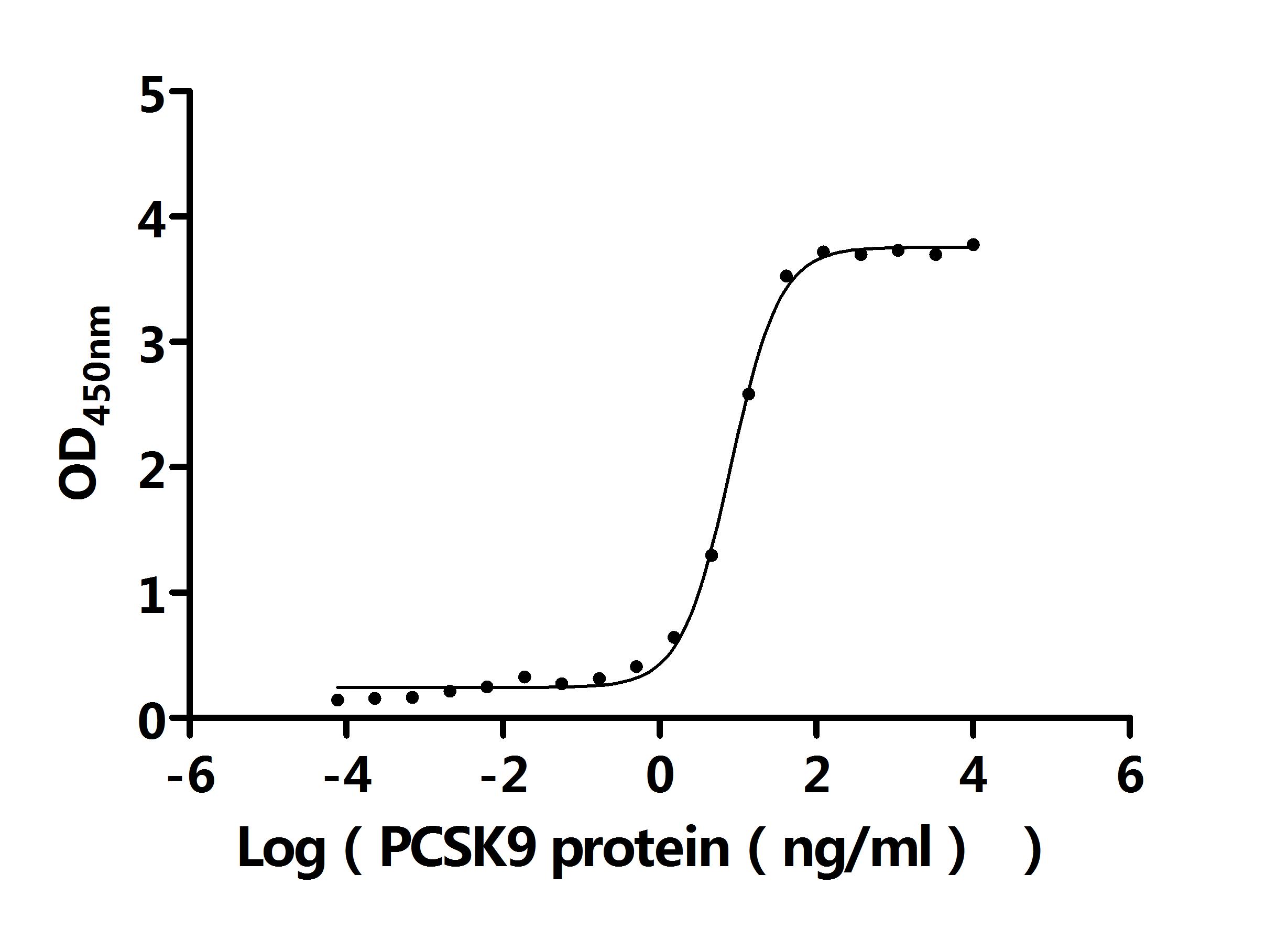
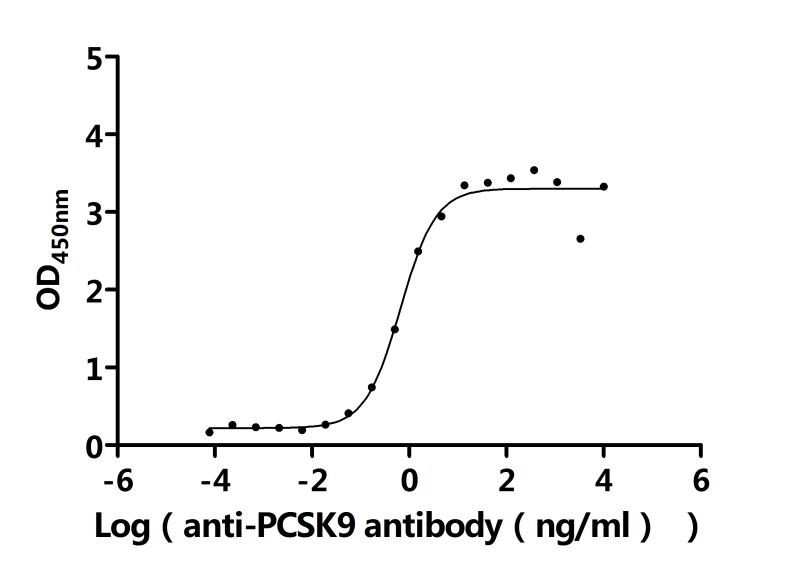
Functional ELISA validation demonstrates robust binding characteristics with well-defined sensitivity parameters. When immobilized at 2 μg/mL, the antibody binds Human PCSK9 protein with an EC50 of 7.450–8.692 ng/mL. In the reverse orientation, with PCSK9 immobilized on streptavidin-coated plates, the antibody achieves an EC50 of 0.3792–1.157 ng/mL, indicating high-affinity target recognition suitable for quantitative detection applications. The recommended ELISA dilution range of 1:5000–1:50000 provides flexibility for optimization across different experimental conditions.
This antibody supports investigations spanning cardiovascular biology, lipid metabolism, cancer research, and signal transduction studies where PCSK9-mediated pathways intersect with cellular regulatory networks. The affinity-purified preparation arrives in a glycerol-based buffer system ready for immediate use in your ELISA-based detection workflows.
There are currently no reviews for this product.





