
Call us
301-363-4651 (Available 9 a.m. to 5 p.m. CST from Monday to Friday)

| Code | CSB-RA090067A0HU |
| Size | US$210 |
| Order now | |
| Image |
|
| Have Questions? | Leave a Message or Start an on-line Chat |
| Application | Recommended Dilution |
|---|---|
| WB | 1:500-1:5000 |
| IHC | 1:50-1:200 |
| FC | 1:50-1:200 |
PNKP (polynucleotide kinase 3'-phosphatase) serves as a critical enzyme in DNA repair pathways, possessing dual enzymatic activities that process damaged DNA termini. This bifunctional protein phosphorylates 5'-hydroxyl groups while removing 3'-phosphate groups, preparing DNA ends for ligation during base excision repair and single-strand break repair. Mutations in PNKP have been linked to neurological disorders including microcephaly with early-onset seizures, making it a significant target for researchers investigating DNA damage response mechanisms and neurodevelopmental conditions.
This recombinant monoclonal antibody, clone 12F11, offers the reproducibility and consistency that demanding research applications require. Produced using recombinant technology with a defined sequence, it eliminates the lot-to-lot variability that can compromise longitudinal studies and multi-site collaborations. The rabbit host and monoclonal nature ensure high specificity for human PNKP detection.
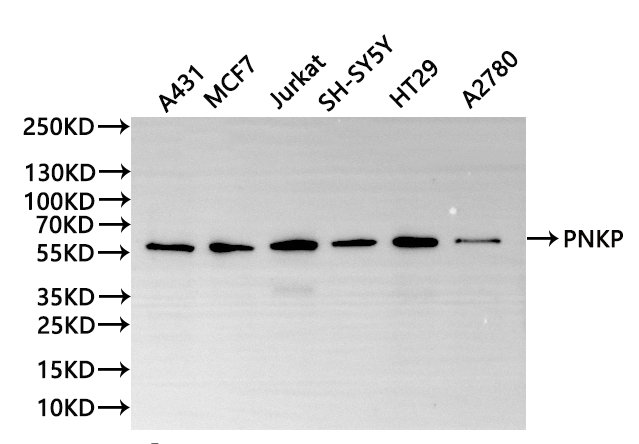
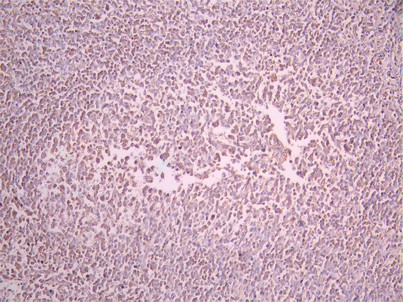
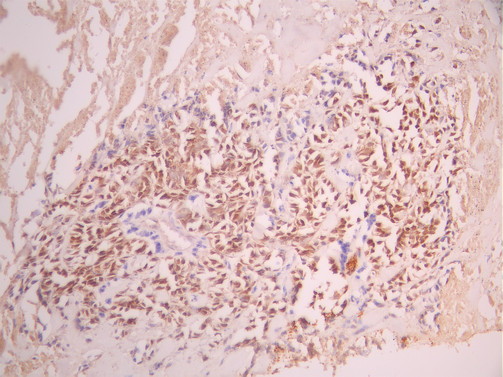
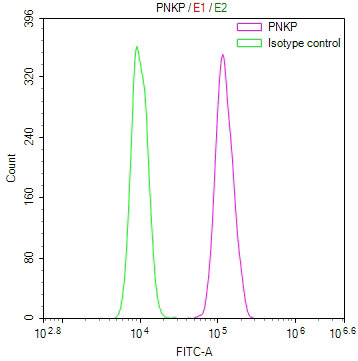
Validation across multiple platforms demonstrates this antibody's versatility in your experimental workflows. Western blot analysis confirms detection of PNKP at the expected 57 kDa molecular weight across diverse human cell lines including A431, MCF-7, Jurkat, SH-SY5Y, HT-29, and A2780, providing confidence when working with epithelial, neuroblastoma, lymphoid, or ovarian cancer models. Immunohistochemistry applications have been validated in paraffin-embedded human tonsil and breast cancer tissues, enabling spatial analysis of PNKP expression in both normal and pathological contexts. Flow cytometry validation in HeLa cells further extends its utility for single-cell analysis of intracellular PNKP levels.
Whether investigating DNA repair mechanisms, exploring PNKP's role in cancer biology, or studying its connection to neurological disease, this antibody provides a reliable tool for advancing your research.
There are currently no reviews for this product.





