
Call us
301-363-4651 (Available 9 a.m. to 5 p.m. CST from Monday to Friday)

| Code | CSB-RA280291A0HU |
| Size | US$210 |
| Order now | |
| Image |
|
| Have Questions? | Leave a Message or Start an on-line Chat |
| Application | Recommended Dilution |
|---|---|
| WB | 1:500-1:5000 |
| IHC | 1:50-1:200 |
POU2AF1, also known as BOB-1 or OCA-B, serves as a critical B-cell-specific transcriptional coactivator that partners with octamer-binding transcription factors to regulate immunoglobulin gene expression and B-cell differentiation. This protein plays essential roles in germinal center formation and the generation of effective humoral immune responses, making it a valuable marker for studying B-cell biology, lymphoma classification, and immune system development.
This recombinant rabbit monoclonal antibody, clone 4A5, offers the consistency and reproducibility that demanding research applications require. Because recombinant antibodies are produced from defined genetic sequences rather than traditional hybridoma methods, researchers benefit from lot-to-lot uniformity that supports reliable longitudinal studies and reproducible experimental outcomes. The antibody was raised against a synthetic peptide derived from human BOB1 and purified using affinity chromatography to ensure high specificity.
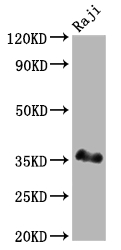
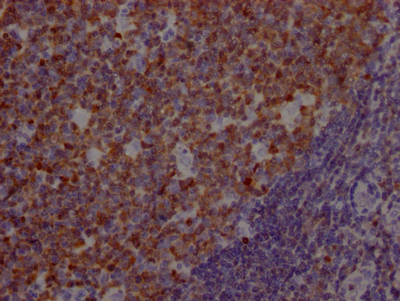
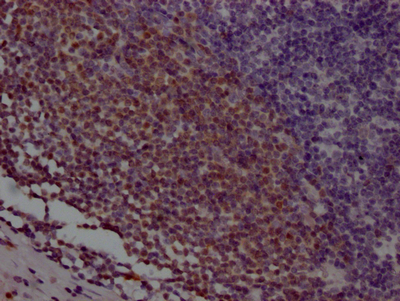
Validation studies demonstrate robust performance across multiple applications. In Western blot analysis of Raji whole cell lysate, the antibody detects a band at approximately 35 kDa, which runs slightly higher than the predicted 28 kDa molecular weight. This size difference likely reflects post-translational modifications, particularly glycosylation, that are characteristic of the native protein. For immunohistochemistry, the antibody has been validated in paraffin-embedded human tonsil and appendix tissues, both of which contain abundant B-cell populations where POU2AF1 expression would be expected. These tissue validations confirm the antibody's utility for examining BOB-1 expression patterns in lymphoid compartments.
Whether investigating B-cell development, characterizing lymphoproliferative disorders, or exploring transcriptional regulation in immune cells, this antibody provides a reliable tool for epigenetics, nuclear signaling, and immunology research.
There are currently no reviews for this product.





