
Call us
301-363-4651 (Available 9 a.m. to 5 p.m. CST from Monday to Friday)

| Code | CSB-RA018656MA1HU |
| Size | US$210 |
| Order now | |
| Image |
|
| Have Questions? | Leave a Message or Start an on-line Chat |
| Application | Recommended Dilution |
|---|---|
| WB | 1:500-1:2000 |
| IHC | 1:50-1:200 |
| IF | 1:50-1:200 |
| FC | 1:50-1:200 |
Peroxiredoxin 3 (PRDX3) serves as a critical mitochondrial antioxidant enzyme, protecting cells from oxidative damage by reducing hydrogen peroxide and organic hydroperoxides within the mitochondrial matrix. This thioredoxin-dependent peroxide reductase plays essential roles in cellular redox homeostasis, apoptosis regulation, and mitochondrial function, making it a significant target in neuroscience research and studies investigating oxidative stress-related pathologies.
This recombinant monoclonal antibody against human PRDX3, clone 7G2, offers the consistency and reproducibility that demanding research protocols require. Generated using recombinant technology with a sequence-defined approach, this antibody eliminates the lot-to-lot variability often encountered with traditional hybridoma-derived antibodies, ensuring your experimental results remain comparable across extended studies.
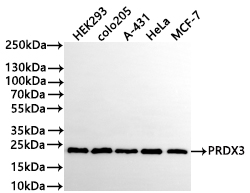
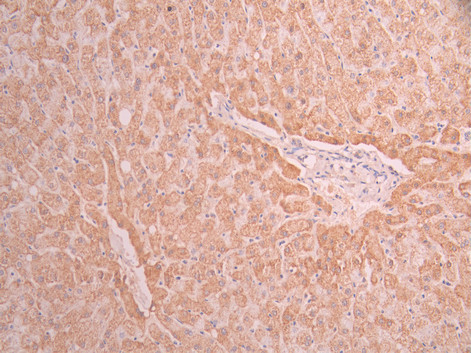
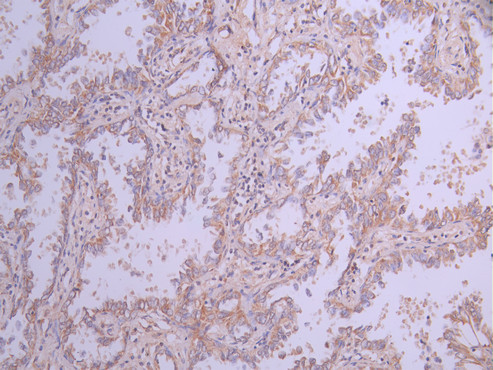
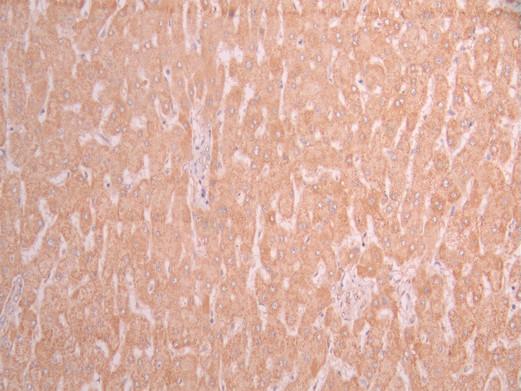
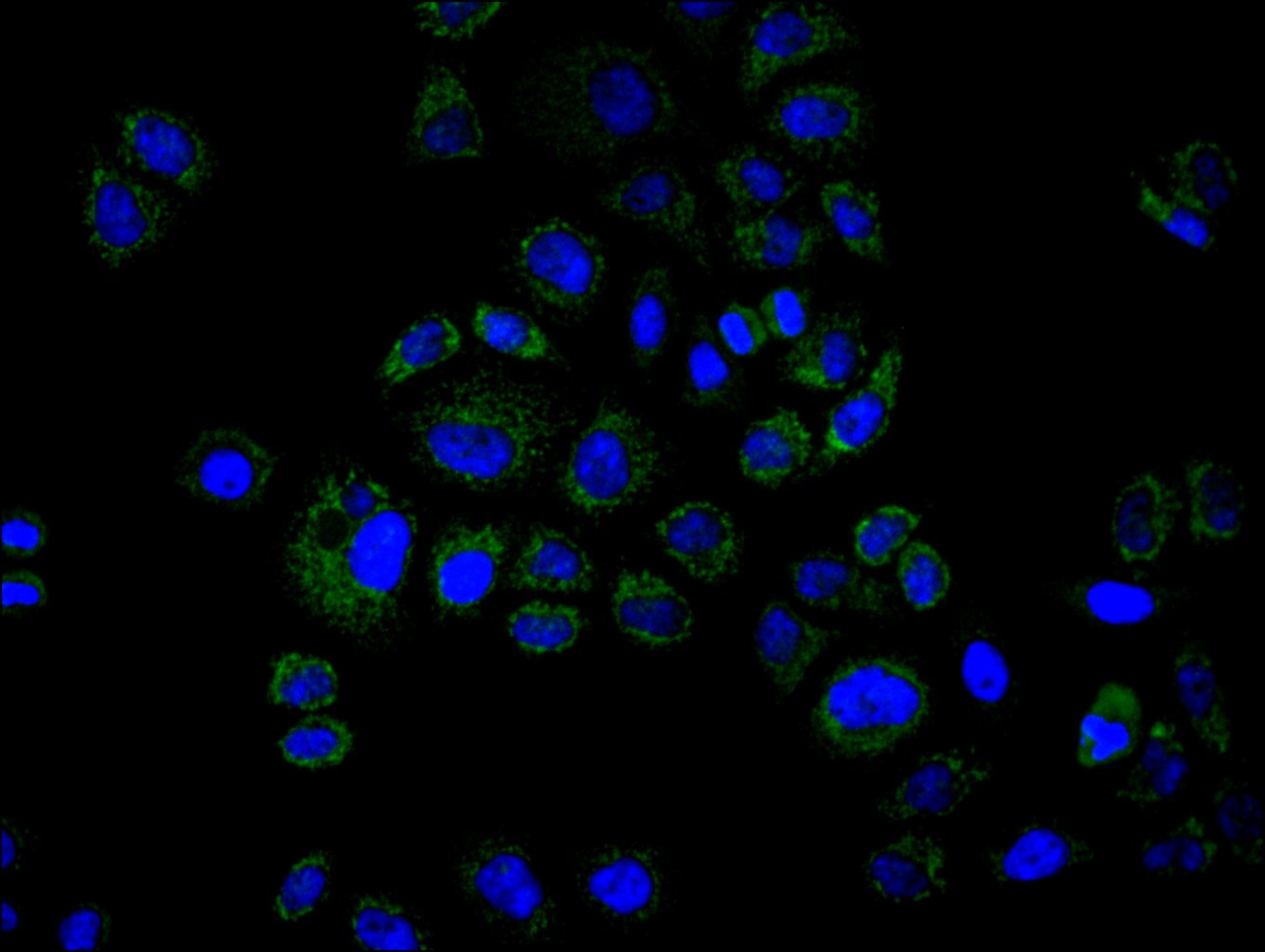
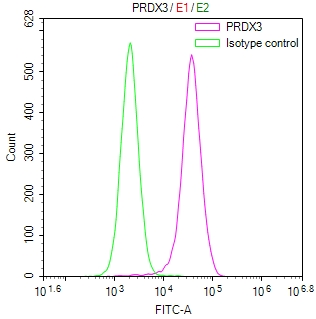
Extensive validation demonstrates this antibody's versatility across multiple experimental platforms. Western blot analysis confirms reliable detection in diverse human cell lines including HEK293, Colo205, A-431, HeLa, and MCF-7 lysates, with optimal performance at dilutions between 1:500 and 1:2000. The observed band at approximately 25 kDa, slightly smaller than the predicted 28 kDa molecular weight, likely reflects post-translational processing or the removal of the mitochondrial targeting sequence during protein maturation. Immunohistochemistry validation in paraffin-embedded human liver tissue, liver cancer, and lung cancer specimens demonstrates clear staining patterns suitable for tissue-based investigations. Additionally, immunofluorescence studies in HeLa cells and flow cytometry analysis in HepG2 cells confirm the antibody's utility for cellular localization and quantitative single-cell applications.
Whether investigating mitochondrial dysfunction, oxidative stress responses, or cancer biology, this affinity-purified human IgG1 antibody provides researchers with a dependable tool for exploring PRDX3 biology across multiple experimental approaches.
There are currently no reviews for this product.





