
Call us
301-363-4651 (Available 9 a.m. to 5 p.m. CST from Monday to Friday)

| Code | CSB-RA561645A0HU |
| Size | US$210 |
| Order now | |
| Image |
|
| Have Questions? | Leave a Message or Start an on-line Chat |
| Application | Recommended Dilution |
|---|---|
| WB | 1:500-1:2000 |
| IHC | 1:50-1:200 |
| IF | 1:50-1:200 |
| FC | 1:50-1:200 |
SET protein serves as a multifunctional regulator with significant roles in chromatin remodeling, transcriptional regulation, and cell cycle control. As a potent inhibitor of protein phosphatase 2A, SET influences numerous cellular signaling pathways, while its function as an inhibitor of granzyme A-activated DNase connects it to apoptotic processes. The protein's involvement in myeloid leukemia translocations and its designation as a nuclear oncogene make it a compelling target for cancer research and studies of cellular transformation.
This recombinant monoclonal antibody, generated from clone 5E6 in rabbit host, offers the reproducibility and consistency that demanding experimental workflows require. Because recombinant antibodies are produced from defined sequences rather than traditional hybridoma methods, researchers benefit from lot-to-lot uniformity that supports longitudinal studies and ensures comparable results across experiments.
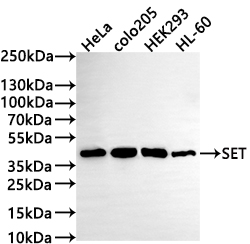
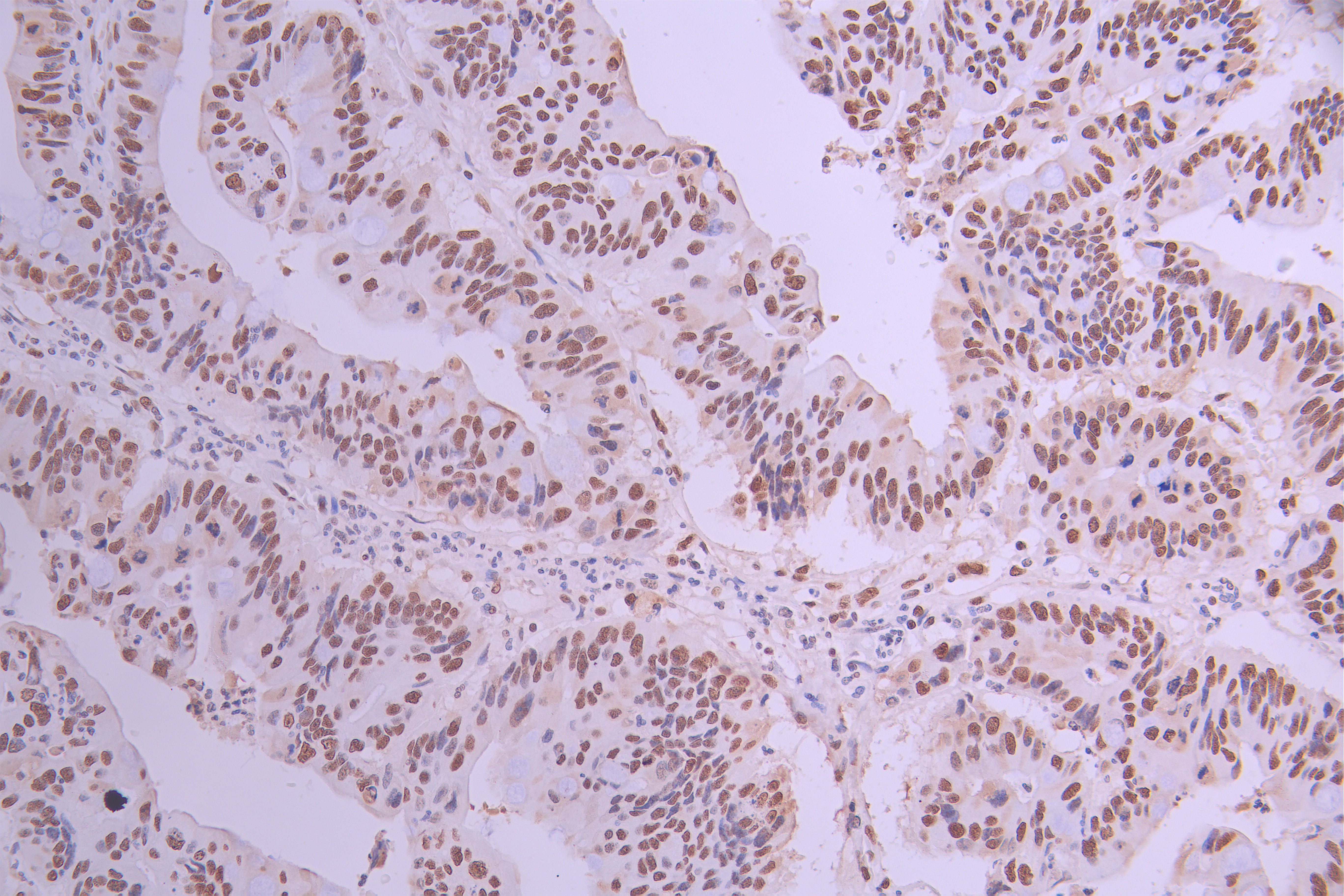
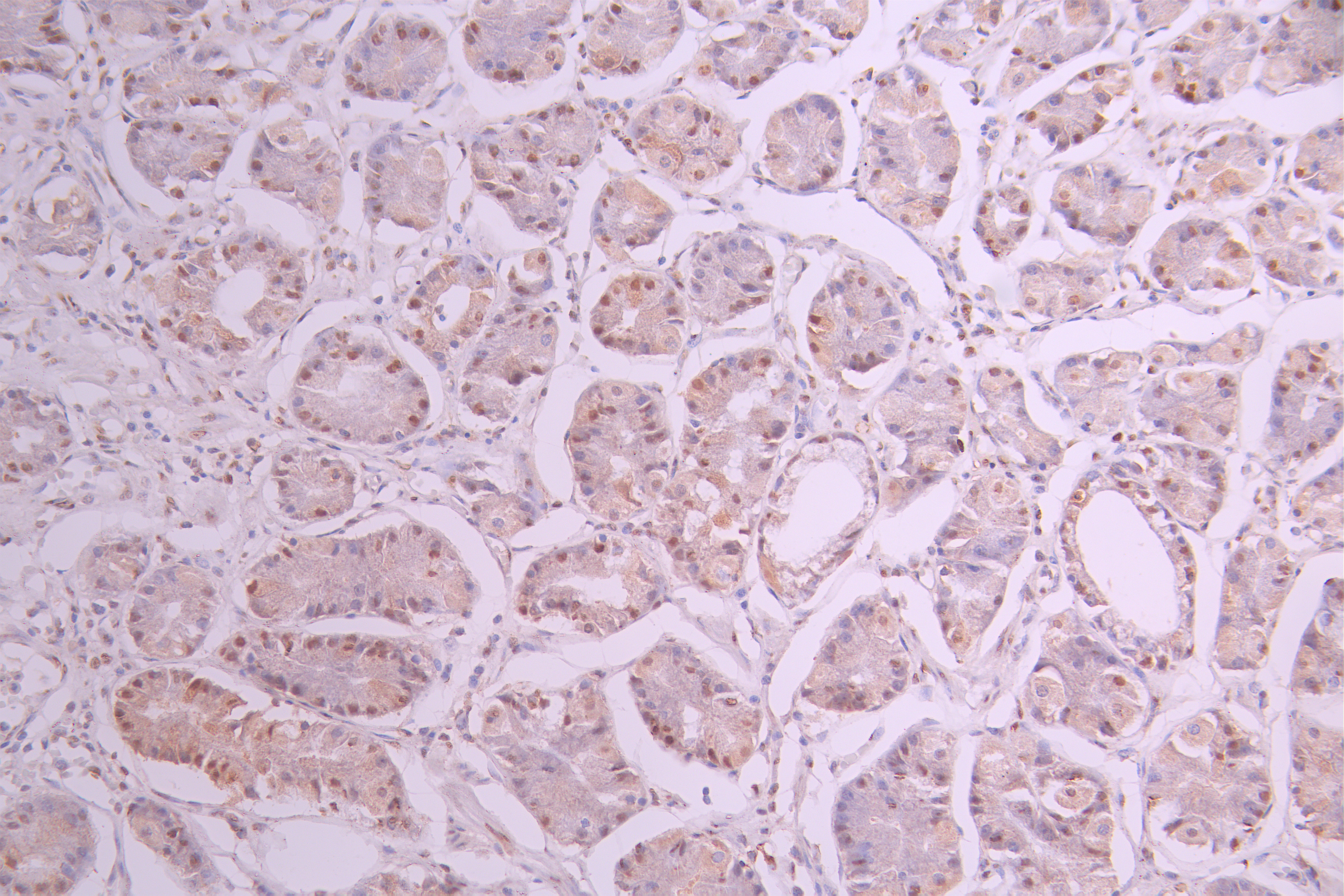
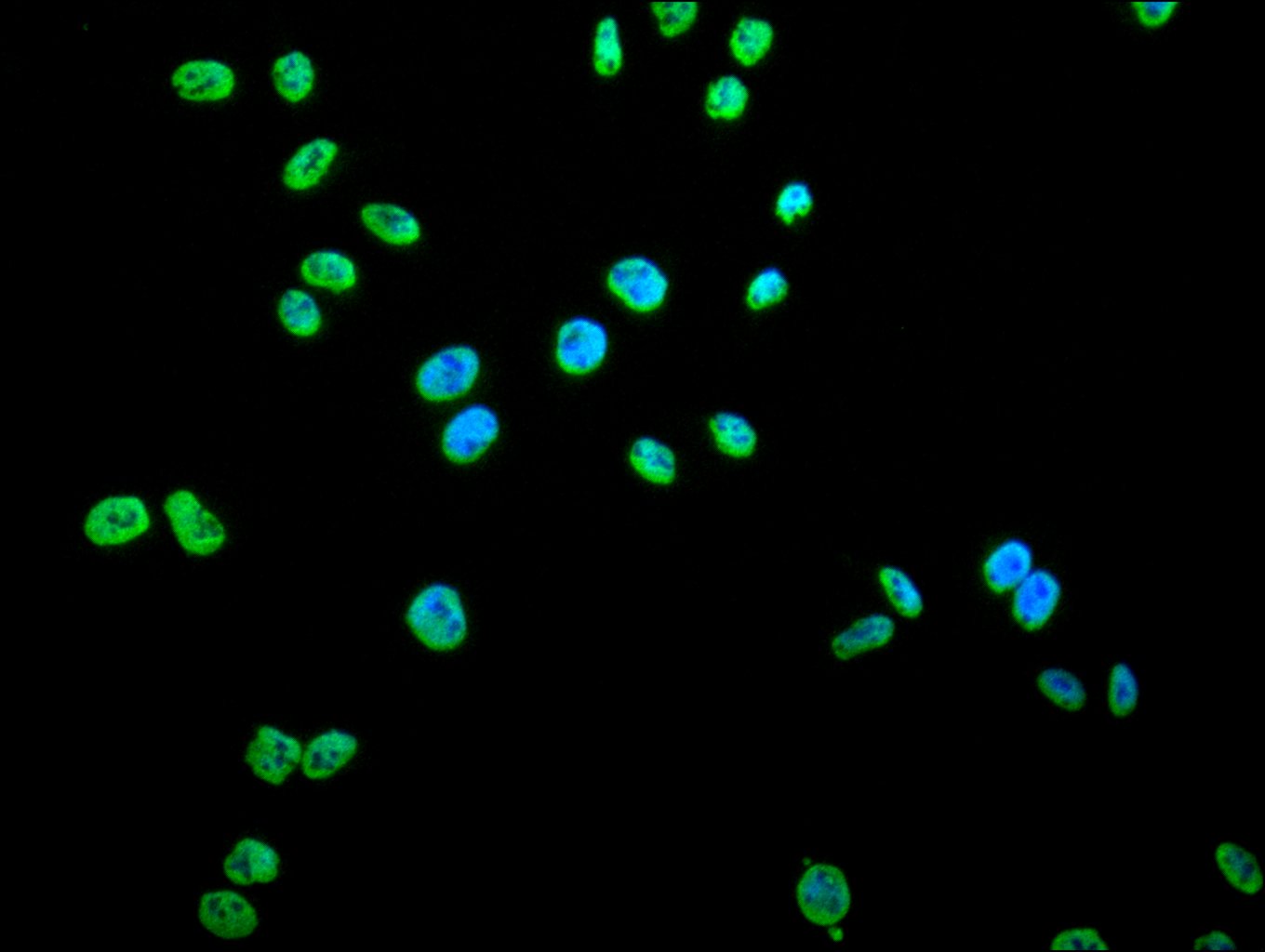
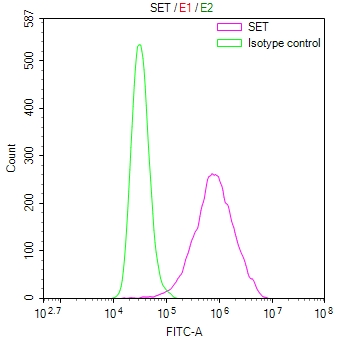
Validation testing demonstrates robust performance across multiple applications, providing flexibility for diverse experimental approaches. Western blot analysis detects SET protein in HeLa, COLO205, HEK293, and HL-60 cell lysates at dilutions between 1:500 and 1:2000. The observed band at 39 kDa runs slightly higher than the predicted 33 kDa molecular weight, a shift commonly attributed to post-translational modifications such as phosphorylation or glycosylation. Immunohistochemistry staining has been validated in human colorectal cancer and stomach tissue sections using citrate buffer antigen retrieval. Immunofluorescence microscopy reveals clear nuclear localization in HeLa cells, consistent with SET's known biological function. Flow cytometry analysis further confirms reliable detection in permeabilized HeLa cells.
This antibody supports investigations into PP2A signaling, chromatin dynamics, and oncogenic mechanisms across cancer biology and cell signaling research programs.
There are currently no reviews for this product.





