
Call us
301-363-4651 (Available 9 a.m. to 5 p.m. CST from Monday to Friday)

| Code | CSB-RA576014A0HU |
| Size | US$210 |
| Order now | |
| Image |
|
| Have Questions? | Leave a Message or Start an on-line Chat |
| Application | Recommended Dilution |
|---|---|
| WB | 1:500-1:5000 |
| IHC | 1:50-1:200 |
| IF | 1:50-1:200 |
| FC | 1:50-1:200 |
SF3B3, also known as SAP130 or SF3b130, serves as a critical component of the SF3b splicing complex, playing an essential role in pre-mRNA splicing and spliceosome assembly. This 136 kDa protein participates in the recognition and selection of branch point sequences during the early stages of spliceosome formation, making it a valuable target for researchers investigating RNA processing mechanisms, alternative splicing regulation, and related disease pathways.
This recombinant rabbit monoclonal antibody (clone 11G2) offers the reproducibility and consistency that demanding experimental workflows require. Generated against a synthetic peptide derived from human SF3B3, the sequence-defined nature of recombinant production ensures that each lot performs identically to the last, eliminating the variability concerns that can complicate long-term studies or multi-site collaborations.
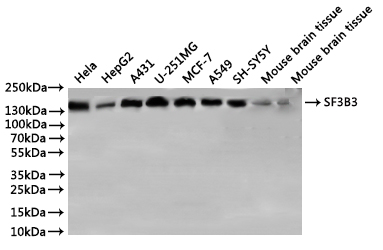
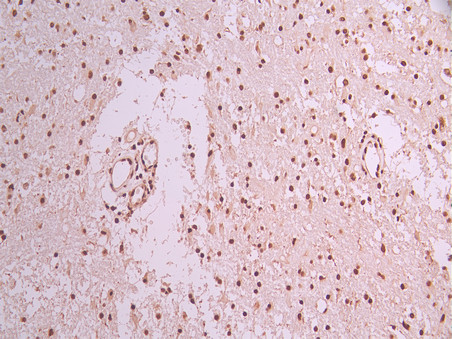
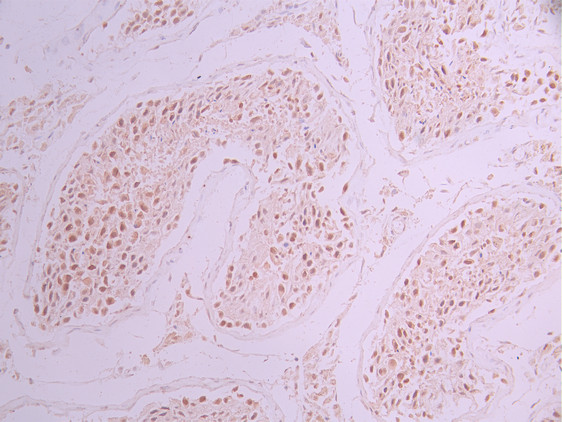
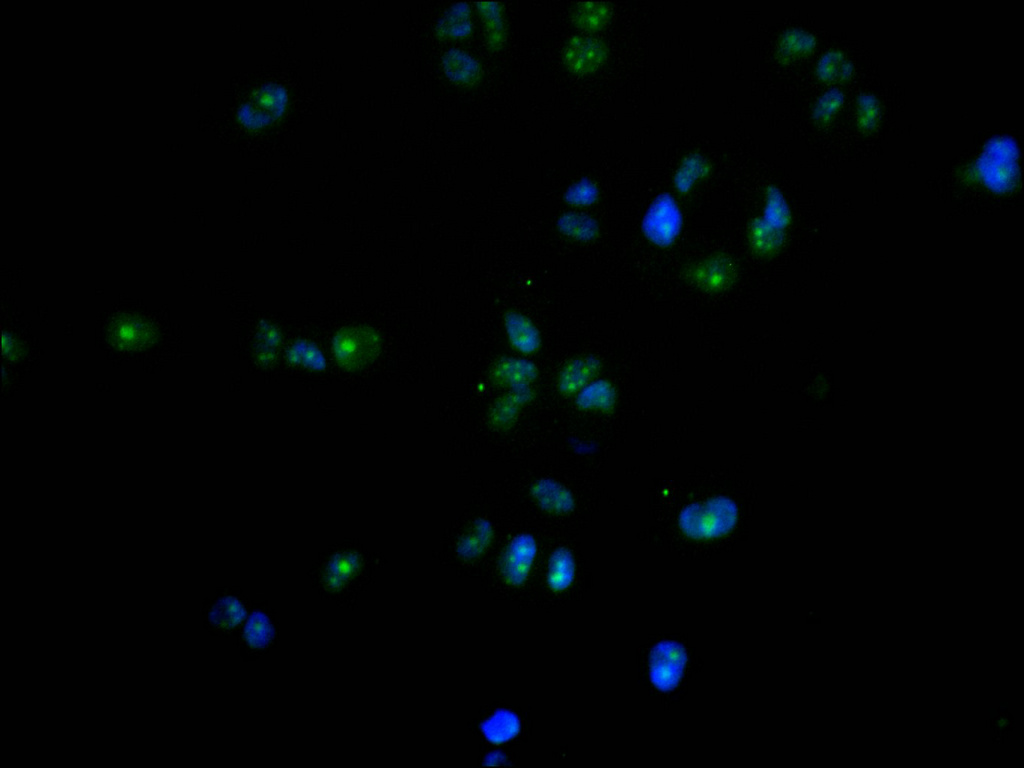
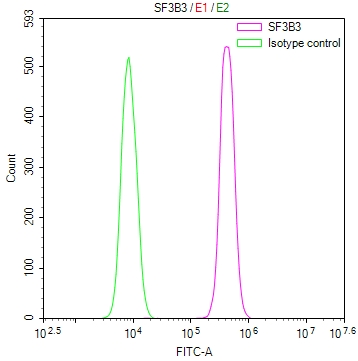
Validation data demonstrates robust performance across multiple experimental platforms. Western blot analysis confirms specific detection of the expected 136 kDa band across a diverse panel of human cell lines including HeLa, HepG2, A431, U-251MG, MCF-7, A549, and SH-SY5Y, with cross-species reactivity confirmed in mouse and rat brain tissue lysates. Immunohistochemistry staining has been validated in paraffin-embedded human glioma and testis tissues, revealing clear nuclear localization patterns consistent with SF3B3's known function. Immunofluorescence studies in MCF-7 cells and flow cytometry analysis in HeLa cells further expand the application flexibility available to researchers.
Whether investigating spliceosome biology, exploring splicing factor dysregulation in cancer, or characterizing RNA processing pathways, this antibody provides a reliable tool for detecting SF3B3 across tissue sections, cultured cells, and lysate-based assays.
There are currently no reviews for this product.





