
Call us
301-363-4651 (Available 9 a.m. to 5 p.m. CST from Monday to Friday)

| Code | CSB-RA822213MA1HU |
| Size | $49.9 |
| Order now | |
| Promotion |

|
| Image |
|
| Have Questions? | Leave a Message or Start an on-line Chat |
| Application | Recommended Dilution |
|---|---|
| IF | 1:50-1:200 |
SIPA1, also known as signal-induced proliferation-associated protein 1 or GTPase-activating protein Spa-1, functions as a critical regulator of Rap1 GTPase signaling. By accelerating the hydrolysis of GTP-bound Rap1 to its inactive GDP-bound state, SIPA1 influences fundamental cellular processes including adhesion, proliferation, and migration. Dysregulation of SIPA1 has been implicated in cancer metastasis and immune cell function, making it a compelling target for researchers investigating cell signaling networks and disease mechanisms.
This recombinant monoclonal antibody, clone 20H11, offers the reproducibility and consistency that demanding experimental workflows require. Developed using recombinant technology with a defined sequence, this antibody eliminates the lot-to-lot variability that can compromise longitudinal studies and multi-site collaborations. The human IgG1 isotype format, generated against recombinant human SIPA1 protein, ensures reliable target recognition in human samples.
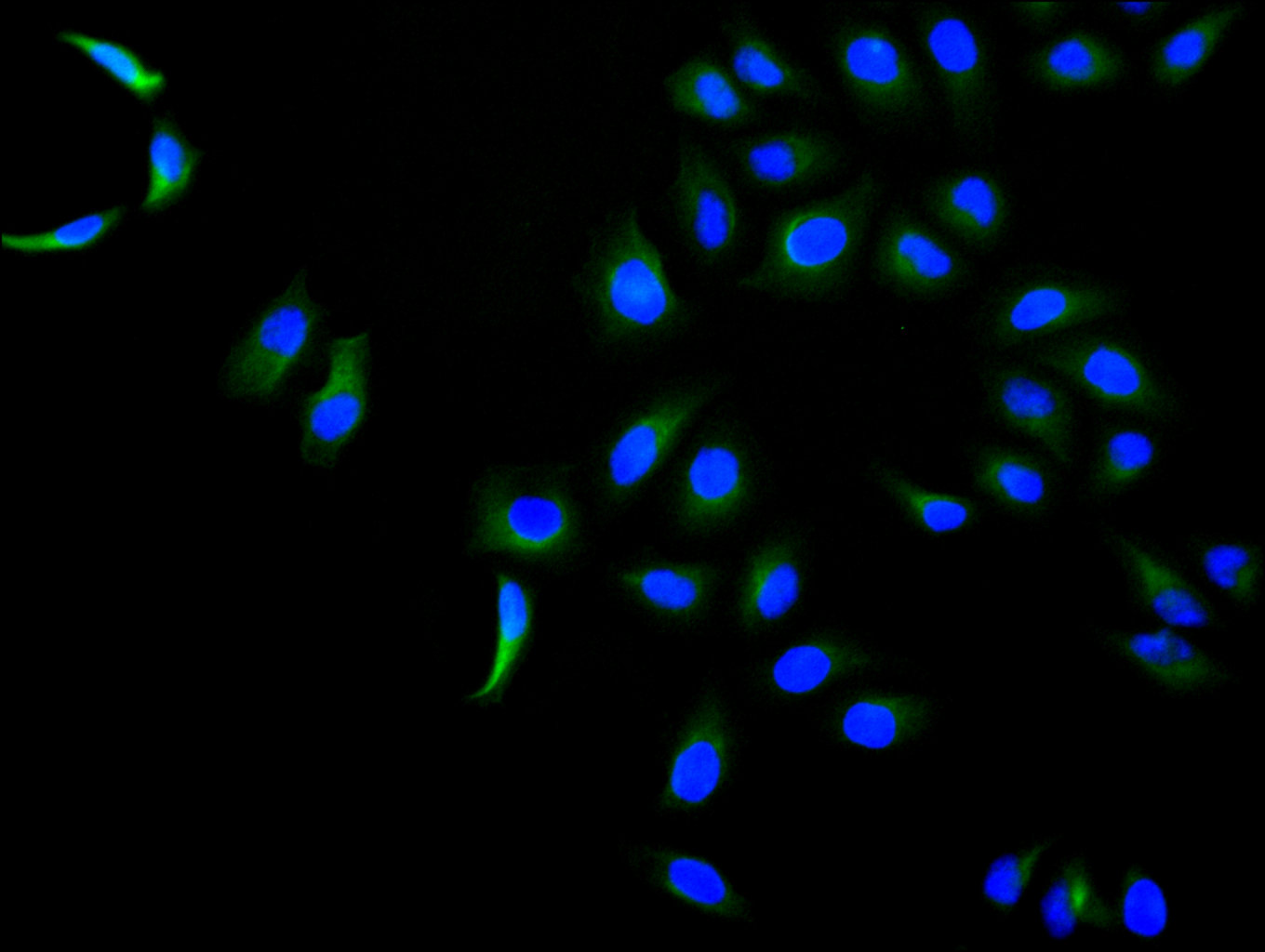
Validation through immunofluorescence demonstrates clear cytoplasmic localization in HeLa cells, with recommended dilutions ranging from 1:50 to 1:200 providing flexibility to optimize signal intensity for your specific imaging setup. The validation protocol employed standard fixation with 4% formaldehyde and 0.2% Triton X-100 permeabilization, offering a straightforward starting point for your experiments. Additional compatibility with ELISA extends the utility of this antibody across detection platforms.
Supplied in a liquid format with glycerol-based buffer for stability, this affinity-purified antibody is ready for immediate use in cell biology research exploring Rap1-mediated signaling, cellular adhesion dynamics, or proliferation control mechanisms. Whether investigating SIPA1's role in normal physiology or its contribution to pathological processes, this antibody provides the molecular specificity your research demands.
There are currently no reviews for this product.





