
Call us
301-363-4651 (Available 9 a.m. to 5 p.m. CST from Monday to Friday)

| Code | CSB-RA932304A0HU |
| Size | US$210 |
| Order now | |
| Image |
|
| Have Questions? | Leave a Message or Start an on-line Chat |
| Application | Recommended Dilution |
|---|---|
| WB | 1:500-1:2000 |
| IHC | 1:50-1:200 |
| IF | 1:50-1:200 |
| FC | 1:50-1:200 |
SRSF3, also known as SRP20, is a member of the serine/arginine-rich splicing factor family that plays essential roles in constitutive and alternative pre-mRNA splicing. This protein regulates splice site selection and participates in mRNA export from the nucleus, making it a critical factor in post-transcriptional gene regulation. SRSF3 has garnered significant research attention due to its involvement in cell proliferation, tumorigenesis, and developmental processes, with altered expression patterns observed across multiple cancer types.
This recombinant monoclonal antibody, generated against a synthetic peptide derived from human SRSF3, offers the consistency and reproducibility that demanding experimental workflows require. As a sequence-defined recombinant clone, it eliminates the lot-to-lot variability inherent in traditional hybridoma-derived antibodies, ensuring your results remain comparable across extended studies and collaborative projects.
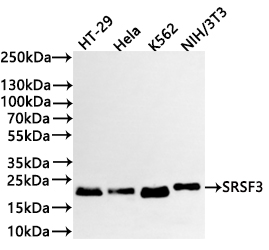
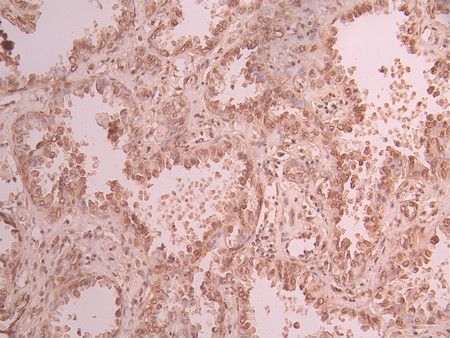
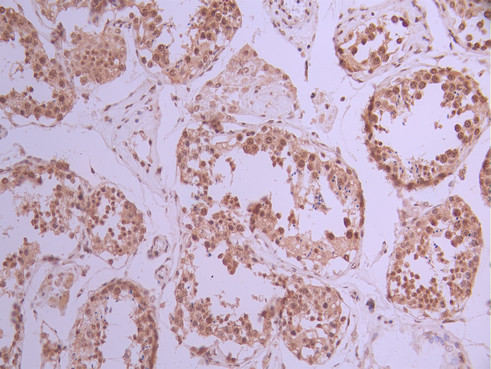
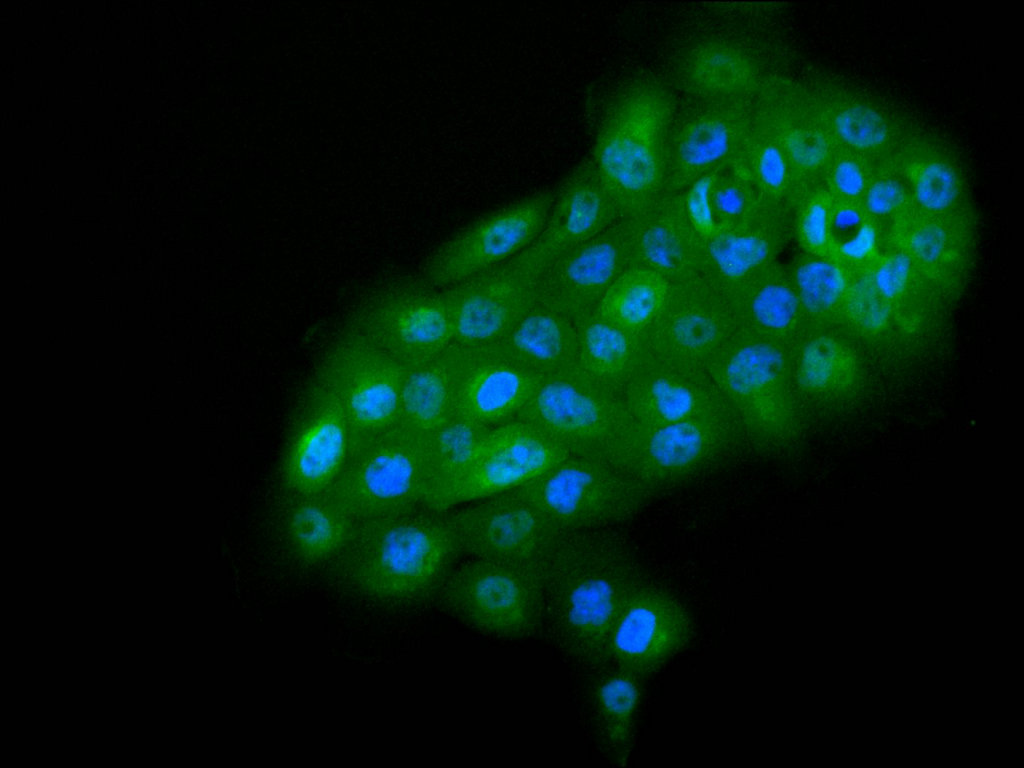
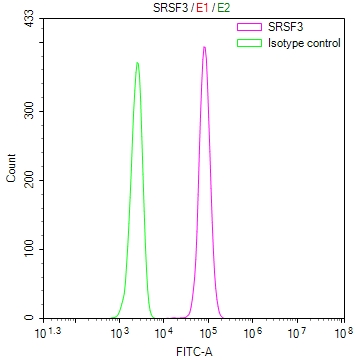
Validation data demonstrates robust performance across multiple applications. Western blot analysis at 1:1000 dilution detects a clean band at the predicted 19 kDa molecular weight in both human cell lines including HT-29, HeLa, and K562, as well as mouse NIH/3T3 cells, confirming cross-species reactivity between human and mouse samples. Immunohistochemistry staining has been successfully performed on paraffin-embedded human lung cancer and testis tissues using citrate buffer antigen retrieval. For cellular localization studies, immunofluorescence analysis in A431 cells and flow cytometry with Jurkat cells provide validated protocols for examining SRSF3 expression at the single-cell level.
This antibody serves researchers investigating RNA processing mechanisms, splicing regulation, and the growing field of splicing factor dysregulation in cancer biology and developmental disorders.
There are currently no reviews for this product.





