
Call us
301-363-4651 (Available 9 a.m. to 5 p.m. CST from Monday to Friday)

| Code | CSB-RA192658A0HU |
| Size | US$210 |
| Order now | |
| Image |
|
| Have Questions? | Leave a Message or Start an on-line Chat |
| Application | Recommended Dilution |
|---|---|
| IF | 1:50-1:200 |
| FC | 1:50-1:200 |
TCF7L2, also known as TCF-4, serves as a critical transcription factor within the Wnt signaling pathway, where it partners with β-catenin to regulate genes controlling cell proliferation, differentiation, and survival. This pathway's dysregulation has been extensively linked to colorectal cancer progression and type 2 diabetes susceptibility, making TCF7L2 a compelling target for researchers investigating metabolic disease mechanisms and oncogenic signaling networks.
This recombinant monoclonal antibody, clone 13G5, offers the reproducibility and consistency that demanding experimental workflows require. Generated against a synthetic peptide derived from human TCF7L2 and produced using recombinant technology in rabbit host, this antibody provides sequence-defined specificity that eliminates the lot-to-lot variability often encountered with traditional hybridoma-derived reagents. The result is reliable performance across extended studies where experimental continuity matters.
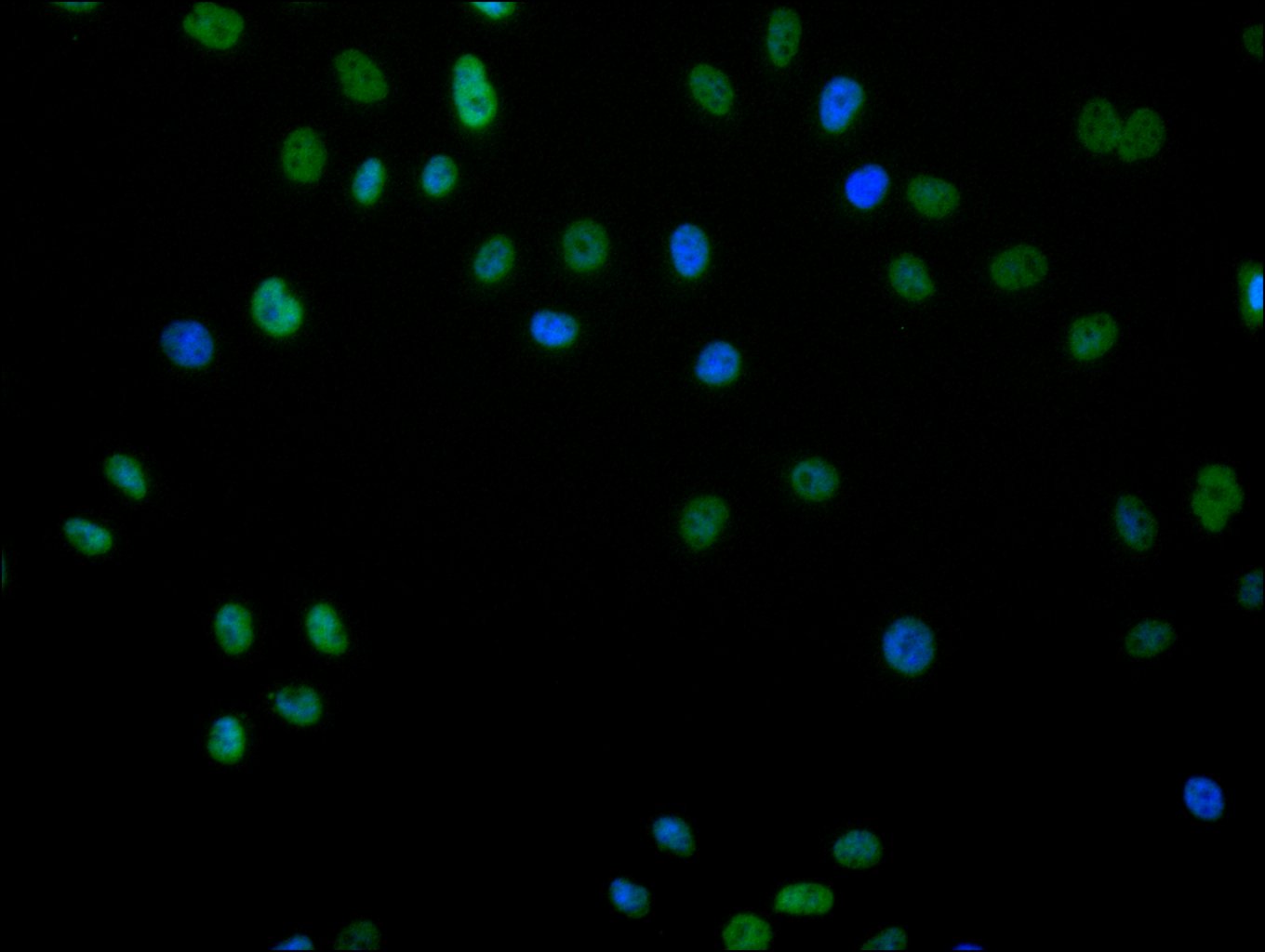
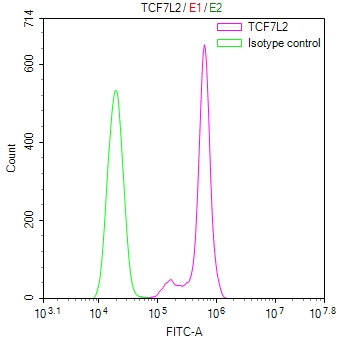
Validation studies demonstrate robust performance in immunofluorescence and flow cytometry applications. Immunofluorescence staining of HeLa cells reveals clear nuclear localization consistent with TCF7L2's role as a transcription factor, with optimal results achieved at dilutions between 1:50 and 1:200. Flow cytometric analysis using A549 cells confirms specific detection with minimal background, showing distinct separation from isotype control when used at 1:100 dilution. Both cell lines were processed using standard fixation with 4% formaldehyde and permeabilization with 0.2% Triton X-100, providing researchers with established protocols for immediate implementation.
This antibody supports investigations into Wnt pathway dynamics, cancer biology, and metabolic disease research where understanding TCF7L2 expression patterns and subcellular localization provides mechanistic insights into disease pathophysiology and potential therapeutic intervention points.
There are currently no reviews for this product.





