
Call us
301-363-4651 (Available 9 a.m. to 5 p.m. CST from Monday to Friday)

| Code | CSB-RA844006A0HU |
| Size | US$210 |
| Order now | |
| Image |
|
| Have Questions? | Leave a Message or Start an on-line Chat |
| Application | Recommended Dilution |
|---|---|
| IF | 1:50-1:200 |
| FC | 1:50-1:200 |
TFF1, also known as pS2 or trefoil factor 1, is a small secreted protein that plays a critical role in mucosal protection and epithelial restitution throughout the gastrointestinal tract. Originally identified as a breast cancer estrogen-inducible protein, TFF1 has become an important marker in cancer research, particularly in studies of hormone-responsive breast cancer and gastric carcinogenesis. Its expression patterns and regulatory mechanisms make it a valuable target for researchers investigating epithelial biology, tumor progression, and estrogen receptor signaling pathways.
This recombinant monoclonal antibody, clone 18C8, offers the consistency and reliability that demanding experimental workflows require. Produced using recombinant technology with a sequence-defined approach, this antibody eliminates the lot-to-lot variability often encountered with traditional hybridoma-derived reagents. The rabbit host origin combined with monoclonal specificity ensures reproducible results across extended research programs, allowing you to confidently compare data generated months or years apart.
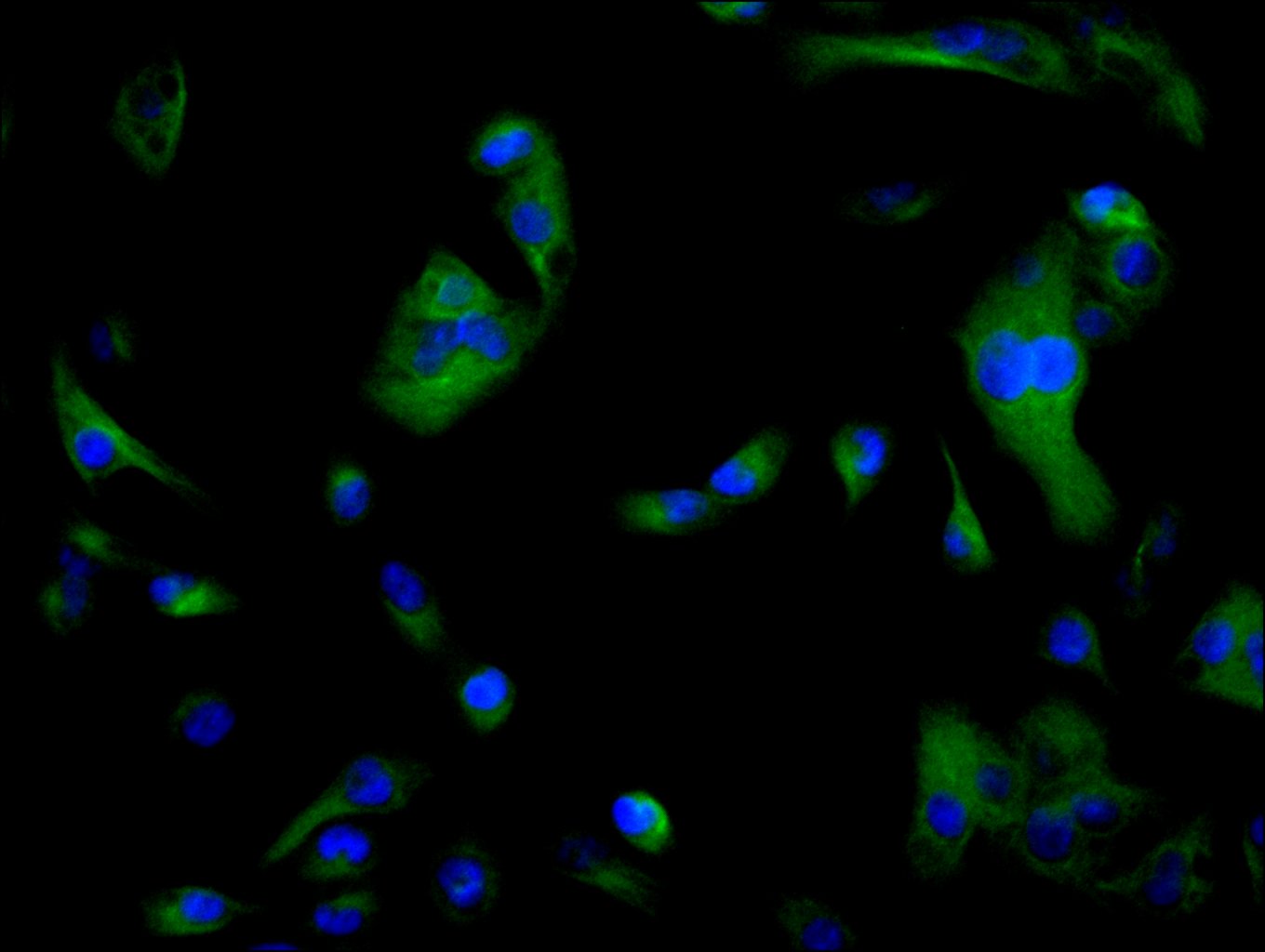
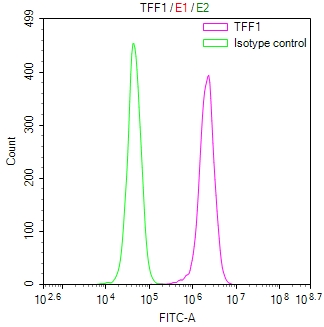
Validation studies demonstrate robust performance in both immunofluorescence and flow cytometry applications. Immunofluorescence staining of HepG2 cells reveals clear signal with recommended dilutions of 1:50 to 1:200, while flow cytometric analysis of MCF-7 cells shows distinct positive population shifts compared to isotype controls. These validated human cell lines provide confidence when incorporating this antibody into your experimental design.
The unconjugated format offers flexibility for pairing with your preferred secondary detection systems, supporting customization across diverse experimental setups. Whether investigating TFF1 expression in breast cancer models, exploring its role in gastrointestinal epithelial maintenance, or examining estrogen-mediated gene regulation, this antibody provides a dependable tool for advancing your research objectives.
There are currently no reviews for this product.





