
Call us
301-363-4651 (Available 9 a.m. to 5 p.m. CST from Monday to Friday)

| Code | CSB-RA279338A0HU |
| Size | US$210 |
| Order now | |
| Image |
|
| Have Questions? | Leave a Message or Start an on-line Chat |
| Application | Recommended Dilution |
|---|---|
| WB | 1:500-1:5000 |
| IHC | 1:50-1:200 |
TLE1, or Transducin-like enhancer protein 1, functions as a transcriptional corepressor within the Groucho/TLE family, playing essential roles in developmental signaling pathways including Wnt, Notch, and various homeodomain transcription factor networks. This protein has garnered significant attention in diagnostic pathology as a highly sensitive marker for synovial sarcoma, while its broader involvement in cell fate determination and differentiation makes it a valuable target for researchers investigating epigenetic regulation and nuclear signaling mechanisms.
This recombinant monoclonal antibody, clone 22D6, offers the reproducibility and consistency that demanding experimental workflows require. Generated against a synthetic peptide derived from human TLE1, the antibody is produced using recombinant technology, ensuring sequence-defined specificity and eliminating the lot-to-lot variability that can compromise longitudinal studies. Affinity chromatography purification delivers a reagent ready for sensitive detection applications.
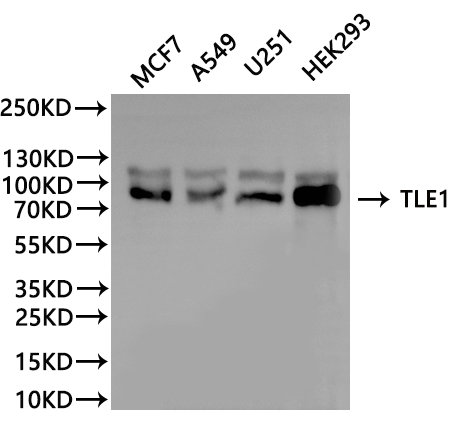
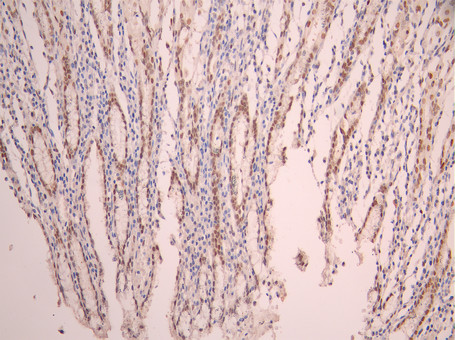
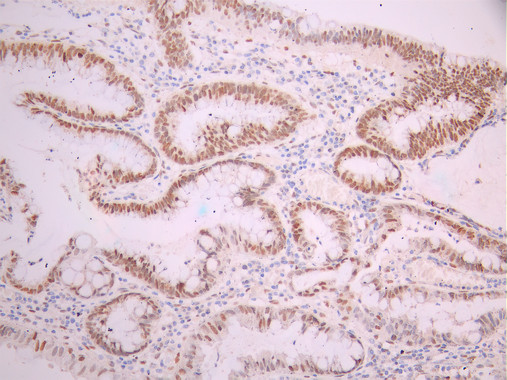
Validation studies demonstrate robust performance across multiple experimental platforms. Western blot analysis detects TLE1 at the expected 83 kDa molecular weight across diverse human cell lines including MCF7, A549, U251, and HEK293, confirming reliable detection in breast cancer, lung adenocarcinoma, glioblastoma, and embryonic kidney models at dilutions ranging from 1:500 to 1:5000. For tissue-based studies, immunohistochemistry validation in paraffin-embedded human stomach tissue and gastric cancer specimens shows clear staining using citrate buffer antigen retrieval at 1:50 to 1:200 dilutions, providing flexibility for optimizing signal intensity in your specific tissue context.
Whether investigating TLE1's role in transcriptional repression, exploring its diagnostic utility in soft tissue tumor classification, or examining its function in developmental pathways, this antibody provides a dependable tool for advancing your epigenetics and nuclear signaling research.
There are currently no reviews for this product.





