
Call us
301-363-4651 (Available 9 a.m. to 5 p.m. CST from Monday to Friday)

| Code | CSB-RA230008A0HU |
| Size | US$210 |
| Order now | |
| Image |
|
| Have Questions? | Leave a Message or Start an on-line Chat |
| Application | Recommended Dilution |
|---|---|
| WB | 1:500-1:2000 |
| IF | 1:50-1:200 |
| FC | 1:50-1:200 |
TNFAIP3, also known as A20, serves as a critical negative regulator of NF-κB signaling and plays an essential role in limiting inflammatory responses. This zinc finger protein possesses dual enzymatic activities—functioning as both a deubiquitinase and an E3 ubiquitin ligase—that enable it to terminate NF-κB activation following TNF-α stimulation. Dysregulation of TNFAIP3 has been implicated in autoimmune disorders, chronic inflammatory conditions, and various malignancies, making it a significant target for researchers investigating immune regulation and inflammatory pathways.
This recombinant monoclonal antibody, generated against a synthetic peptide from human TNFAIP3, offers the reproducibility and consistency that demanding experimental workflows require. As a sequence-defined recombinant clone, it eliminates the lot-to-lot variability that can compromise longitudinal studies, ensuring your results remain comparable across experiments conducted months or years apart.
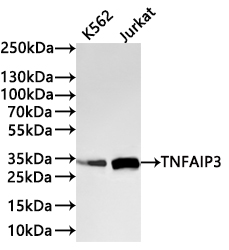
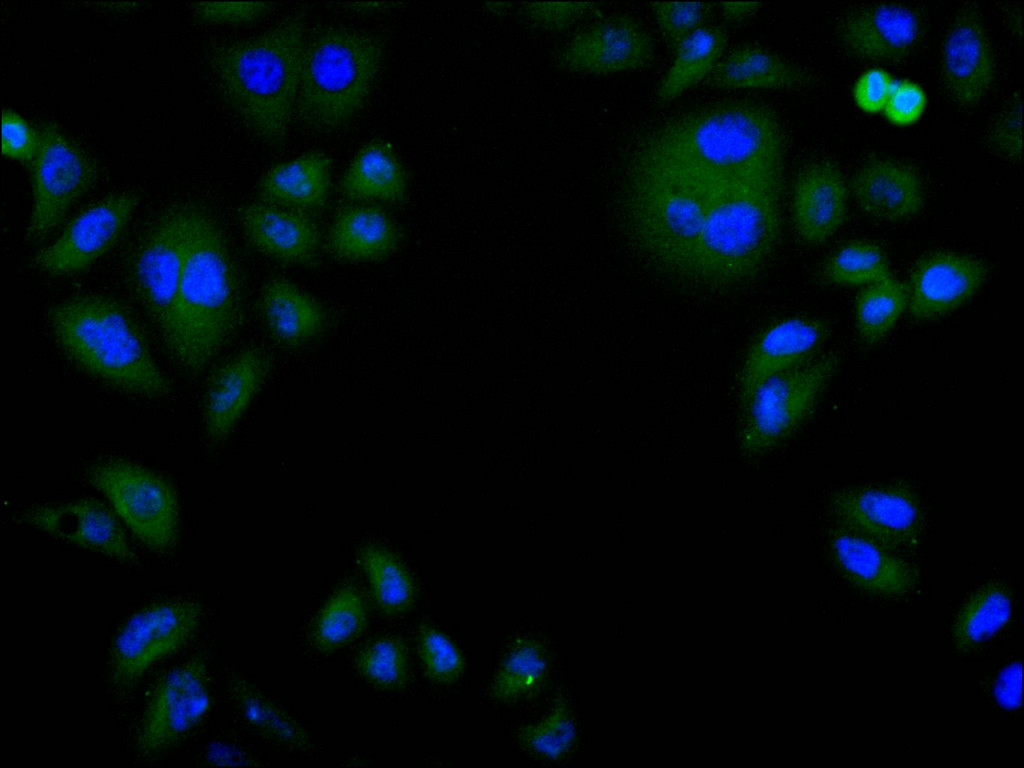
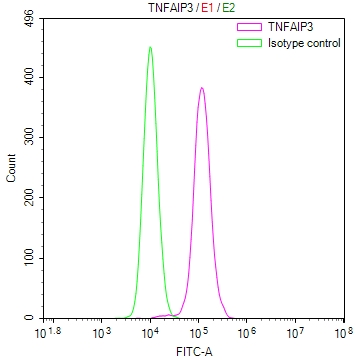
Validation studies demonstrate reliable performance across multiple applications. Western blot analysis of K562 and Jurkat whole cell lysates reveals a clean band at the predicted 90 kDa molecular weight, confirming specific detection of full-length TNFAIP3 in human lymphoid and myeloid cell lines. Immunofluorescence staining in HeLa cells enables visualization of subcellular localization patterns, while flow cytometry analysis using Raji cells shows clear positive signal separation from isotype controls, supporting intracellular detection studies in B-cell models.
Whether you are investigating TNF-α-induced signaling cascades, exploring ubiquitin-mediated protein regulation, or characterizing TNFAIP3 expression in disease models, this antibody provides the versatility and reliability needed for immunology, oncology, and inflammation research applications.
There are currently no reviews for this product.





