
Call us
301-363-4651 (Available 9 a.m. to 5 p.m. CST from Monday to Friday)

| Code | CSB-RA905988A0HU |
| Size | US$210 |
| Order now | |
| Image |
|
| Have Questions? | Leave a Message or Start an on-line Chat |
| Application | Recommended Dilution |
|---|---|
| WB | 1:500-1:5000 |
| IHC | 1:50-1:200 |
| FC | 1:50-1:200 |
TRAP1, also known as heat shock protein 75 kDa mitochondrial, serves as a critical molecular chaperone within the mitochondrial matrix where it plays essential roles in cellular stress responses, metabolic regulation, and protection against oxidative damage. As a member of the HSP90 family, TRAP1 has garnered significant research attention for its involvement in cancer cell survival mechanisms and its potential as a therapeutic target, particularly given its frequent overexpression in various tumor types.
This recombinant monoclonal antibody, clone 3F9, offers researchers the reproducibility and consistency that comes with sequence-defined production. Unlike traditional hybridoma-derived antibodies, recombinant technology ensures that every lot performs identically, eliminating the variability that can compromise longitudinal studies or multi-site collaborations. The rabbit IgG format provides excellent signal-to-noise characteristics across multiple detection platforms.
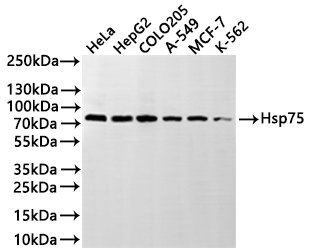
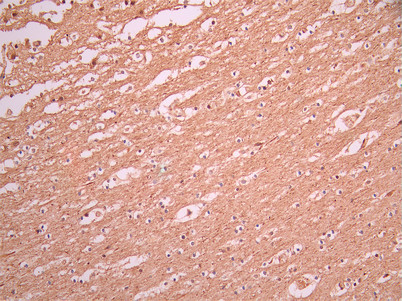
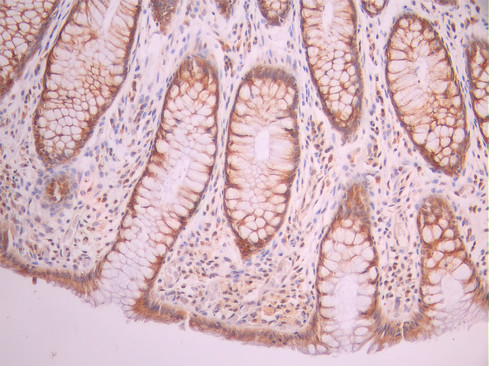
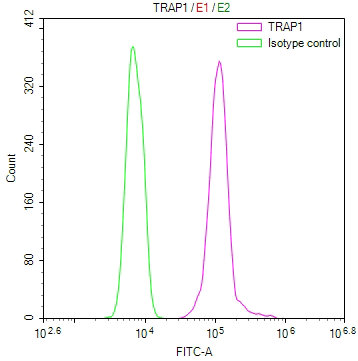
Validation testing demonstrates robust performance across diverse experimental workflows. Western blot analysis confirms specific detection at the expected 80 kDa molecular weight across multiple human cell lines including HeLa, HepG2, COLO-205, A-549, MCF-7, and K-562, providing confidence when working with various cancer models and tissue types. Immunohistochemistry applications have been validated in paraffin-embedded human brain tissue and colorectal cancer specimens, supporting researchers investigating TRAP1 expression patterns in both normal and pathological contexts. Flow cytometry validation in HeLa cells further extends the utility of this antibody for quantitative single-cell analysis of intracellular TRAP1 levels.
Whether investigating mitochondrial stress responses, exploring TRAP1's role in tumor metabolism, or examining TNF receptor-associated signaling pathways, this antibody provides a reliable tool for advancing your signal transduction research.
There are currently no reviews for this product.





